
Israeli Involvement in South Korea’s KF-X Stealth Fighter Program Could Seriously Undermine it’s Export Potential
Military Watch Magazine Editorial Staff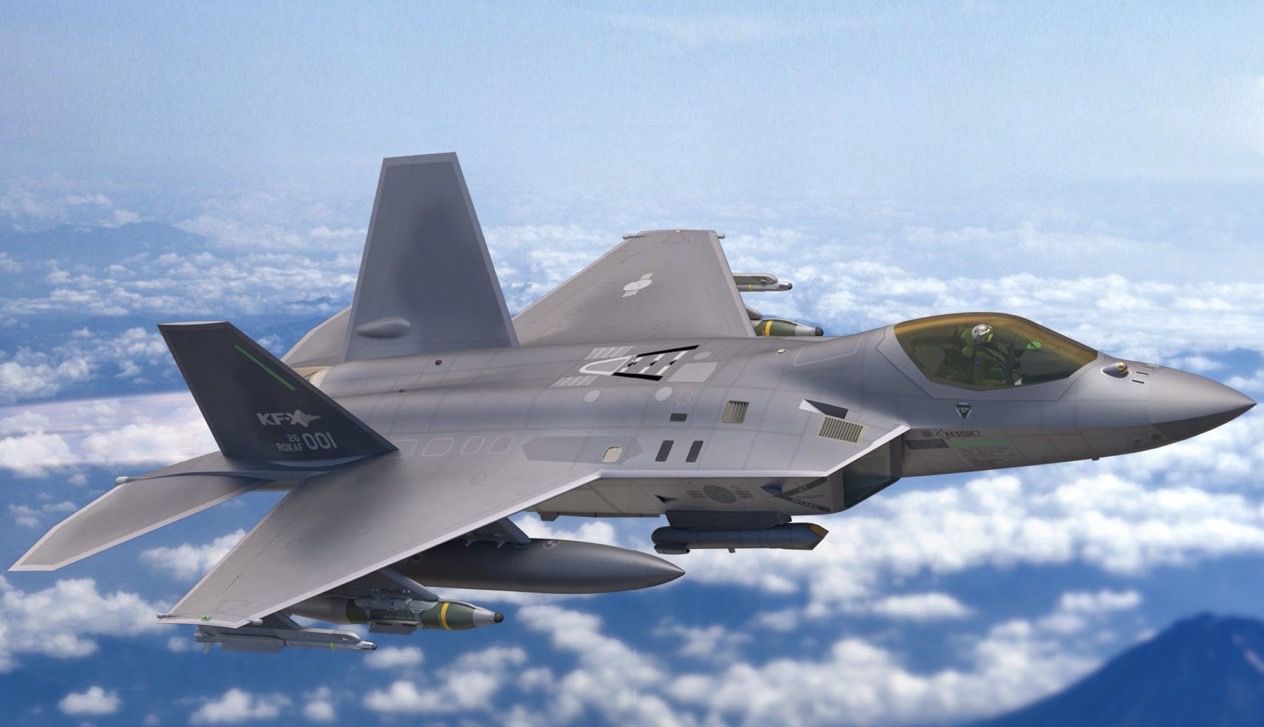
South Korean KF-X Fifth Generation Fighter - Artwork
Israel’s Elbit Systems announced on February 6th that it was awarded a $43 million contract from South Korea’s Hanwha Systems Company to equip the country’s KF-X next generation fighter with embedded Terrain Following-Terrain Avoidance (TF/TA) systems - to be implemented over a six year period. Yoram Shmuely, Executive Vice President and General Manager of Elbit Systems Aerospace Division, stated regarding the contract: “We are proud to be in a position to increase the capabilities of Air Forces through joint development with Hanwha Systems Co. Ltd.“. The system will allow the aircraft to fly and maneuver safely at low-altitudes, in zero visibility and in harsh weather conditions - capabilities which are vital for the aircraft operate effectively in heavily defended enemy territory. The KF-X is a next generation medium weight fighter designed for both high end air to air combat an strike roles. It will integrate a powerful AESA radar and deploy a range of high end munitions including Meteor long range air to air missiles and indigenous derivatives of the Taurus bunker buster cruise missile.
While Elbit systems is well known for the sophistication of its avionics, integrating Israeli technologies onto the KF-X may limit its export potential. Indoensia was a leading client for the fighter and a partner in the program itself, and maintains very poor relations with Israel as a number of Southeast Asian Muslim nations have. Indonesia may refuse to purchase fighters integrating Israeli technologies - as could Malaysia, Iraq and other potential clients. Iraq and Indoensia were notably two leading clients for South Korean's FA-50 light fighter, and ruling these two out as export clients for the KF-X could seriously undermine its export potential - without even considering the impact this could have on possible exports to other Muslim states. While South Korea is expected to procure between 200 and 250 fighters for its own Air Force, exports will be key to facilitating larger production lines, lower production costs and an overall more efficient program. Israel itself, heavily reliant on American military aid, is unlikely to show an interest in the fighter despite its advanced capabilities - ruling out potential sales to the country to compensate for the loss of Muslim clients.
