
Opinion: These Are the World’s Eight Most Dangerous Fighters in Air to Air Combat - In No Particular Order
Military Watch Magazine Editorial Staff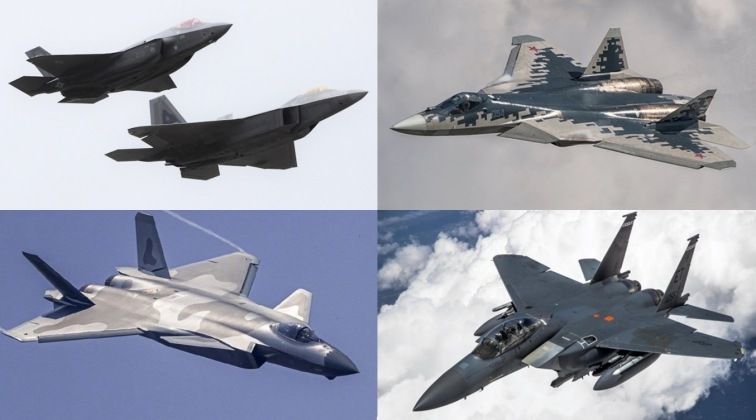
World's Top Fighters F-22 and F-35, Su-57, F-15EX and J-20
While air to air combat between jet fighters first occurred during the Korean War, it remains perhaps the most competitive area of fighter performance in the 21st century. Although even older fighters can be relied on to deliver air to ground munitions, and even mediocre ones with the right munitions and targeting pods can do so precisely, engagements against enemy aircraft are generally far less forgiving and even a slight performance disadvantage can result in defeat, pilot death and near instant hardware losses in the tens of millions of dollars for the service operating the aircraft. Increasingly particularly from the 2010s a fighter’s capabilities have been determined primarily by how well it can operate as part of a network and the kinds of assets that are available to support it, whether they be drones, AEW aircraft or satellites. The capabilities of the individual fighters themselves are nevertheless key, and while the leaders in air to air combat have been hotly debated consistently, the shortlist can be narrowed down to eight leaders among operational aircraft. In no particularly order, and based on pure combat performance rather than availability rates or cost effectiveness, the eight most capable aircraft in air to air combat and their outstanding attributes are given below.
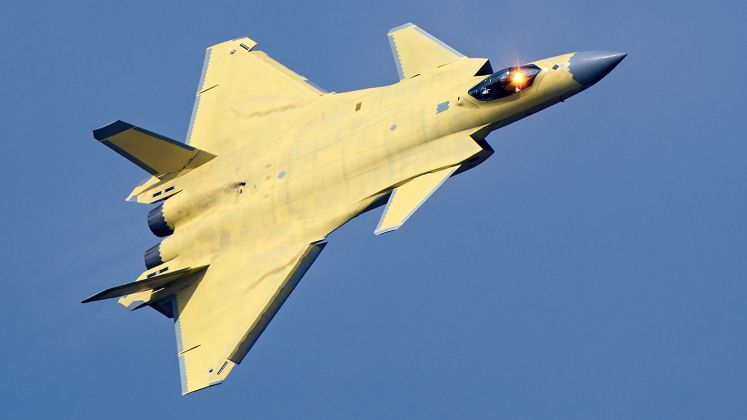
J-20A - China
First delivered to the Chinese People’s Liberation Army (PLA) Air Force in 2016, the J-20 today represents one of just two fifth generation fighters in the world that is both in production and fielded at squadron level strength alongside the American F-35. Unlike the F-35, however, it uses a heavyweight twin engine airframe that can accommodate a much larger radar and more weapons, facilitates a significantly longer range, and allows it to fly far faster, at higher altitudes and with much greater manoeuvrability. The enhanced J-20A variant which entered production in 2019 further improved the fighter’s stealth capabilities and integrated the new WS-10C engines, which made it the only fighter of its generation in production with a supercruise capability - the ability to fly supersonically for sustained periods without using engine afterburners. The J-20 shares a number a features with the F-35 including use of distributed aperture systems and sensor fusion provided by state of the art avionics, with both having left the previous American stealth fighter the F-22 behind in this regard. The fighter is prized for its access to P-10 and PL-15 short and long ranged air to air missiles both of which are close contenders for the titles of the most capable of their kind, with the PL-15 boasting a longer range than its Western rivals and access to an AESA radar. The J-20 is currently being produced at a much higher rate than any non-Chinese heavyweight fighter in the world, and as its capabilities have fast improved a growing number of analysts have considered it to be the world’s prime air superiority fighter.
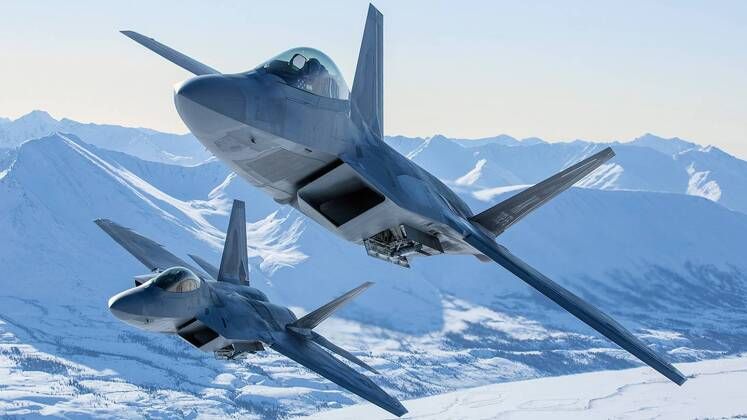
F-22A - United States
The first fifth generation fighter to enter service worldwide, the F-22A Raptor joined the U.S. Air Force in December 2005 after years long delays and post-Cold War budget cuts impeded progress in development significantly. The Raptor's twin F119 engines were revolutionary and continue to provide the fighter with more thrust than any other in the world, while its stealth capabilities are until today considered unsurpassed in many respects. The F-22's high flight performance at all speeds is supplemented by use of thrust vectoring engines for enhanced manoeuvrability, with the F-22 being the only Western fighter to use this technology. The aircraft has nevertheless been let down by its avionics, which impede its performance significantly at all ranges compared not only to the F-35 and J-20, but even to modern variants of fourth generation aircraft such as the F-15EX or F-16 Block 70/72. The fighter’s AESA radar is considered increasingly out of date, its ability to share data with units other than F-22s remains poor which is crippling in the increasingly network centric battlefields of the 2020s. Furthermore, its lack of helmet mounted sights prevents it from performing at all competitively at visual ranges. The Raptor saw orders to terminate production given in mid 2009 less than three and a half years after its entry into service, and its extremely high maintenance requirements and relatively low endurance are among the factors which have led it to be slated for a very early retirement.
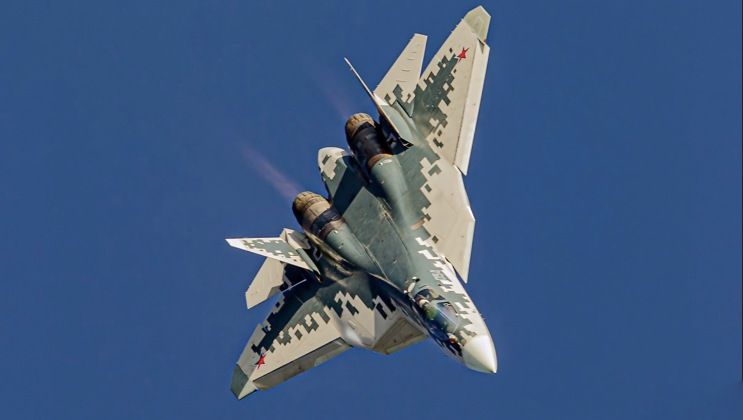
Su-57 - Russia
The Su-57 was Russia’s second attempt at a major state backed fifth generation air superiority fighter, with the highly ambitious MiG 1.42 program effectively collapsing due to Russian economic and industrial decline in the 1990s. The new fighter first flew in 2010, although delays to the program mean it has yet to enter service at squadron level strength. The Su-57 is nevertheless the only one of its generation to have been tested in combat delivering standoff missile strikes, deploying cruise missiles against Islamist insurgents in Syria and ground units in Ukraine, and boasts a range of unique features not seen on its American and Chinese counterparts. Although less stealthy than other fighters of its generation, the Su-57 benefits from access to sextuple radars rather than a single one providing a very high degree of situational awareness and the ability to track 60 aircraft simultaneously. With sensors operating in different wave bands, this also presents a wide range of options for electronic warfare and counter stealth operations. The fighter has the longest range of any in the world designed for air to air combat, is more manoeuvrable than any rival, and has a longer air to air engagement at 400km using derivatives of the R-37M air to air missile. With its Himalayas electronic warfare system distributed across its airframe, and fielding APAA guided air to air missiles with very long ‘no escape ranges,’ the Su-57 is highly potent in all roles and is a less specialised more well balanced design than those developed in China and the United States.
F-35A/C - United States
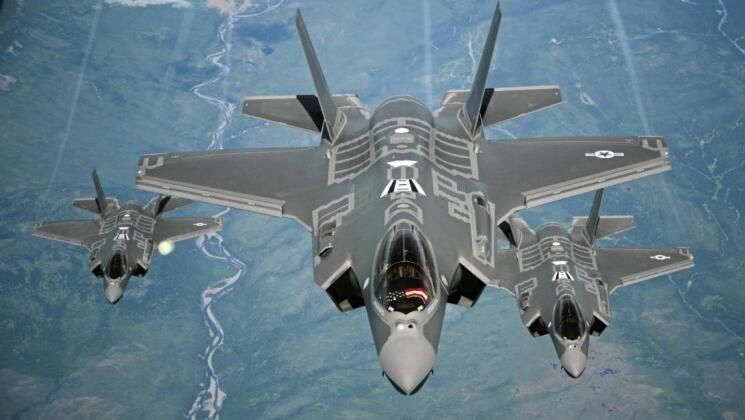
The only single engine fighter of its generation, the F-35 is a relatively light aircraft designed to provide a cheaper and lower end counterpart to the F-22. The cancellation of F-22 production, however, has led the smaller aircraft to increasingly surpass the few F-22s that are in service particularly in terms of its avionics. Its ability to fuse data from a wide network of assets provides a significant situational awareness advantage at longer ranges, while its use of helmet mounted sights allows it to engage targets at extreme angles in visual range combat where the F-22 cannot. The F-35 is limited by low manoeuvrability, a small internal payload, poorer stealth capabilities than the F-22, and above all its approximately 800 defects which have been a primary factor leading the Pentagon to deny approval for full scale production. The fighter is currently restricted to an initial operating capability, but has significant potential particularly if its currently high operational costs can be reduced to make it affordable in large numbers. The F-35 was designed primarily for air to ground operations, hence its program name Joint Strike Fighter, but its sophistication makes its secondary air to air capability potentially very potent once current issues with the design are resolved.
MiG-31BM/BSM - Russia
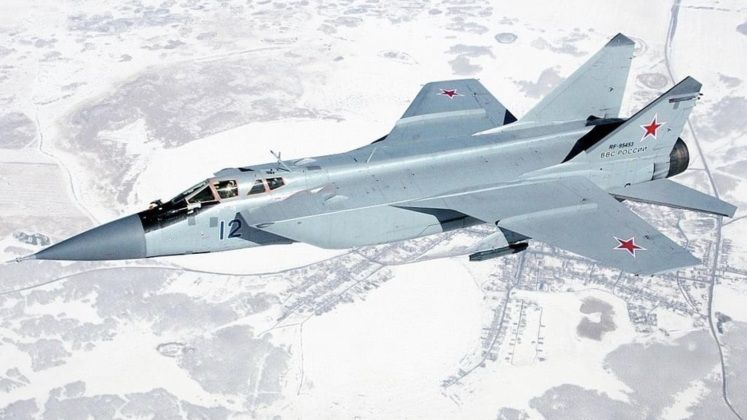
The largest operational aircraft in the world designed for air to air combat, the MiG-31 is arguably the most capable fighter/interceptor in Russian service with newer specialised variants also deployed for anti satellite operations and as strike fighters armed with hypersonic missiles. Foxhounds deploy larger radars than any other fighter or interceptor in the world, and are the fastest modern combat jets in service capable of operating at Mach 2.8 speeds. Designed to be able to fly in and fire all missiles from space, the airframe’s capabilities add to the already very long range of its primary armament the R-37M missile which boasts a 400km range, Mach 6 speed and 60kg warhead. This makes the oversized missile a close contender for the title of the world’s most dangerous, and although it is too heavy for most fighters to use the Foxhound can carry up to six alongside six shorter ranged R-77-1 missiles. Foxhounds can fly supersonically for extended periods, have high endurances, and are capable of operating in extreme temperatures and landing on ice runways. This makes them ideal for the defence of Russia’s increasingly contested Arctic regions. Whether the aircraft will continue to be modernised past the mid 2020s, however, depends heavily on how much progress has been made on its successor currently being developed under the PAK DP (MiG-41) program. Plans for a more ambitious successor under the Soviet MiG 702 programs were notably terminated after the superpower’s disintegration.
J-16/J-15B - China
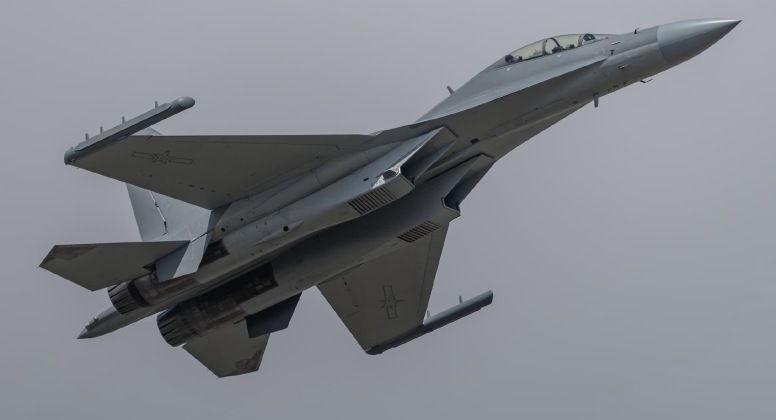
China acquired its first Su-27 Flanker fighters from the Soviet Union in 1991, with three delivered that year, and subsequently invested heavily first in license producing the design entirely indigenously and then in improving it to develop much more capable indigenous variants. While the Su-27 is widely considered the most dangerous fighter fielded by any air force during the Cold War era, with derivatives of it forming almost the entirety of the Russian fighter fleet, the Chinese PLA today purchases the new J-16 derivative on a scale far larger than the Russian Air Force does any of its own Flankers. The J-16 builds on the design's very high endurance, capacity for a large sensor suite and excellent flight performance with limited stealth capabilities, fifth generation level avionics, and advanced armaments most notably PL-10 and PL-15 missiles. It is also responsible for deploying the oversized PL-XX air to air missile which is thought to have the longest range in the world. The fighter has been at the heart of PLA Air Force modernisation plans for its fighters fleet since the mid 2010s. A Flanker derivative integrating many of the same technologies deployed by the PLA Navy, the J-15B, was developed for carrier operations. It uses a single rather than twin seats, is more focused on air superiority, and has many of the same performance strengths as the J-16. The J-16’s avionics have also been used as a basis to modernise older Chinese Flanker variants, namely the J-11B series as the J-11BG which similarly pairs its strong flight performance with state of the art sensors, missiles, data links and sensor fusion capabilities.
Su-35S - Russia
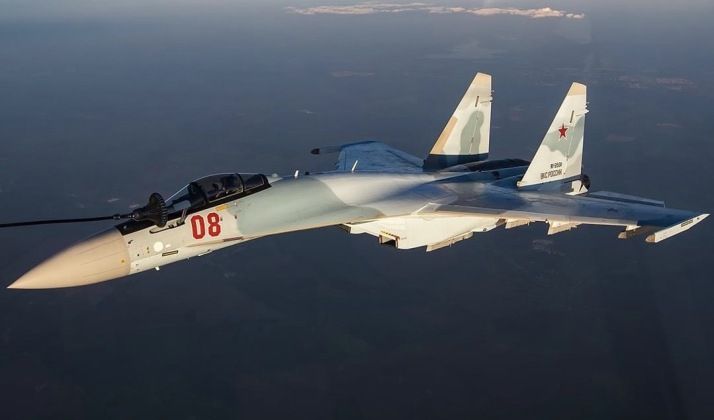
Joining the Russian Air Force from early 2014, the Su-35S was derived from the Su-27 Flanker and benefited considerably from work done to develop enhanced derivatives in the 1990s under the Su-27M, Su-37 and Su-35BM programs. The fighter finally brought the ’Super Flanker’ concept into operational service after considerable delays due to lack of funding, with the technologies available to do so having been effectively completed in the 1990s but at the time offered for export only. The Su-35S boasts access to triple radars, including two L-band AESA radars optimised for electronic warfare and counter-stealth missions, and uses more powerful engines than any other Flanker derivative only slightly weaker than the F-22’s F119 in thrust. For the aircraft’s much lighter airframe, this provides an excellent flight performance which is supplemented by the use of three dimensional thrust vectoring engines - which it was the first serial production fighter to use. Although lacking the advanced avionics, stealth capabilities and missiles of Chinese Flanker variants, the Su-35 has a much longer range, can climb faster and manoeuvre better, and was designed to be able to go head to head with NATO fifth generation jets in particular F-22s. The fighter’s technologies including its AL-41 engines have been used to modernise older Su-30 fighters to the Su-30SM2 standard.
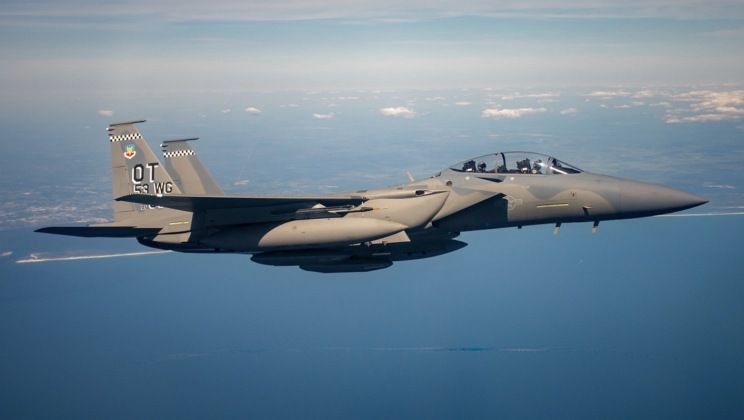
F-15EX - United States
Entering service from 2021, the F-15EX is the latest iteration of a fighter which first joined the U.S. Air Force in 1975 and, due to the failure of the F-22 program to provide a viable successor, is still in production. The only heavyweight fighter in production in the Western world, the F-15EX lacks the F-22’s advanced stealth capabilities but outperforms it in most other areas. The fighter is far more versatile and able to deploy a range of air to ground and anti shipping weapons, integrates a more powerful radar as well as an infrared search and tracking system, and has far lower maintenance requirements allowing it to be kept at far higher levels of operational readiness. With avionics up to the latest standard, the F-15EX is far better suited to network centric operations and can deploy a much larger arsenal of air to air missiles, while also expected in future to deploy oversized missiles with extreme ranges. The fighter benefits from a much higher endurance than the F-22, and for visual range engagements has access to helmet mounted sights to engage at extreme angles.
