
North Korea Proposes Partnership with China Amid U.S. Threats: Test Fires Ballistic Missiles and Rockets as Show of Force
Military Watch Magazine Editorial Staff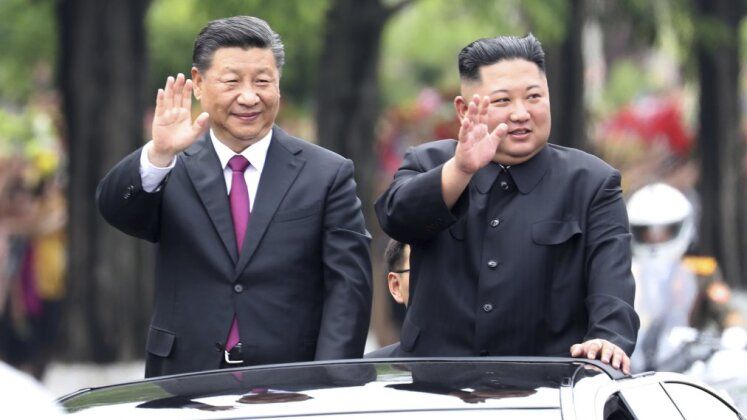
Chinese and North Korean Leader Xi and Kim
Following heated exchanges between the Chinese and U.S. delegations in Alaska, which was widely interpreted as signalling a period of greater tensions with the Joe Biden administration now in power in Washington, North Korea has proposed closer cooperation with Beijing to bolster ties and counter a perceived common threat from the U.S. The message came from the recently appointed General Secretary Kim Jong Un who entered the post in January, and it first appeared on China's Xinhua News Network following an exchange between Secretary Kim and Chinese President Xi Jinping. The Korean leader called for improved ties “as required by the times that call for intensifying the strategic communication between the two parties on the basis of deep comradeship." President Xi notably visited Pyongyang in June 2019 and the two countries’ militaries reached an agreement in August that year to cooperate more closely to guard against security threats in Northeast Asia. The two countries are each one another’s only treaty allies.
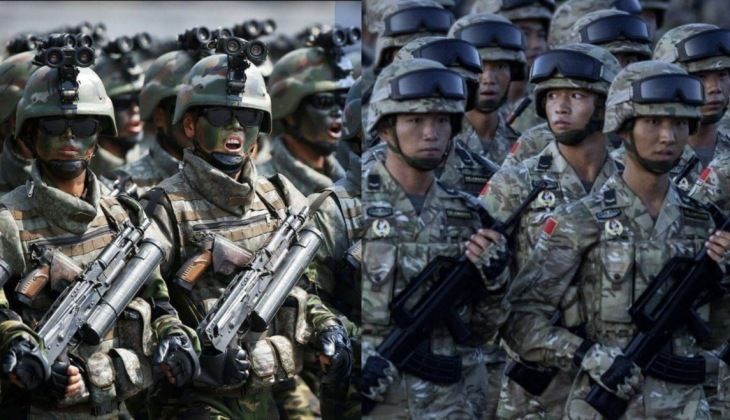
North Korea followed calls for closer ties with China with its first major weapons test of the year - firing what are thought to be two artillery rockets likely from a KN-25 artillery system. The KN-25 is the longest ranged weapon of its kind in the world, and has been speculated by some sources to have been developed with Chinese assistance. The tests were downplayed by senior administration officials, who stressed that they fell "on the low end of the spectrum" of the kinds of weapons the East Asian state could test to place pressure on the U.S. Washington has long sought to deny Pyongyang the right to develop its arms industry and has deemed its missile tests unilateral provocations, while North Korea sees them as part of its inalienable right to self defence to deter possible American aggression. Some reports initially indicated that the projectiles fired may have been cruise missile rather than rockets. One unnamed official quoted by CNN stated: “This is a system that is not covered by UN Security Council resolutions. It is a normal part of the kind of testing North Korea would do. We do not believe it is in our best interest to hype these things in circumstances in which we would consider those activities as part of a 'normal' set of a tense military environment like we see on the Korean Peninsula."
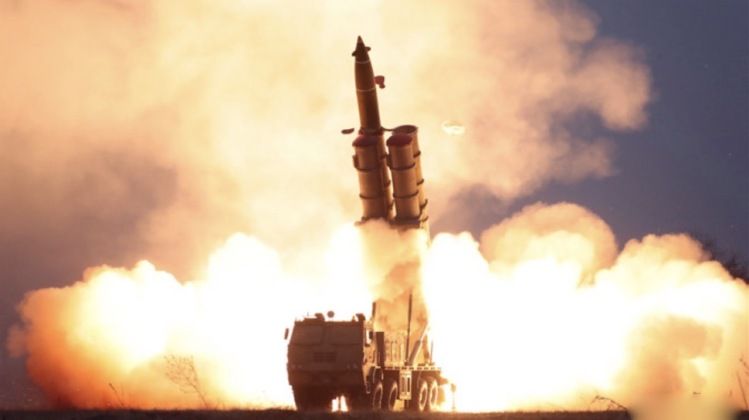
In the early morning of March 25th, Korean time, North Korea tested what initial assessments stated was a ballistic missile. The projectile was fired into the Sea of Japan, and could represent a further step towards escalation against Washington. North Korea unveiled a wide range of sophisticated new ballistic missiles in November 2020 including a new intercontinental range platform which could begin flight testing later in the year if relations with the Biden administration deteriorate sufficiently. Washington has sought to place pressure on China to take a hard line against Pyongyang, with U.S. Secretary of State Antony Blinken stating earlier in the month that “Beijing has an interest, a clear self-interest in helping to pursue denuclearisation” of North Korea. This was interpreted by some as a threat to China should it fail to coordinate with Washington against its own treaty ally. Relations between Beijing and Pyongyang have improved considerably since the mid-2010s, and ties are expected to continue to be strengthened over the coming decade due primarily to a shared perceived threat from the U.S.
