
Premier Xi Jinping’s Visit to Pyongyang as Part of a Profound Shift in Chinese Strategy - Opinion Piece By Dr. Emanuel Pastreich
Military Watch Magazine Editorial Staff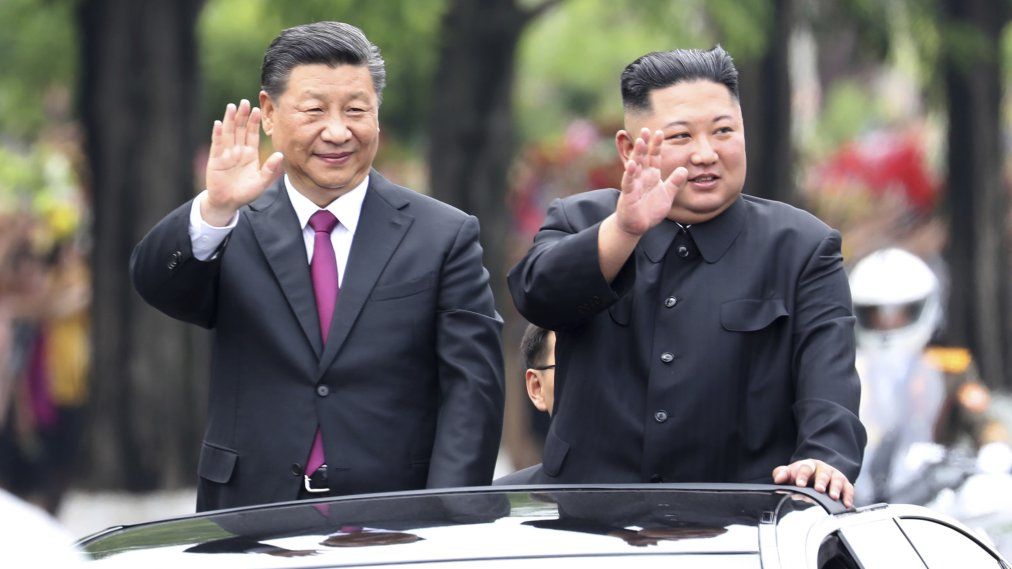
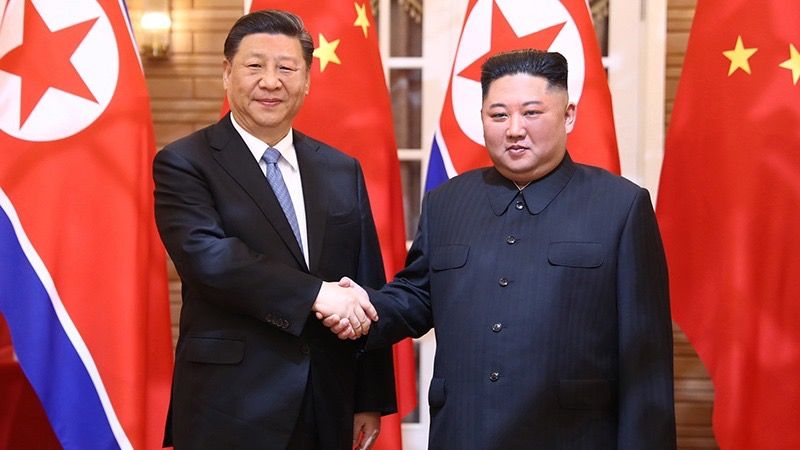
Chinese Premier Xi Jinping and North Korean Leader Kim Jong Un in Pyongyang
The recent visit of China’s President Xi Jinping to Pyongyang for a formal state visit has been interpreted in the context of the stalled talks on denuclearization between DPRK Leader Kim Jong Un and U.S. President Donald Trump. As the Nikkei’s Katsuji Nakazawa put it, “If Xi can help put (the talks) back in motion, he would have a card to play in Osaka (at the G-20 Summit in a possible meeting with Trump).” But the historical significance of this summit, the first visit by a top Chinese official in 14 years, has nothing to do with the denuclearization process - not that Presidnet Trump was ever serious about that idea after he dismissed from the Federal government everyone capable of drafting complex nuclear agreements, adhering to international treaties, or inspecting for nuclear weapons. Xi’s visit signifies a profound shift in Chinese strategy towards the United States, and a move away from the “strategic patience” towards an increasingly arrogant, unpredictable and aggressive America, and towards a Chinese formulation of a comprehensive, long-term response.
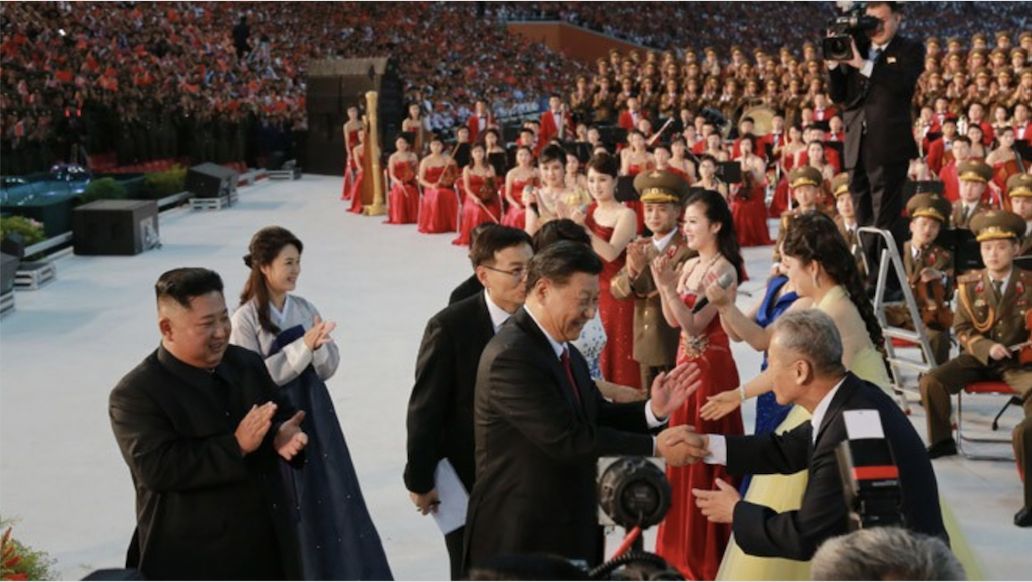
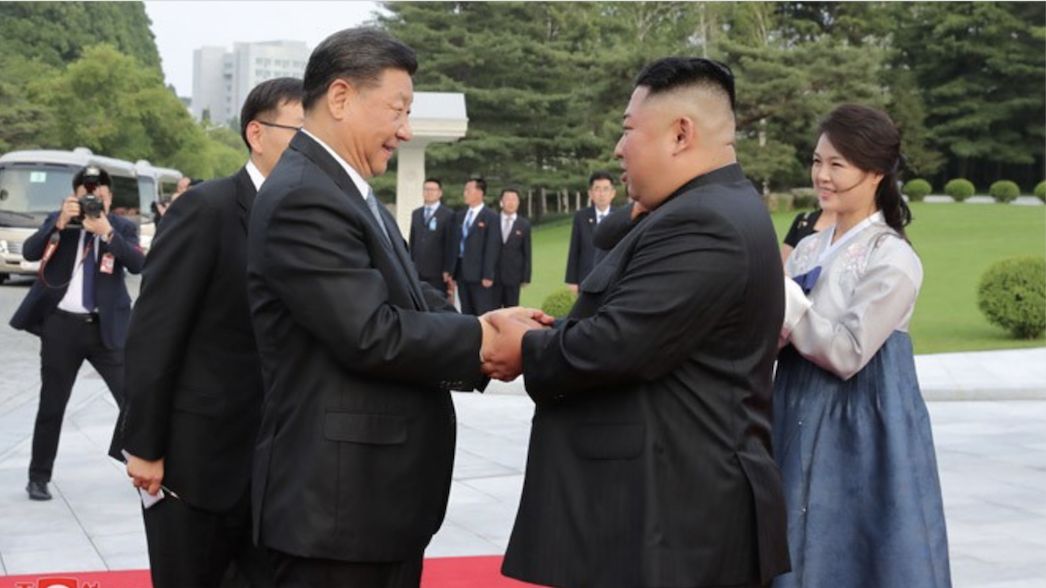
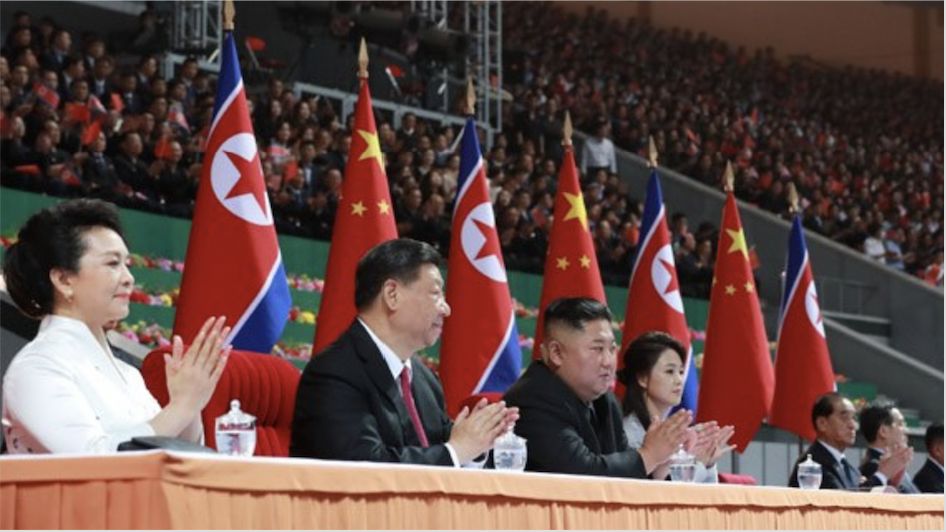
The reporting in Chinese language about the summit meeting stressed socialist values, the close personal connections between leaders Xi and Kim, and a gathering momentum for cooperation. There was nothing about the denuclearization demands of the United States (through the United Nations) or even of a push for North Korea to adopt Chinese market reforms. We do not know what was discussed in the meetings, but based on the recent efforts of China to create cultural, scientific and economic cooperation on a basis of equality through the Belt and Road Initiative, my guess is that the primary issue for discussion was how North Korea might be integrated into such exchanges going forward and how China can establish a new parallel “international community” through the Belt and Road Initiative that stretches from Greece and Italy to Uzbekistan and Mongolia, to China and Malaysia. That new drive on the Chinese part to start creating own global system runs parallel to the move to drop the U.S. dollar in international exchanges being led by Russia, China, Turkey and Iran. That move is accelerating, and gaining further adherents, as the cultural, institutional and economic authority of the United States is worn away by its decadent and brutal new style of international relations.
Although there may have been some discussion of the upcoming G 20 in Osaka when Xi and Kim met, and the possible frosty meeting between Xi and Trump that could take place then, it is pretty clear that China has run out of patience with Trump’s fun and games, house of mirrors as trade policy. So China is no longer as concerned with how to make Trump happy today. Rather, China is preparing to engage in a long-term battle to increase its own self-sufficiency and to accept as a new normal a far more limited economic relationship with the United States. Over the last ten years, China has expressed frustration with North Korea, even slighted Pyongyang on occasion as it made it clear that economic relations with prosperous South Korea, and with the United States and Japan, were more critical than sleep-inducing speeches about how the Chinese and Koreans fought against American imperialism.
But all has changed now.
China has made a new assessment of the value of North Korea, and of the need for China to assert a vision for Northeast Asia, perhaps with North Korea as an important part. That shift probably would not have been possible if the threats of economic and military conflict from the United States has not grown so powerful as to make real differences in interest with Pyongyang seem less significant (as is the case in the China-Russia relationship too). There were two recent incidents that have shifted the mood in Beijing sufficiently to make close engagement with North Korea, at the cost of positive coverage in the Western mainstream press, seem worth it: the demonstrations in Hong Kong and the attack on a Japanese oil tanker in the Gulf of Oman.
Hong Kong is portrayed as an island of democracy and freedom that is connected directly to the People’s Republic of China and is subject to the oppressive rule of Communist bureaucrats. Yet the demonstrations made little sense in terms of either democracy, something that people in Hong Kong (as opposed to South Koreans) have never been all that interested in. The issue was whether criminals living in Hong Kong could be extradited to China and Taiwan to face charges. Well, if you asked a Martian, he would say, “of course they should.” After all, Hong Kong extradites people accused of crimes to the United States, a country that has a terrible record of imprisoning innocent people and whose prisons are more dangerous than those of China. But we also have to come back to another important incident that took place in Hong Kong, the attempt of NSA contractor Edward Snowden to seek asylum in China. China, wishing perhaps to avoid unnecessary conflicts, rejected Snowden’s appeal and the result was that he ended going to Russia. Hong Kong has been a popular place for spies from the U.S. and elsewhere to hang out and gather information on China. China has put up with that chaos for the most part, assuming that China should go for the long game, economic development over the next fifty years, and not get hung up on what the United States does today. Rejecting Snowden can be seen in that context.
But the demonstrations in Hong Kong went beyond anything that had happened before. As the Ron Paul Institute think thank has documented, any number of American NGOs and corporately funded organizations were mobilized to support and encourage violent attacks on the police, and to humiliate Hong Kong politicians into apologizing for passing an entirely legitimate law. There can be no doubt that there are Hong Kong citizens who have strong feelings about the mainland, and some who have legitimate grievances, but the reporting in the American media was so grotesquely biased that Chinese saw the whole push as something more akin to the overthrow of the government in Libya, or Egypt, rather than any serious effort to promote due process.
That sense that American operatives in Hong Kong had gone too far was an incentive to reassess what China’s global strategy is going to be, especially as the United States now demands that domestic industrial policy like Made in China 2025 be a topic for trade negotiations. Switching strategy on North Korea, and most likely taking a position more critical position relative to the U.S. unconditional demand that North Korea give up all nuclear weapons before any sanctions are removed, is starting to look better and better. The clear intention behind drowning the airwaves with reports about the democracy demonstrations in Hong Kong (as opposed to such demonstrations all over the world, and in the United States itself) was to set the stage so that Washington could move from tariffs to sanctions. The grotesque union of white nationalist isolationists like Stephen Bannon and Steven Miller with militarists like John Bolton has created a culture in which the threats like delisting all Chinese companies from the U.S. stock exchange, or implementing broad sanctions are future steps that are entirely in the realm of the possible.
The attack on the Japanese oil tanker also may have been a factor in Xi’s visit to Pyongyang as well. Let us remember that the attack by a UFO (unidentified flying object) took place at precisely the moment that Japan’s prime minister Shinzo Abe was visiting Iran to meet with Supreme Leader Ayatollah Ali Khamenei. The Trump administration, through the mouth of Secretary of State Mike Pompeo, declared that the attack was carried out by Iran and the United States ramped up for war. But since then, the captain of the Japanese ship has not say that the attack was by Iran, Abe did not cut his summit meeting short and in fact Japan has not backed the American narrative. Although this series of events has been brushed under the rug, they suggest a serious tear in the U.S. relationship with Japan. It makes no sense for Iran to attack a Japanese ship when Abe was a state guest engaged in broad discussions.
The assumption promoted in the American media that Abe was there to try to convince Iran to meet American demands is deeply misleading. Both Iran and Japan are major regional powers with sophisticated foreign policy and immense economic and cultural power. The dialog had more to do with the strategic relations between two major countries who are trying to increase their punch as the United States becomes increasingly isolationist. Perhaps the attack on the ship was a message to Japan as much as it was to Iran. If the United States, or its partners, had something to do with that (and the failure of the U.S. government and much of the media to come to a consensus on this attack suggests that may be the case) then it would be interpreted in an extremely negative manner by Japan. Japanese do not show their emotions. But this incident could very well lead to a fundamental reassessment of relations with the United States within Japan.
That brings us back to North Korea. Japan has most likely been involved in secret negotiations with North Korea about the settlement of reparations, and the visits of Japanese businessmen to North Korea to explore infrastructure proposals and mineral resource development has leaked out here and there in the media. So far Japan has adhered to the U.S. line on North Korea, of economic sanctions until complete dismantlement of the nuclear program. But Japan sees North Korea as a major economic and strategic opportunity.
The incident in the Gulf of Oman suggested to China that the United States was willing to risk world war over Iran and that China would soon have no choice but to take a firm stand. But the unspoken split between Japan and the United States we are now witnessing suggests that Japan could take a very different path with regards to North Korea and to China in the future. If that is the case, then North Korea will be central to a new Asian order which could well evolve with the participation of both China and Japan, but without a role of the United States. In fact, only recently the former prime minster of Japan Hatoyama Yukio floated a suggestion for a common market shared by China, Japan and Korea which did not include the United States. He no doubt floated that idea with some significant support.
Thus, the possibility has emerged for a significant shift in Japanese policy, moving away from a reflexive endorsement of U.S. policy. That shift could open up new opportunities for China to expand its influence, including closer cooperation with North Korea and Japan as part of a new regional order.
Emanuel Pastreich serves as the director of the Asia Institute, an associate at the Council on East Asian Studies at Yale University and a member of the academic council at CCG (Center for China and Globalization) in Beijing. He was formerly editor-in-chief of the official online newspaper of the Korean Overseas Information Service “Dynamic Korea,” and has published eleven books in English, Chinese and Korean.