
Moscow Wins: How American Sanctions and European Pressure on Turkey Could Seriously Backfire
Military Watch Magazine Editorial Staff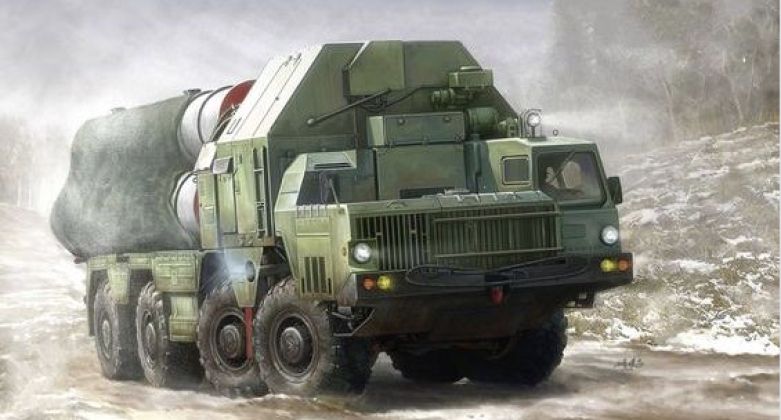
S-400 Missile Battery - artwork
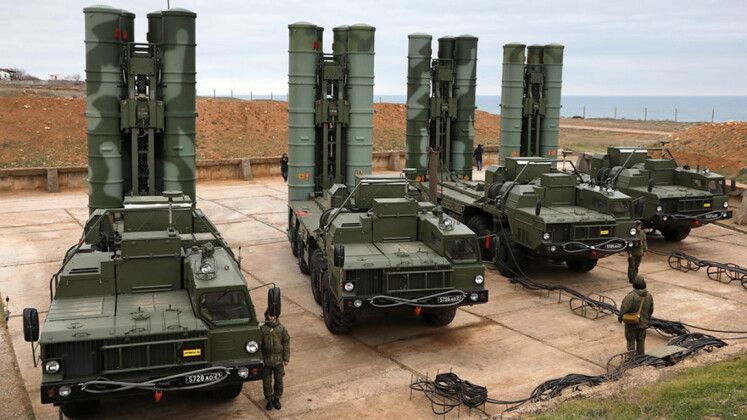
After threatening to take the unprecedented step of sanctioning its NATO ally for over two years, the United States placed Turkey under economic sanctions on December 14th over its purchase of the Russian S-400 surface to air missile system. The sanctions were directed against Turkey’s Presidency of Defense Industries, and were appleid under the Countering America’s Adversaries Through Sanctions Act (CAATSA), under which the U.S. sought since late 2017 to threaten possible clients for Russian weapons to force them to instead purchase arms from Western or Western-aligned states. The S-400 was chosen over Western and Chinese competitors for its superior capabilities, and is considered the world’s foremost surface to air missile system of its kind. It is prized for its ability to engage very large numbers of targets simultaneously, its powerful sensor suite, its high mobility and versatility with access to over half a dozen missile types, and its high performance against stealth targets and hypersonic weapons which few air defence systems are well suited to countering effectively. While the move to sanction Turkey is expected to send a strong signal to other potential clients for advanced Russian weapons systems, such as Egypt, Indonesia an the Philippines which have all received U.S. threats warning them to limit their purchases to Western defence products only, when considering Turkey’s current geopolitical position the move has significant potential to hinder American and Western interests in the medium and long term.
Preceding moves to sanction Turkey, the country was notable evicted from the F-35 fifth generation fighter program. The U.S. went through with this despite Turkey having been an integral member of the program rather than an external client, and despite investment already having been made to produce hundreds of components in the country. This ultimately led Turkey to look to Russia to provide it with modern fighter jets from mid-2018, with Turkish President Recep Tayyip Erdogan attending the MAKS 2019 airshow in Russia alongside his Russian counterpart Vladimir Putin and showing a particularly strong interest in the Russian Su-57 fighter. It was subsequently confirmed that negotiations were in their late stages for a Turkish order for Su-35 fighter jets, which could potentially be followed by an order for the more advanced Su-57. Turkey also showed an interest in the Russian S-500 air defence system, which is a complementary platform to the S-400 currently in the late stages of development and was designed for space warfare and interception of high value targets such as hypersonic aircraft.
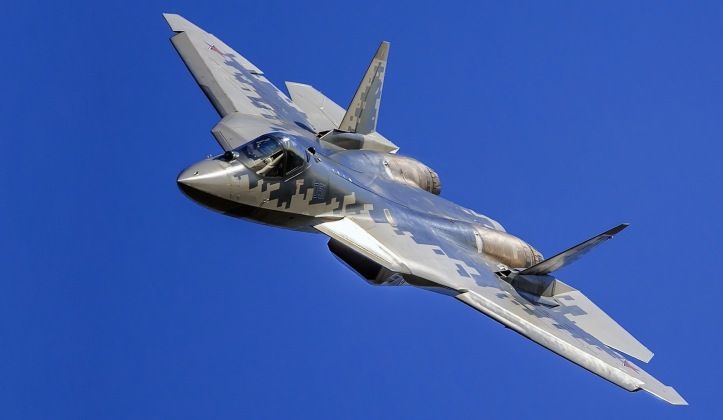
It was previously speculated that Turkey’s conspicuous interest in acquiring more high end Russian aerial warfare systems following on from the S-400 was intended largely as a threat to prevent the U.S. from imposing more sanctions. The imposition of sanctions, however, means the ball is now in Turkey’s court to both respond to the U.S. and to find means of modernising its defences without relying on Western sources. The latter point became particularly urgent in 2020 as the country faced growing challenges to its territorial claims from neighbouring Greece, which had gained considerable support from the European Union and from France in particular and is expected to receive modern Rafale and F-35 fighter jets to provide it with a qualitative edge over the Turkish Air Force. With Turkey already under pressure from the West due to its eviction from the F-35 program and ongoing pressure in the Mediterranean, the imposition of U.S. sanctions is likely to be the last straw before it commits more fully to becoming a major client for Russian aerial warfare systems - the first step towards which is likely to be an order for Su-35 or Su-57 fighters. The primary factor which could delay this, however, is the change in administration in the United States and possible hopes in Ankara that the upcoming Joe Biden administration will seek to improve relations and relax sanctions. Failing this, however, the primary beneficiary of Washington’s move to sanction Turkey will be Moscow, which could see billions of dollars worth of new contracts bolstering its defence sector and funding research and development for future advanced weapons programs to counter the U.S. and its allies.
