
Turks Unimpressed With ‘Junk’ American F-16s After Witnessing Russia’s New Su-35 in Action
Military Watch Magazine Editorial Staff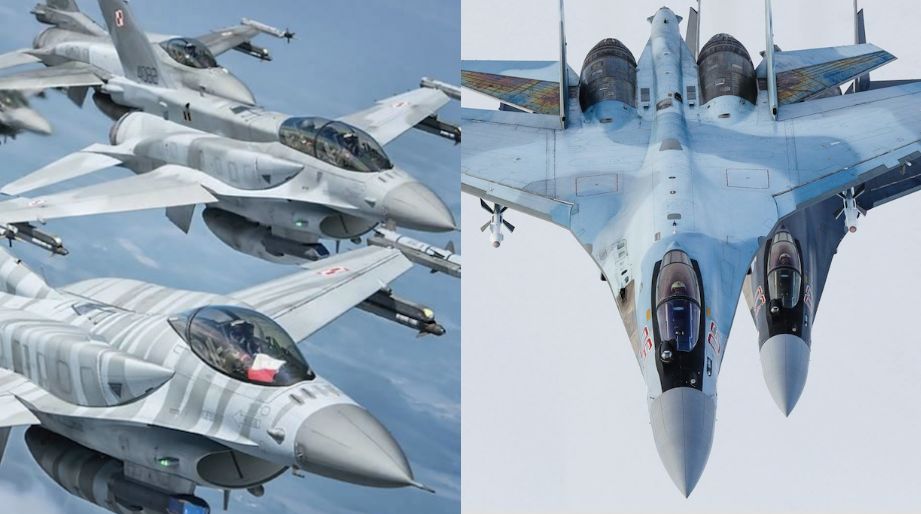
F-16 Fighting Falcons (left) and Su-35 Flankers
As Turkey’s relations with the Western Bloc and with the United States in particular have continued to deteriorate, Ankara has repeatedly indicated a strong interest in acquiring high end Russian hardware for aerial warfare. Most prominent among the weapons systems under consideration are the S-500 long range surface to air missile system, the Su-35 ‘4++ generation’ air superiority fighters and the newer and more advanced Su-57 fighters. Shortly following Turkish President Recep Tayyip Erdogan’s visit to the MAKS 2019 airshow in Moscow, where he showed particularly strong interest in the Su-57 and to a lesser extent the lighter MiG-35, Russian Su-35 jets were sent to take part in the Technofest exhibition in Turkey. The elite Russian fighters reportedly impressed the Turkish audience when performing at the Ataturk International Airport, leading to many highly favourable comparisons with the American F-16 Fighting Falcon which currently comprises the mainstay of the Turkish Air Force. A number of American and other outlets noted with some surprise that the F-16 was described as 'junk' compared to the Su-35 due to its far more limited capabilities.
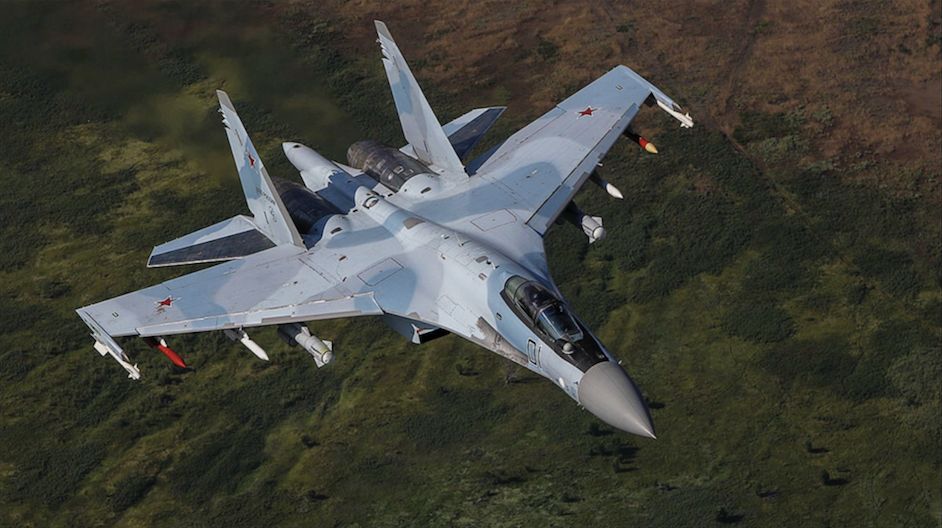
The F-16 first entered service in 1978, and was designed as a lighter and cheaper complement to the F-15C Eagle twin engine air superiority fighter. The Su-35 by contrast represents a high end air superiority fighter of a similar weight range to the F-15C, meaning it benefits from a far longer range, higher weapons payload (more than double), heavier and more powerful sensors and higher speed and altitude than the lightweight F-16. Furthermore, the Su-35 integrates technologies several decades ahead of those on either of the American jets - including three dimensional thrust vectoring engines for supermanoeuvrability, multiple sensors for a far wider pane of view including infra red tracking systems and a powerful Irbis-E radar, as well as a radar cross section reducing profile and access to hypersonic air to air missiles.
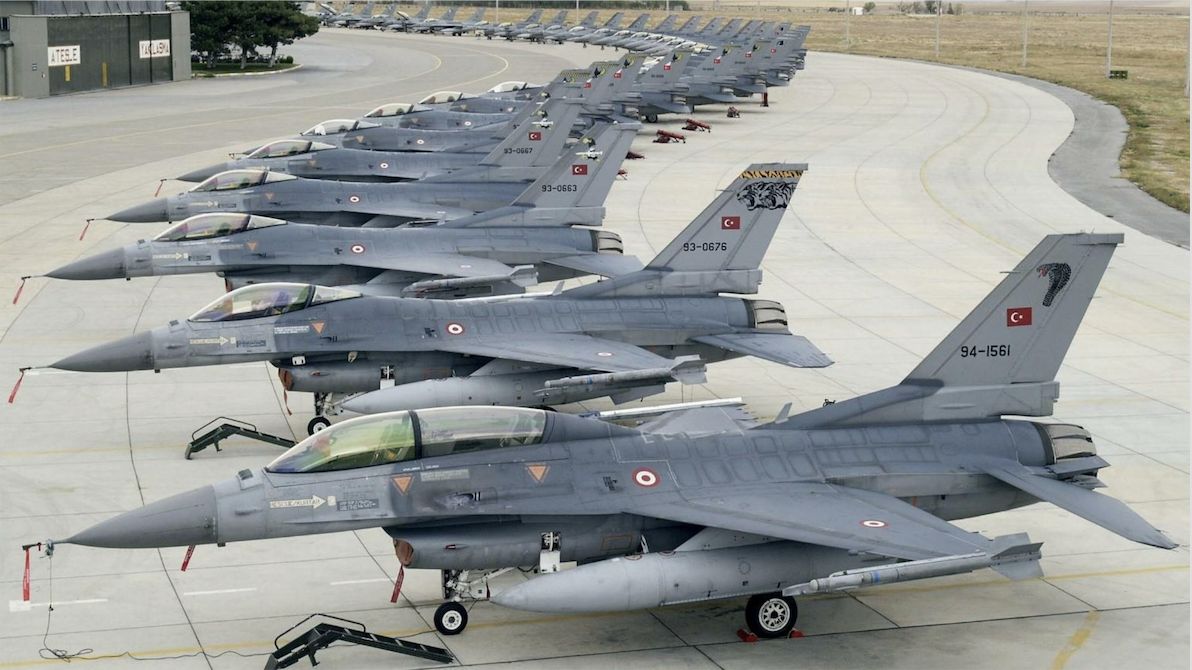
Due to the cost effectiveness of Russia’s defence sector, the new high end fighter is being marketed for export at a significantly lower price than the ageing F-16s - with China’s People’s Liberation Army purchasing two dozen of the heavyweight jets for approximately $83 million each. This sum included costs of training, armaments, spare parts, technology transfers and maintenance infrastructure. With Turkey reportedly planning to acquire the jets on a considerably larger scale, it is likely that the price per unit will be considerably lower. American F-16 fighters set to be delivered to Taiwan, despite the larger size of the order and the aircraft’s considerable age and inferior capabilities across the spectrum to the Su-35, cost over $120 million per unit. F-16 airframes today closely resemble those of the Cold War with a near identical engine performance and radar cross section - but have integrated avionics and sensor upgrades. Officials from a number of countries including the United States and Singapore have noted that the F-16 is fast approaching obsolescence.
