
Turkey and Russia to Begin Discussions for Joint Production of S-500 Missile System - President Erdogan
Military Watch Magazine Editorial Staff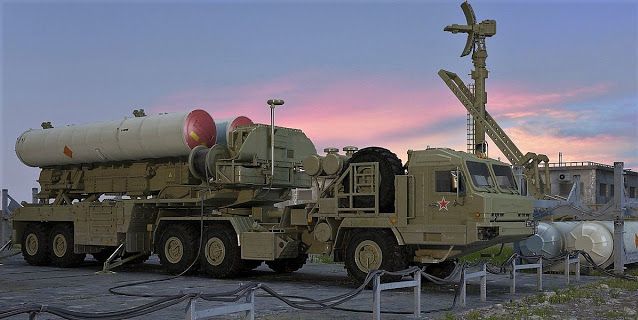
S-500 Air Defence System with Hypersonic Long Range Missiles - concept art
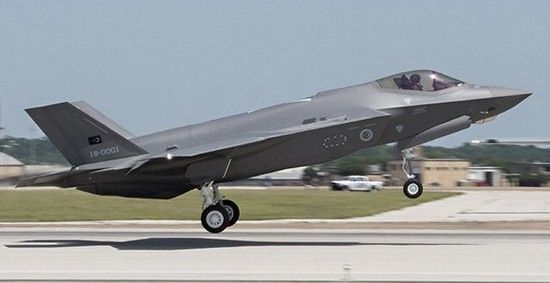
Following mounting Western pressure on Ankara to abandon contracts to acquire the Russian S-400 long range surface to air missile system from defence manufacturer Almaz Antey, Turkish President Recep Tayyip Erdogan reiterated that his country would not abandon the deal despite potential U.S. and European economic sanctions. The President further stated that the Turkey would move to begin discussions on the acquisition of the next generation S-500 air defence system - a complementary longer ranged platform which began low level initial production in Russia in March 2019. “The S-400 deal is completed, the deliveries are to begin in July or, maybe, even earlier. Russia has offered us very good conditions. After that, we will talk about the S-500, including joint production, as well as S-400,” he announced in a televised meeting. Regarding American threats to block the sale of F-35 stealth fighters to Turkey in response to acquisitions of high end Russian weaponry, President Erdogan stated: “They (U.S.) are passing the ball around in the midfield now, showing some reluctance. But sooner or later, we will receive the F-35s. (The U.S.) not delivering them is not an option.” He made these claims on the basis that Turkish defence producers were responsible for manufacturing key components for the fighter, and Turkish expulsion from the program could have repercussions for the F-35 program globally. With the first F-35 fighters already delivered to the country, and training for Turkish F-35 pilots ongoing in the United States, the seriousness of American threats remains in question. The potential for economic sanctions under the Countering American Adversaries Through Sanctions Act (CAATSA) and full termination of Turkish membership of the F-35 program has repeatedly been raised as a consequence should Turkey fail to acquiesce to Western demands to abandon the S-400 for an American or European system.
President Erdogan first raised the possibility of an S-500 acquisition in late 2017, and while this was first suspected to be empty conjecture the country took steps to officially acquire the system in June 2018 with the President stating at the time: “I have contacted President Putin with a proposal about the joint production of the S-500… During the second and third stages (of acquisition) we will proceed to the joint production of the S-500 systems.” Turkey’s Anadolu news agency reported in early May 2019 that Sergey Chemezov, head of the Russian defence export corporation Rostec, had announced his country’s willingness to admit Turkey into the S-500 program as a co-developer. The S-500 is expected to deploy a number of hypersonic munitions for interception at extreme ranges including in near space - and is designed to neutralise enemy satellites, ballistic missiles and high value aircraft such as AWACS and aerial tankers. A prototype set a record for surface to air interception range two months later in May, and the patlfrom is expected to have a 600km engagement range. Much of the S-500’s role including whether it is capable of low level interceptions, whether it will integrate the 40N6 hypersonic missiles from the S-400 and whether it will retain a significant capability against enemy stealth fighters and bombers, remains uncertain. The missile system is thought to be able to intercept enemy space planes travelling at hypersonic speeds such as the SR-72 Blackbird currently under development. Whether Turkey will go ahead with joint development of the system and become its first export client, and when the platform will be made available for sale to traditional Russian defence clients such as China, India and Algeria, remains to be seen. It is likely that Turkey will seek out complementary shorter ranged air defence platforms such as the S-350 and Pantsir-SM to strengthen the capabilities of the S-400 and S-500, the both platforms designed to operate as part of a wider network.
