
More S-400s Continue to Joint Russian Military: Third Full Missile Regiment of 2020 Delivered Ahead of Schedule
Military Watch Magazine Editorial Staff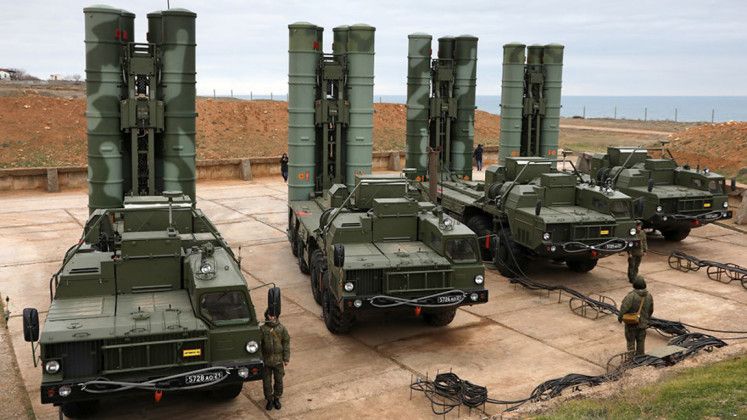
S-400 Missile Batteries
The Russian Military has received its third regiment of S-400 surface to air missile systems since the beginning of 2020, with the delivery made ahead of schedule by the Almaz Antey Air and Space Defense Corporation to meet outstanding orders. The Defence Ministry stated regarding the delivery: “"Within the framework of its obligations under the state defence contract, the Almaz Antey Air and Space Defense Corporation JSC handed over another (the third in year 2020) regiment set of the S-400 missile air defence systems to the Ministry of Defense ahead of time.” The S-400 is currently in mass production both for the Russian Military and for export, with Turkey and India having ordered one and five full battalions respectively, and other parties including Iraq, Iran and Saudi Arabia showing a strong interest in the system. The system is considered one of the most cost effective air defence assets in production in Russia, with each capable of engaging up to 80 enemy aircraft simultaneously but being produced a similar cost to around a dozen Su-35 fighter jets.
The S-400’s operational costs are notably far lower than those of combat aircraft, and the threat they can pose to advanced enemy stealth fighters is in many ways greater than that of Russian ‘4++ generation’ combat jets which has made them a priority investment to create a robust air defence capability. The system has continued to be modernised and to integrate new technologies since entering service in 2007, including recent integration of the 40N6E surface to air missile which better optimises the S-400 to intercept hypersonic targets and extents its engagement range to 400km. The S-400 is set to be joined in frontline service by the newer S-500 system by the end of 2021, with the higher end platform designed to neutralise higher value targets such as satellites, AEW aircraft and strategic missiles and retaining an engagement range of 600km. The ability of the two systems to closely integrate and share targeting data is expected to improve the S-400’s performance considerably due to its access to data from the S-500’s own sensor suite. A further complementary system to the S-400, the shorter ranged S-350 system, entered service in 2019 and has been designed primarily to protect its larger counterparts from saturation attacks.
