
Red Flag Air-to-Air Combat Exercises Test British Eurofighters Against U.S. and Australian F-35s
Military Watch Magazine Editorial Staff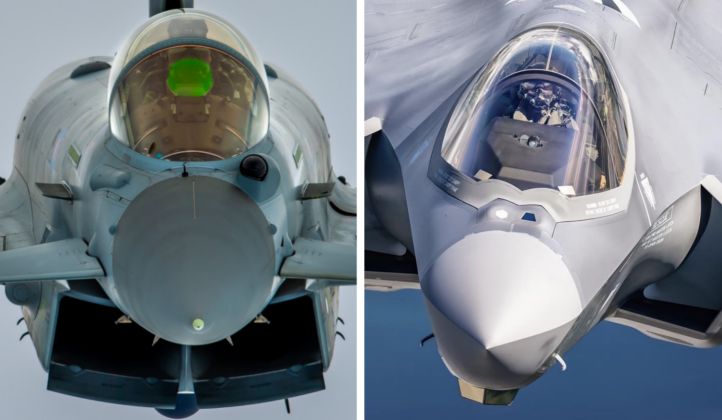
Eurofighter (left) and F-35 Fighters
British Royal Air Force Eurofighters and Royal Australian Air Force F-35A fifth generation fighters are currently participating in Exercise Red Flag 26-1, joining the U.S. Air Force at Nellis Air Force Base, Nevada, in what is widely considered by analysts to be one of the most demanding air combat training events in the world. Exercises involve approximately 3,000 personnel from 32 units, and include smaller contributions from the U.S. Space Force, Marine Corps, and Navy. Red Flag has placed a particular emphasis on simulated air-to-air engagements, the results of which have often provided a significant indicator of the relative capabilities of new types of aircraft and their subsystems. The F-35 fifth generation fighter’s first demonstration of its combat potential during the exercises in 2017, for example, highlighted its overwhelming advantages over older fighter types, and reportedly resulted in a 15-1 kill ratio in its favour.
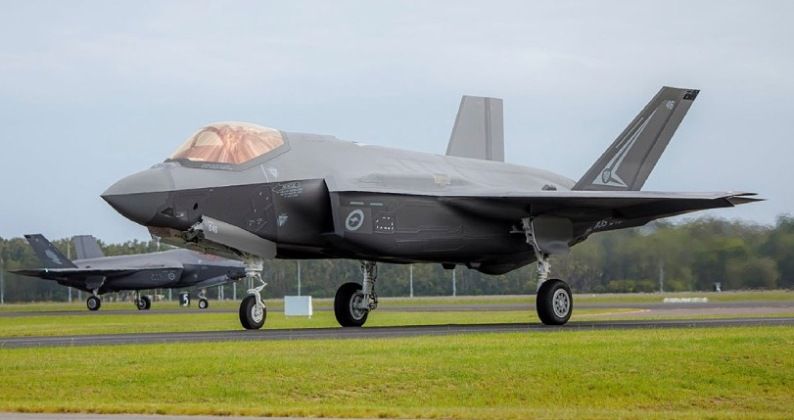
British Royal Air Force reports indicate that the scale of the exercises are intended to build operational experience, while reinforcing cooperation between the three participating countries’ services. Twelve Eurofighters were deployed from RAF Coningsby and RAF Lossiemouth, supported by a Voyager tanker, an A400M transport aircraft, and an RC-135 Rivet Joint intelligence aircraft. The Royal Australian Air Force meanwhile deployed six F-35A fighters and an E-7A Wedgetail AEW&C system. Wing Commander Matthew Deveson, who is leading the Australian contingent, reported regarding the importance of the exercises: “These exercises provide a highly realistic training environment where we can integrate different capabilities and strengthen our ability to operate with key allies and partners.” “The RAAF’s F-35A Lightning remains at the cutting edge of air combat technology as a highly advanced, multi-role, supersonic stealth fighter, and our E-7A Wedgetail is one of the world’s premier airborne battle management platforms,” he added.
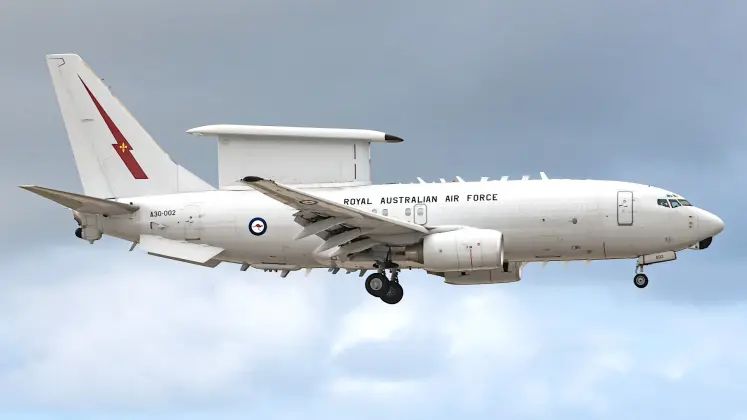
Australia’s E-7A is expected to provide its F-35s with a distinct advantage in a wide range of combat scenarios, with neither the United States nor the United Kingdom fielding a similarly capability AEW&C system. The British Royal Air Force is expected to begin fielding the E-7 within a year, but lacks a comparably capable fighter to the -35A, while Pentagon has sought to cut planned procurements of the E-7 as a cost reducing measure despite congressional objections. The aircraft combines an advanced Multi-Role Electronically Scanned Array radar with mission crew consoles and integrated voice and data communications, allowing it to coordinate joint operations while significantly boosting situational awareness for friendly networks. The obsolescence of the U.S. Air Force’s E-3 AEW&Cs in the Pacific, which were found to be wholly insufficient to counter Chinese fifth generation fighter operations, was a primary factor stimulating initial interest in the E-7.
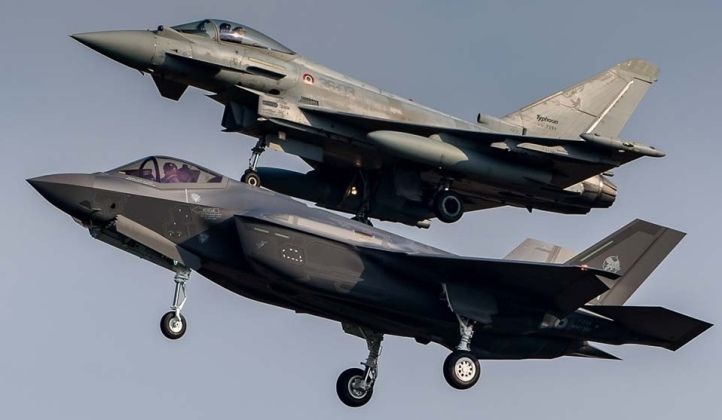
While it is expected that the F-35A will play a central role in U.S. Air Force participation in Red Flag, as it has in preceding years, the exercises are expected to further highlight the poor state of the British fighter fleet, which relies on Eurofighters with mechanically scanned array radars that are considered well over a decade past obsolescence. In January 2026 it was revealed that the British Ministry of Defence is financing the procurement of urgently needed new radars for just 40 of the Eurofighters in its fleet, which is in line with broader trends towards the aircraft’s deprioritisation. The Ministry in 2025 confirmed that there were no plans purchase further Eurofighters, with the Air Force set to continue to withdraw them from service while ordering F-35A fighters, the first of which will arrive in the early 2030s. When faced with the F-35’s cutting edge stealth capabilities and electronic warfare systems, the Eurofighter’s Captor radar’s weakness and vulnerability to jamming are expected to be exposed.
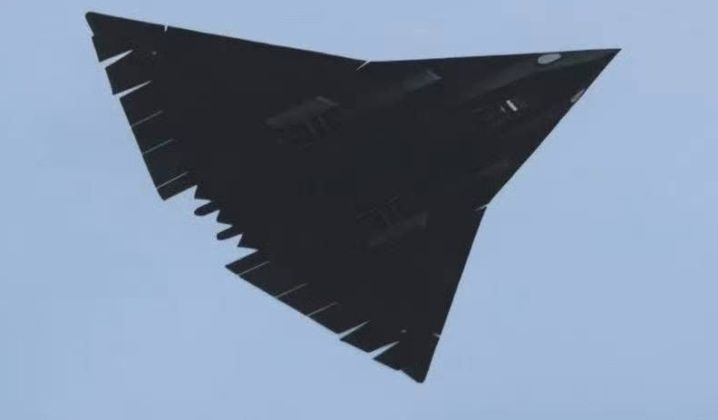
As China and the United States are poised to begin fielding sixth generation fighters in the early and mid 2030s respectively, it is likely that continued reliance on ‘4+ generation’ fighters like the Eurofighter will not be seen as viable, and that acquiring fifth generation fighters, particularly ones with potential to be upgraded to a ‘5+ generation’ standards, will be seen as a minimum requirement for major air forces. Red Flag exercises may explore ways to compensate for the Eurofighter’s disadvantages by pairing them with other fighters, potentially using data from the Australian E-7 or from F-35A fighters, or other fighter types with modern sensors, to maintain higher degrees of situational awareness and thus carry out more effective targeting. This could provide valuable information for the British Royal Air Force as it prepares to bring both the E-7 and the F-35A into service. With Red Flag focused on preparing for leading edge threats, the rapid growth and enhancement of the Chinese fifth generation fleet, the slower but still significant growth of the Russian Su-57 fleet, and signs of the beginning of the Su-57’s proliferation, are expected to be factors influencing the kinds of training planned.
