
Korean K2 Black Panthers in Warsaw: Poland Could Soon Field the World’s Most Capable Battle Tanks Under $9 Billion Deal
Military Watch Magazine Editorial Staff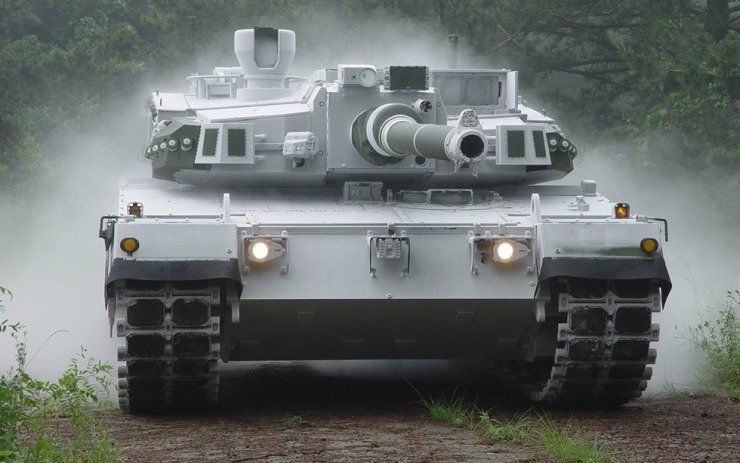
South Korean K2 Black Panther Battle Tank
South Korea’s Hyundai Rotem is reportedly favoured to win a contract to provide Poland’s ground forces with new battle tanks under a $9 billion deal. The deal would see Poland acquire 800 K2 Black Panther main battle tanks, which would be jointly manufactured, and would provide Poland with arguably the most capable armour in Europe. The K2 is widely considered the world’s most capable battle tank, and is one of just three fourth generation tanks in service alongside the Japanese Type 10 and the Russian T-14. The K2 is the only one of these to have been placed under mass production and marketed for export. Turkey has already begun manufacturing the K2 domestically under licence as the Atlay tank, and is reportedly planning to build up to 1000 of these, while a desert warfare variant of the K2 is also a leading contender to provide Oman with a new generation of frontline armour.
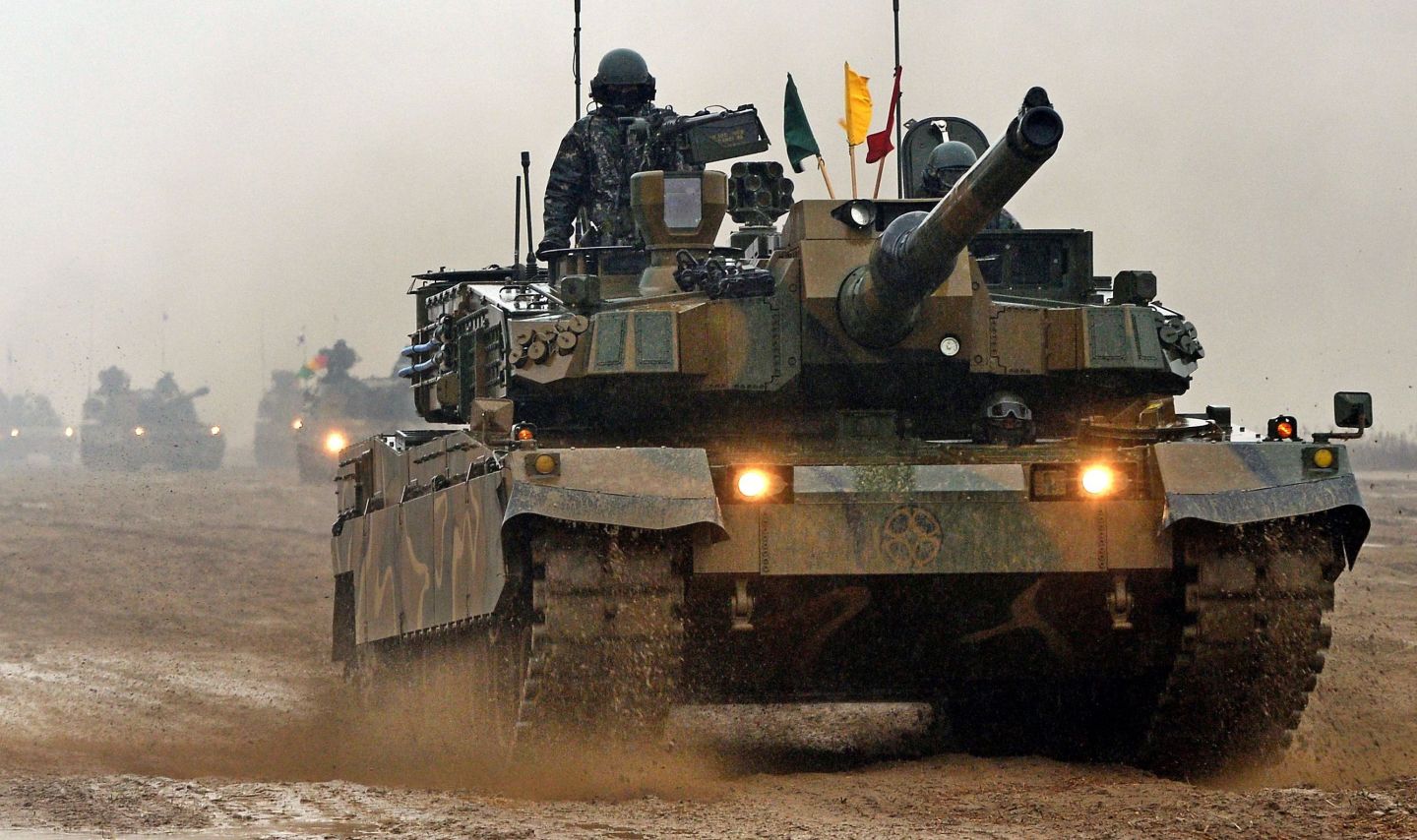
The K2 will be expected to face off against frontline Russian and possibly Belarusian armour, and retains a number of considerable advantages over the T-72, T-80 and T-90 tanks which form the bulk of these units. Newer Russian tanks such as the T-90M and T-80BVM can potentially threaten the K2, but the Korean tank retains a number of important advantages. The Black Panther benefits from a combination of advanced composite armour, explosive reactive armour and non-explosive reactive armour, and maintains excellent situational awareness with its fire control system linked to a high frequency radar deployed on the frontal arc of the turret. This complements its crosswind sensors and laser rangefinders. A thermographic camera with a 'lock on' mode further allows the tank to track specific targets at ranges of up to 9.8km. A millimetre band radar system capable of operating as a Missile Approach Warning System, which alongside the K2 computer's ability to triangulate incoming projectiles and fire visual and infrared screening smoke grenades can block the tank’s visual and infrared signatures.
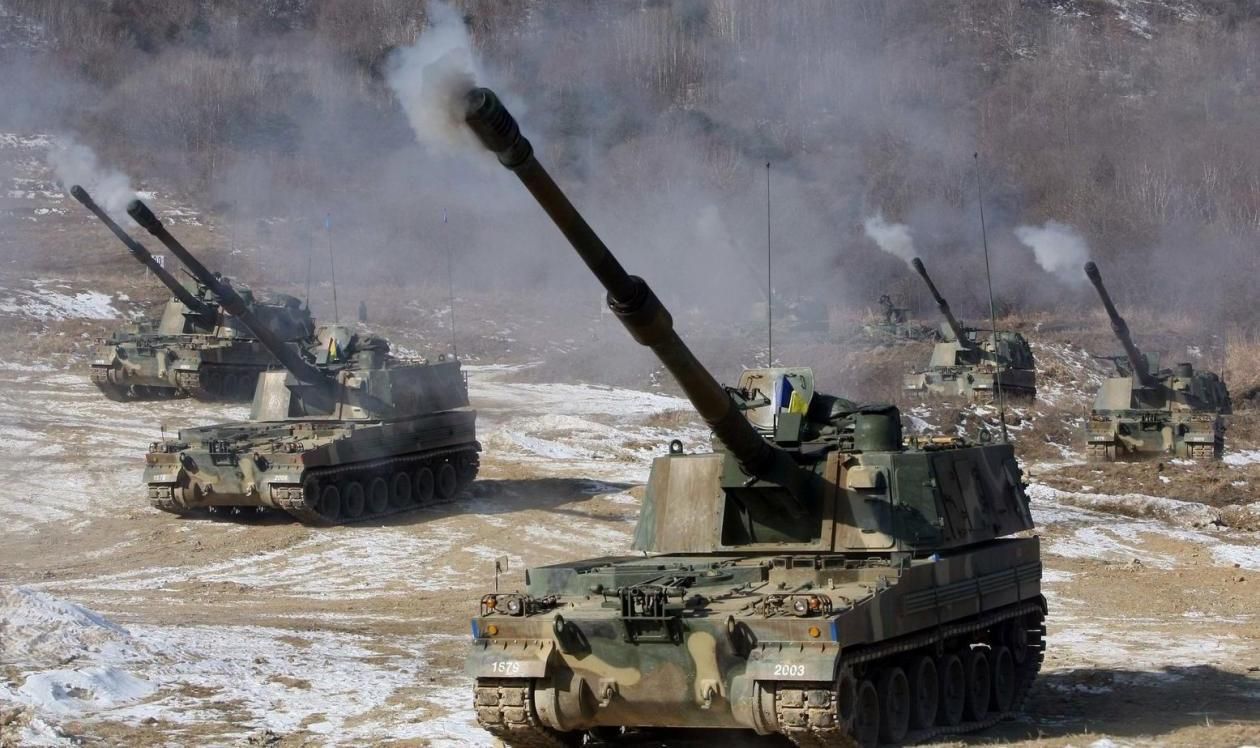
The K2 is also capable of operating as an artillery piece and engaging targets at extreme ranges, and benefit from impressive speed and firepower with the ability to fire 120mm rounds while cruising at 70 kilometres an hour. Poland has also shown interest in South Korean K99 howitzers, which are also widely considered the most capable in the world. These howitzers are the only design currently in production potentially capable of matching the Russian Koalitsiya-SV - the only other contester for the title of the world’s foremost mobile artillery gun. While the K2 is costly, it remains highly cost effective and is cheaper than less sophisticated and older European designs such as the French Leclerc and British Challenger 2, while retaining very considerable performance advantages. It remains to be seen whether political pressure will play a major role in Warsaw’s decision making process, which could influence it towards acquiring a European design, or whether the need to counter increasingly sophisticated Russian armour will incline it towards purchasing the more capable Korean tanks.
