
Iranian Media Boast of New Kowsar Fighter’s Capabilities as Air Force Receives Additional Units
Military Watch Magazine Editorial Staff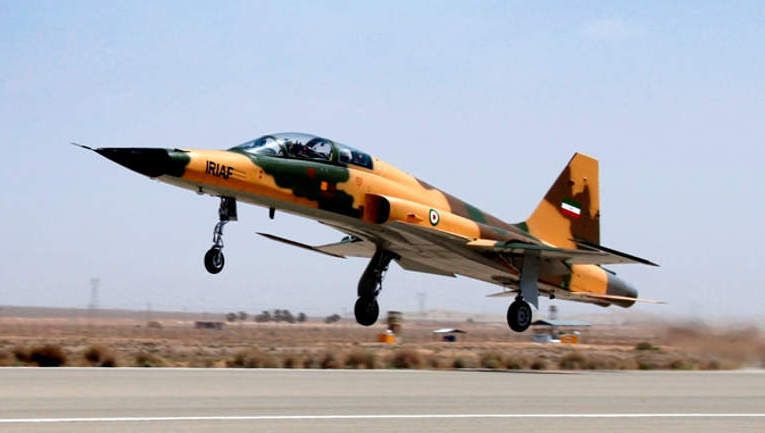
Iranian Kowsar Lightweight Fighter
Following its unveiling in 2018 and its entry into serial production the following year, Iranian media reported on June 25th that the country’s air force commissioned three new Koswar lightweight multirole fighters. The Iranian press has since repeatedly reported on the jet as a sign of growing technological progress and self reliance in defence, with military officials stressing this point at the aircraft’s acceptance ceremony. The fighter is a lightweight fourth generation aircraft comparable to the American F-20 Tigershark introduced in the mid-1970s, and like the Tigersshark it is heavily derived from the F-5E Tiger II third generation jet. Iran was one of the largest clients for the F-5E during the 1970s, selling the bulk of its older second generation F-5s on to South Vietnam and purchasing the lightweight jets to complement its heavier F-4E Phantoms. The Kowsar represents an extensive modernisation of the design with fourth generation avionics, electronic warfare systems and precision guided air to ground munitions. Its air to air capabilities remain questionable however, with Iran lacking a modern active radar guided air to air missile class suitable for the aircraft.
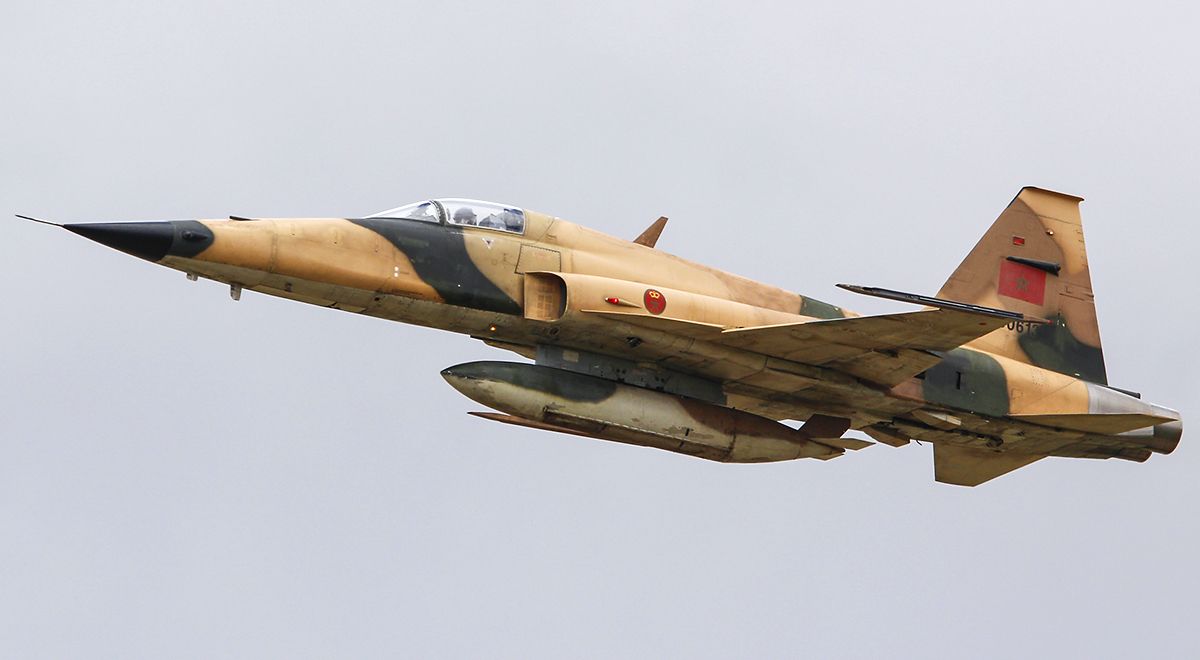
The F-5E remains a popular design today and has been heavily modernised by a number of operators - most notably Thailand, Singapore and Taiwan which have all equipped them with active radar guided long range air to air missiles. Indeed, the Thai Air Force considers its new F-5E variants to be ‘4+ generation’ fighters and has integrated AESA radars for vastly improved situational awareness. Although the Kowsar is a separate derivative of the F-5E rather than a modified variant of the design, with a new airframe and engines, its capabilities particularly in air to air combat are thought to be inferior to those of the enhanced East Asian F-5E variants. This could change should Iran develop superior missiles for the fighter, which could potentially also be used to modernise its F-4E and F-5E fleets that are also lacking in air to air capabilities. Iran is reportedly planning to acquire new fighter classes from abroad, with leading contenders being the Chinese J-10C and Russian MiG-35 ‘4++ generation’ platforms. Acquisition of a heavier fighter class such as the Su-30SM or Su-57 also remains a considerably possibility, despite the cost, due to their higher endurance and their ability to challenge enemy aircraft such as Saudi and Israeli F-15 jets on a peer level. The Kowsar is expected to provide a lighter complement to the foreign jets, and could be enhanced with technology transfers from China and Russia acquired under a potential future contract.
