
Iranian Drone Strike Destroys Key U.S. Air Defence Radar in Saudi Arabia
Military Watch Magazine Editorial Staff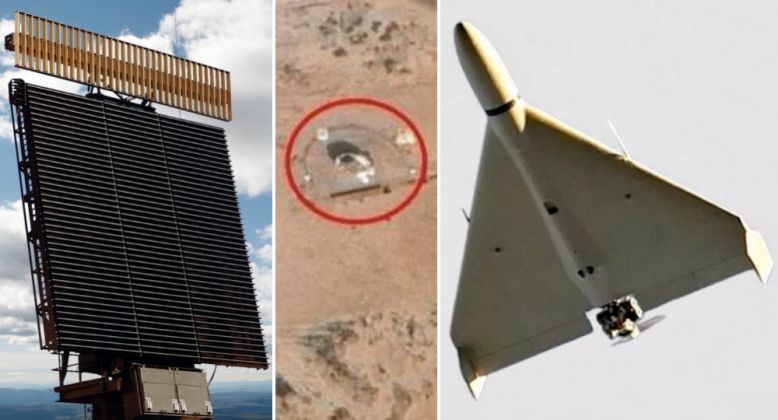
AN/FPS-117 Radar, Destroyed Radar in Saudi Arabia, and Shahed 136
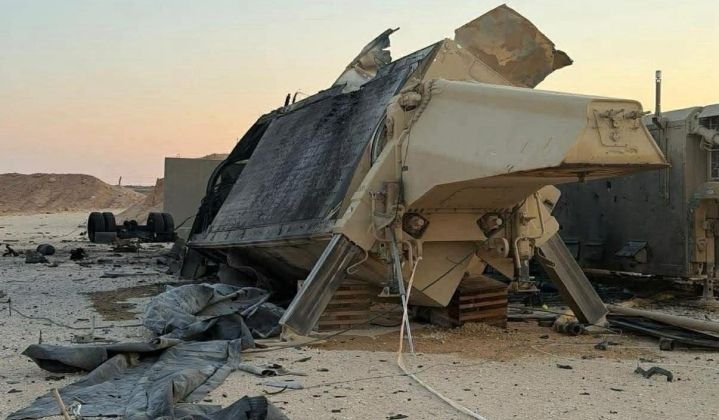
The Iranian Islamic Revolutionary Guard Corps has launched a successful strike using single use attack drones to destroy an AN/FPS-117 air defence radar near Al-Qaisum airport in Saudi Arabia. The $20 million radar has a 460 kilometre detection range, with its targeting representing part of broader efforts by Iranian forces to single out the U.S. and its strategic partners’ radar networks to limit their situational awareness and their air defence capabilities. Following the U.S. and Israel’s initiation of a large scale assault on Iran on February 28, the Revolutionary Guard quickly achieved the destruction of $2.7 billion worth of high value radar systems, including the sole AN/FPS-132 radar based outside the U.S., which was located in Qatar, and two AN/TPY-2 radars in Jordan and the United Arab Emirates. Multiple lower value radars have also been destroyed at facilities across the region.
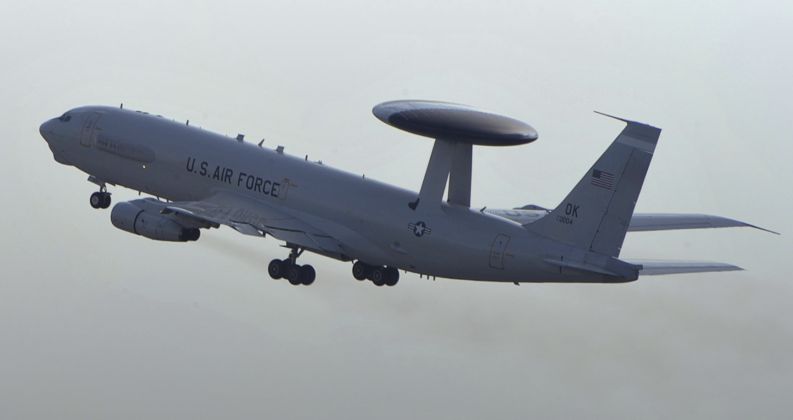
Responding to the destruction of the ground-based radar network, the U.S. Air Force surged the operational tempo of E-3 Sentry airborne early warning and control systems (AWACS) over the Middle East, with the aircraft reportedly flying in unprecedented density over Jordan, northern Saudi Arabia, southern Iraq, and the eastern Mediterranean. These operations are intended to provide a persistent detection capability against Iranian drones and missiles being fired at targets in Jordan and Israel. The U.S. Air Force deployed the bulk of its global operational E-3 fleet to the Middle East and Europe preceding the initiation of attacks against Iran, with the AWACS carrying the largest airborne radars in the world, and being relied on to control the tactical battlespace using data links to increase the situational awareness of U.S. and allied air defence networks.
The U.S. has further responded to the destruction of ground-based radars by withdrawing air defence systems and their radars, from across the world, including from strategically critical forward positions in South Korea, for redeployment to the Middle East. This has had significant long term implications for the U.S. force posture in East Asia and for the state of its alliances in the region. Iranian drone strikes have achieved growing successes destroying high value targets at military facilities across the Middle East, with a number of Western sources alleging that the Revolutionary Guard Corps has received targeting support from Russia using its satellite network. Iran has also built up an arsenal of higher value ballistic missile types, most notably the Fattah 2 which has demonstrated the capabilities of its advanced hypersonic glide vehicle to neutralise high value targets, with these being among the assets that have allowed it to deny the U.S. escalation dominance.
