
Introducing the New ‘F-16U’: South Korea’s AESA Radar Equipped Fighters Just Deployed for Exercises in Australia
Military Watch Magazine Editorial Staff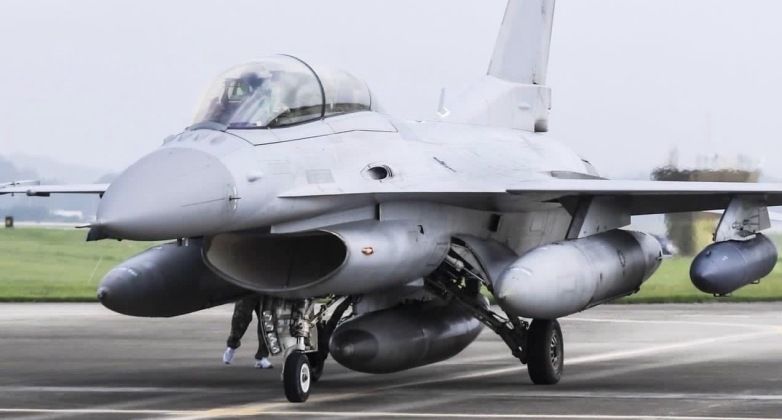
South Korean Air Force F-16U
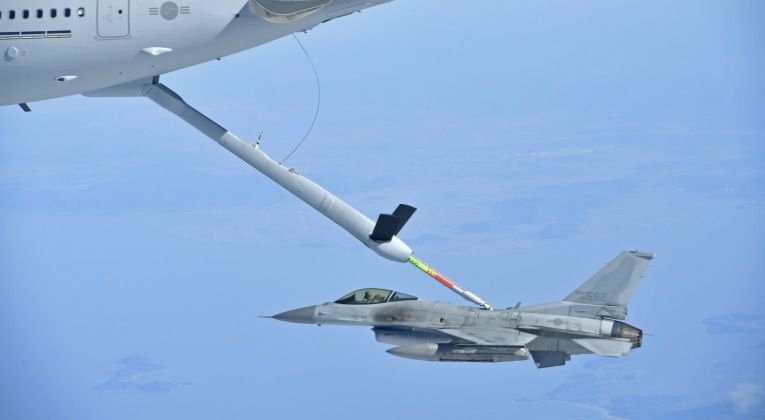
The South Korean Air Force, officially the Republic of Korea Air Force, has deployed newly modernised F-16U fighters to Australia to participate in Exercise Pitch Black 2022 alongside contingents from Australia, France, Germany, Indonesia, India, Singapore, Japan, Britain, the Philippines, Thailand, the United Arab Emirates, Canada, Netherlands, Malaysia, New Zealand and the U.S. The live fly exercise aims to “enhance regional security through multinational interoperability and understanding,” according to an Australian Air Force statement, highlighting that “activities such as Exercise Pitch Black recognise Australia’s strong relationships and the high value we place on regional security and fostering closer ties throughout the Indo-Pacific region.” The F-16s were accompanied by a KC-330 multirole tanker transport and approximately 130 military personnel, with their deployment coming as a new administration in Seoul moves to strengthen ties with Western Bloc states and take a less neutral position in the escalating conflict between China and the Western world.
The F-16U is a Korean version of the F-16V - a designation for the F-16 that has been modernised with fifth generation level avionics including a new mission computer, entirely new cockpit displays and a new electronic warfare suite. Most significantly, the F-16's obsolete mechanically scanned array radar has been replaced with the AN/APG-83 active electronically scanned array (AESA) radar, which provides compatibility with a range of new weapons classes. When South Korea first acquired F-16s in the 1980s, they were considered outmatched by the Soviet-supplied MiG-29A jets fielded by North Korea, which had been developed specifically with countering Falcons in mind, and could not boast a definite advantage over the north’s newly delivered MiG-23s. Stagnation in the modernisation of the North Korean fleet, with the Soviet collapse and subsequent imposition of UN sanctions cutting off access to new aircraft or upgrade packages, has allowed the F-16 to gradually gain an advantage over the north’s top fighter classes which has become overwhelming with the new F-16U upgrade package.
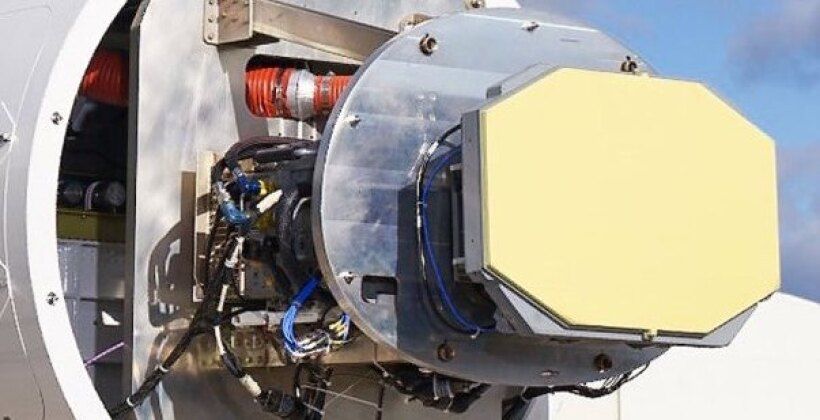
South Korea license produced over 100 F-16s domestically and is one of the largest foreign operators with eight squadrons and an estimated 162 fighters in service, making it the country’s second most widely used fighter class after the F-5E/F from the preceding third generation. Although older F-16s are expected to begin to be phased out of service in the late 2020s or early 2030s in favour of fifth generation KF-21 stealth fighters, newer F-16s are expected to remain in service into the 2040s which makes the F-16U upgrade package particularly critical to prevent squadrons from becoming obsolete. The AN/APG-83 in particular provides a tremendous improvement to situational awareness and electronic warfare capabilities, which could be particularly valuable if encountering North Korea’s new generations of air defence systems which have increasingly shouldered the burden of protecting the country’s airspace as its fighter fleet has aged. With South Korean airfields left increasingly vulnerable to strikes by the north's growing arsenal of rocket artillery systems and tactical ballistic missiles, the F-16's low maintenance needs compared to other fighter classes such as the F-15, F-35 and KF-21 could make it particularly valuable in the case of an inter-Korean conflict.
