
North Korean MiG-23 vs. South Korean F-16: Which Single Engine Jet Would Dominate in a New Korean War?
Military Watch Magazine Editorial Staff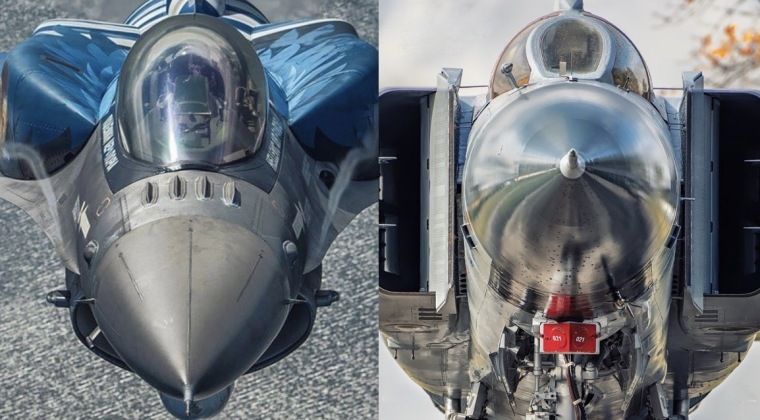
F-16 (left) and MiG-23 Single Engine Fighters
The armed forces of both North and South Korea have long been overwhelmingly defensively oriented with the goal of preparing for a potential outbreak of a new war on the Korean Peninsula. During the Cold War the air forces of both countries fielded some of the most capable fighter jets available from the Soviet Union and the Untied States, although since then North Korea has increasingly been forced to rely on modernising older aircraft rather than acquiring new ones while South Korea has somewhat reduced its reliance on foreign made aircraft in favour of indigenous jets. With the elite of the two countries' aerial warfare capabilities are comprised of F-15K twin engine heavy fighters on the South Korean side and MiG-29 medium fighters in the north, these platforms are fielded in small numbers relative to their lighter, older and less sophisticated single engine counterparts. The bulk of the South Korean fleet is comprised of F-16C Fighting Falcon while the northern fleet relies heavily on the older MiG-23 Flogger, both of which are single engine multirole designs with similar weights and engine power. A comparison of the capabilities of these fighters, both based on designs which first entered service the 1970s and both manufactured to approximately 5,000 airframes, gives invaluable insight into the potential outcome of an air war over the peninsula and the balance of power in the air between the two Koreas.
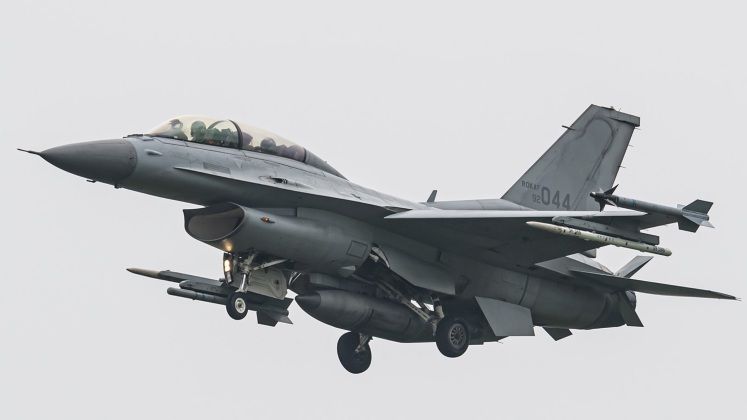
While the original F-16A Fighting Falcon and MiG-23 Flogger-A were somewhat unremarkable in their capabilities even by the standards of their time, both airframe types have been modernised considerably to allow them to remain viable on 21st century battlefields. Later variants of both fighters are considerably superior to the original platforms, incorporating enhanced beyond visual range capabilities, modernised electronic warfare systems, new radars and radar warning receivers and the ability to operate advanced air to air missiles - the American AIM-120C and Russian R-27 respectively. While some MiG-23s have been modified to deploy the Russian R-77, another long range missile which benefits from more modern active radar homing technologies than the R-27, there is currently no evidence that North Korean MiG-23s have integrated these missiles.
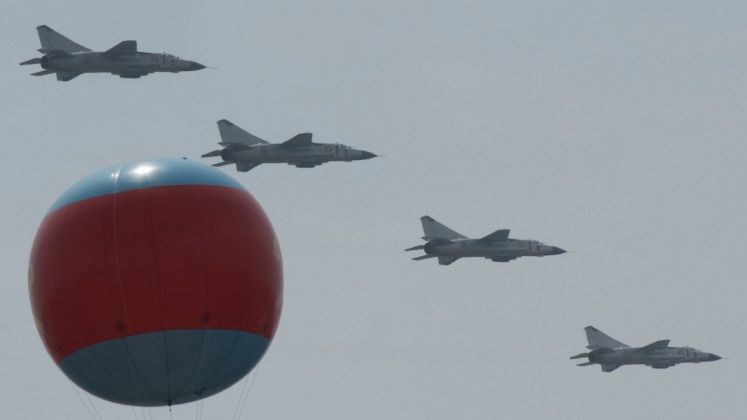
While Floggers and Fighting Falcons sold by both the USSR and the U.S. to a number of third world client states such as Iraq, Libya and Indonesia often left much to be desired in their capabilities, those reserved for sale to the Korean Peninsula, with both Pyongyang and Seoul being considered reliable defence partners, notably had capabilities far closer to those of the jets built for service in the Soviet and American fleets themselves. Although the MiG-23 gained a poor reputation for its performance in Syrian and Iraqi hands in various Middle Eastern wars, the fighter proved highly formidable when superior variants were flown by the Cuban Air Force against South African forces over Angola, and in Korean hands are expected to perform at least as well if not moreso. Comparing the MiG's performance with the F-16, the former retains a combat radius of 600km and the latter of 550km, comfortably giving both coverage over much of the Korean Peninsula. Both the MiG-23's Khatchaturov R-35-300 turbojet and the F-16C's General Electric F110 turbofan give 127 kN of thrust, although the MiG-23 is approximately 17 percent heavier meaning the American built jet retains a superior thrust/weight ratio. The MiG's Flogger's maximum G load of 8.5 compared to the Falcon's 9 also allows the F-16's airframe to pull slightly more extreme manoeuvres. The MiG-23's variable swept wings, although troublesome for their intensive maintenance, allow the fighter to pull more extreme turns which is particularly useful in close quarter fighting.
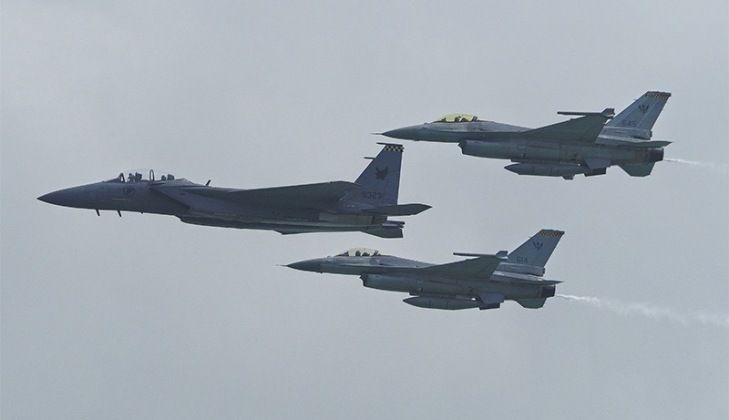
Looking to other aspects of flight performance, the MiG-23 appears to retain several advantages over the F-16 to supplement its longer range and superior turn rate. The Flogger can operate at a high altitude of 18.5km, which provides a considerable advantage over the F-16C which has an altitude limit of approximately 15.5km. As the fastest single engine fighter ever operated, the MiG-23 also has an advantage in speed and can reach Mach 2.35, where the Fighting Falcon is relegated to flying at Mach 2 or less. Where the F-16 remains at a disadvantage in terms of flight performance, it heavily compensates in other fields. While the fighters were close to par when the Cold War ended, North Korea has not had open access to the latest Russian technologies to upgrade its MiG-23 allowing South Korean F-16s to benefit from greater sophistication in their electronic warfare countermeasures, sensors and guided weapons. One of the most notable advantages the F-16 retains is access to the AIM-120C air to air missile, which has advanced 'fire and forget' capabilities and a 105km range. Although some reports indicate North Korea's MiG-23s have integrated older variants of the R-27 missile which have heavier warheads, the AIM-120C's better guidance capabilities means the F-16 will retain a slight edge. Should Korean MiGs use the older R-24 missiles from the 1970s the F-16's advantage at longer ranges will be overwhelming.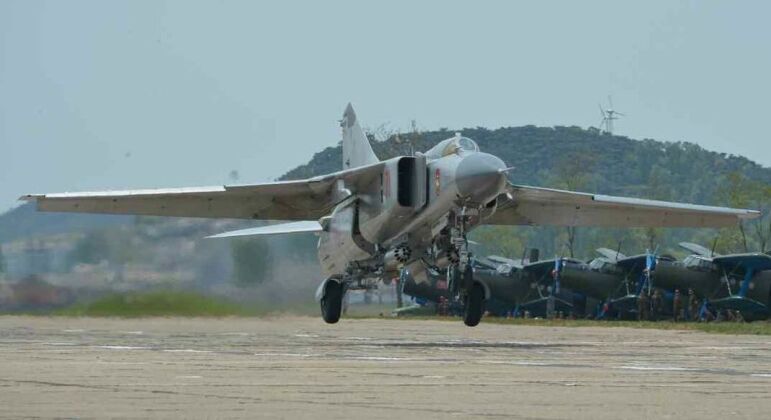
According to Soviet military reports from the 1980s, the armed forces were confident in the capabilities of its MiG-23 to counter the F-16 in the air although warned strongly against engaging the heavier and more capable F-15s which retained a significant advantage over any single engine fighter of its time. Proving the point, the Syrian Air Force reportedly successfully downed five Israeli F-16 fighters during clashes with the Israeli Air Force in June 1982 alone, despite operating less capable export variants of the Flogger at the time and taking heavy losses to the Israeli F-15 fleet. These kills were achieved despite the discrepancy in pilot quality favouring Israel. While upgraded variants of the MiG-23 retain a number of advantages over the Fighting Falcon, the F-16's simpler design and lack of complex variable swept wings make the jet easier to operate and train pilots on and allows the fighter to operate with less maintenance. In a potential war on the Korean Peninsula, where airfields are all potential targets for ballistic missile strikes, low maintenance requirements remain an invaluable asset. This disadvantage on the part of the Flogger is somewhat compensated for however by the jet's ability to operate from short and highly makeshift runways which the F-16 was never designed for.
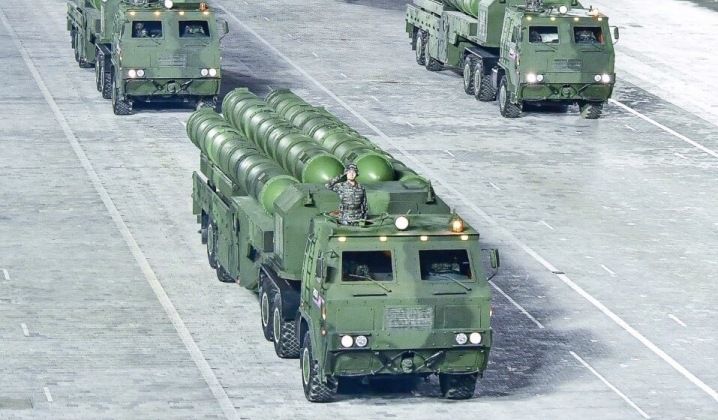
Ultimately the F-16 is likely to prevail in a potential clash primarily due to the fact that South Korean fighters have had much better access to the latest upgrades. The fact that South Korean air units are also far better equipped for network centric operations, meaning they will have much greater situational awareness and be better able to share data, is another significant advantage in their favour. This technological disadvantage, as well as a vast numerical one, is thought to be a key reason why North Korea has invested heavily in asymmetric means of challenging South Korean air superiority, including development of sophisticated ground based long range air defence systems to guard its airspace and hypersonic ballistic missiles to neutralise airbases across South Korea in a war's opening stages. With North Korea's economy expected to enjoy significant growth over the coming decade however, it is expected that the country would be eager to acquire more modern fighter aircraft in the coming years if it is able to somehow circumvent the United Nations arms embargo on it.
