
How Powerful Was the Iraqi Air Force When the Gulf War Started? Over 700 Combat Jets Strong But Still Underwhelming
Military Watch Magazine Editorial Staff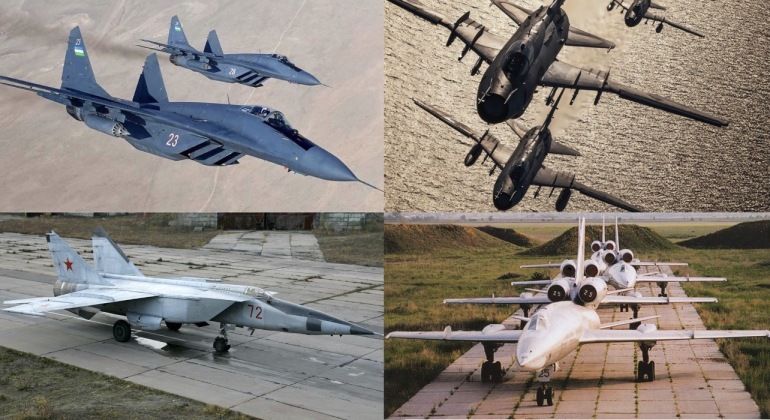
(clockwise from top left) MiG-29, Su-22, Tu-22 and MiG-25 Combat Jets
February 1991 marked a final end to the Persian Gulf War, which had begun six months prior with the Iraqi annexation of Kuwait and concluded with a U.S.-led military intervention to expel Iraqi forces and restore the Western-aligned Kuwaiti monarchy to power. The war's final weeks following a U.S.-led air offensive into Kuwait saw some of the largest scale aerial engagements of the jet era take place primarily over Kuwaiti and Iraqi skies, with clashes occurring with far greater frequency and intensity than prior conflicts such as the Vietnam War or subsequent ones such as the Yugoslav Wars. At the time the war began Iraq fielded one of the largest Air Forces in the world - one which had long been seen as a major threat by both neighbouring Iran and by Israel which had largely been built up with conflict with these countries in mind. The Iraqi Air Force had invested in acquiring its first fourth generation combat aircraft from 1988, the year the Iran-Iraq War ended, although older aircraft still comprised the large majority of its fleet by the time the Gulf War began. A look at the capabilities of the Iraqi Air Force before the war began, and the kinds of capabilities the U.S. and its allies were forced to contend with, is given below.
At the time the Gulf War began the Iraqi Air Force fielded 33 squadrons of fighters and interceptors, four squadrons of attack jets, two squadrons of bombers and a further squadron of combat capable reconnaissance jets - for a total of 40 squadrons of combat jets which few countries could match for size. While all combat jets in the Iraq Military were deployed under the Air Force, the service had no combat helicopters with these all being deployed under the Army. Although large, the Iraqi Air Force had a number of key weaknesses. Of the almost 700 combat jets it had in service, only around 55 could deploy modern air to air missiles with the range and performance needed to challenge American fourth generation fighters such as the F-18 or F-15 - these being the Soviet supplied MiG-25 interceptor and MiG-29 fighter.
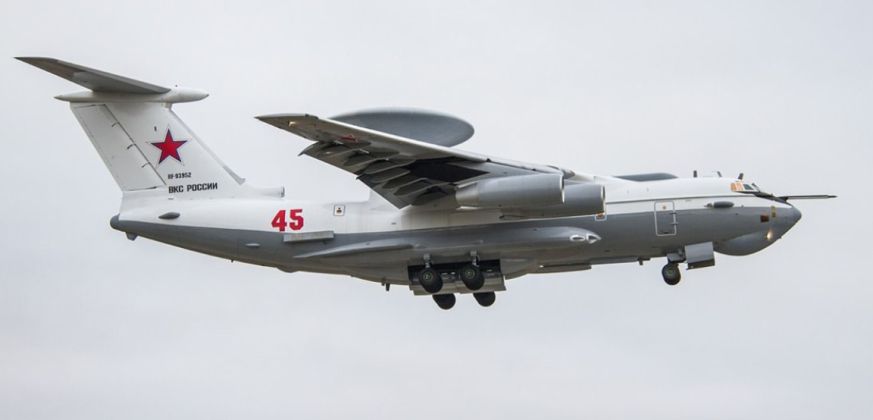
The very high cost of the MiG-25, and the fact that the MiG-29 was a very new aircraft which had only begun to be acquired from 1988, meant that these were not deployed in large enough numbers to form a significant portion of the Iraqi fleet and left the majority of the fleet effectively obsolete for high end air to air engagements. Iraq also suffered from a lack of airborne early warning and control (AEW&C) aircraft, which left it at a major disadvantage against the U.S. Air Force which deployed large numbers of E-2 and E-3 platforms. Such aircraft would be responsible for supporting over 95% of American air to air kills during the Gulf War, and provided American fighter units with a major situational awareness advantage while also making their air to air missile attacks much more accurate. Although the Soviet Union had developed a comparable aircraft to the American E-3, the A-50, Iraq had taken no steps to acquire these aircraft.
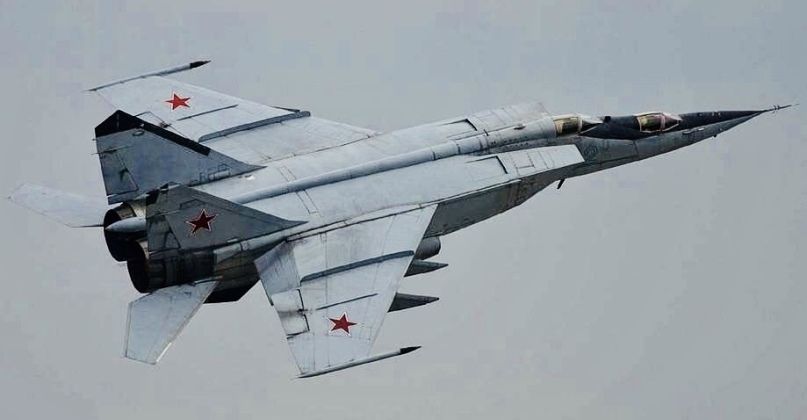
The Iraqi Air Force’s elite was comprised of 32 MiG-25 Foxbat heavyweight aircraft - although only 25 of these were configured for air to air combat with the other seven being reconnaissance variants. The Foxbat was by far the heaviest and most expensive aircraft built for air to air combat in the Iraqi fleet, and made up less than five percent of its composition. The MiG-25 was the most capable Soviet combat jet ever exported by measure of its performance against enemy aircraft, and remans the fastest combat aircraft ever to enter service anywhere in the world. Although heavily downgraded for export, the interceptors still boasted a powerful sensor suite and access to R-40 air to air missiles. These missiles had a long 80km range and carried massive 100kg warheads, and although seldom used during the Iran-Iraq War when Foxbats were primarily used for strike operations, they were used to good effect in the Gulf War. The Foxbat was prized for its very high survivability, as demonstrated both in the Iran-Iraq War and in the Gulf War as well as in prior conflicts in the hands of other operators, with even the most advanced Western anti-aircraft missiles struggling to target them due to their very high speeds and operational altitudes. Only two Foxbats were recorded lost in air to air combat during Gulf War, and the were responsible for the conflict's first kill against a U.S. Navy F-18 and later for an aerial victory against America's prime air superiority fighter the F-15C.
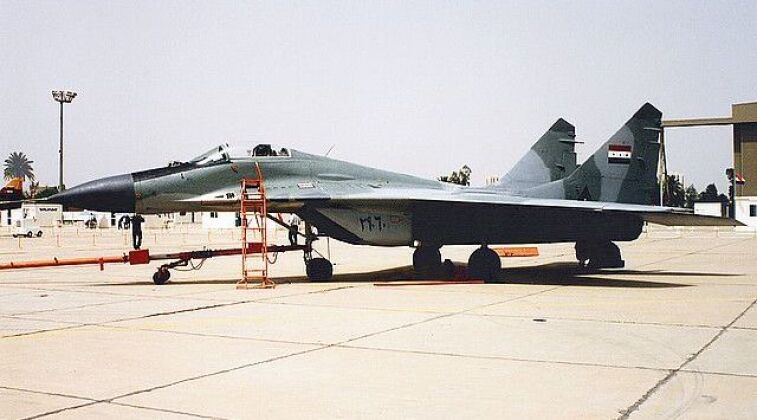
Alongside the MiG-25, the only other high end aircraft in Iraqi service was the MiG-29A of which the country fielded an estimated 30 airframes. The MiG-29 was a much lighter and cheaper aircraft than the MiG-25 and came from the medium weight range, but was unrivalled in many aspects of its flight performance and came equipped with a new generation of air to air missiles - the R-27. Although not as capable as the R-40 used by the Foxbat, the R-27 had the benefit of being small enough for regular sized aircraft to carry and had a similarly long range. Iraq’s failure to equip its MiG-29s with R-73 short ranged missile, which were deployed by Soviet and Warsaw Pact units, would prove costly during the Gulf War and would otherwise have provided a distinct advantage against Western aircraft at close range. The MiG-29 was prized for its powerful sensors and high manoeuvrability, and its relatively low maintenance requirements and operational costs combined with a low acquisition cost allowed it to potentially be deployed in very large numbers - much as the Soviet Union was doing at the time and as Iraq likely would have done had the Gulf War not ended further acquisitions.
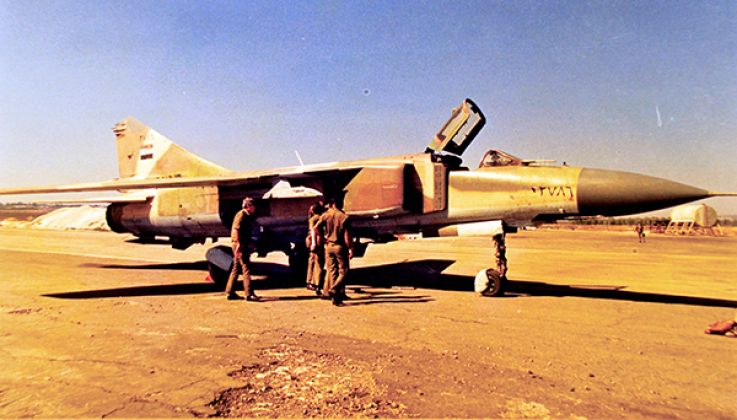
The bulk of the remainder of the Iraqi fleet was comprised of ageing and unspecialised third generation aircraft, including an estimated 90 MiG-23 and 95 French built Mirage F1 fighters neither of which were used particularly effectively in either the Iran-Iraq War or the Gulf War. Approximately 200 lighter MiG-21 and J-7 fighters, the latter being a Chinese derivative of the former, also formed much of the Iraqi fleet and between them made up nine squadrons. These smaller aircraft saw relatively little combat, with the heavier and more advanced MiG-23s and Mirages jets tasked with most operations. An older early second generation fighter design, the Chinese J-6, was also deployed in small numbers with around 30 in service - and these had reportedly seen extensive service against Iran where they were used for ground attacks.
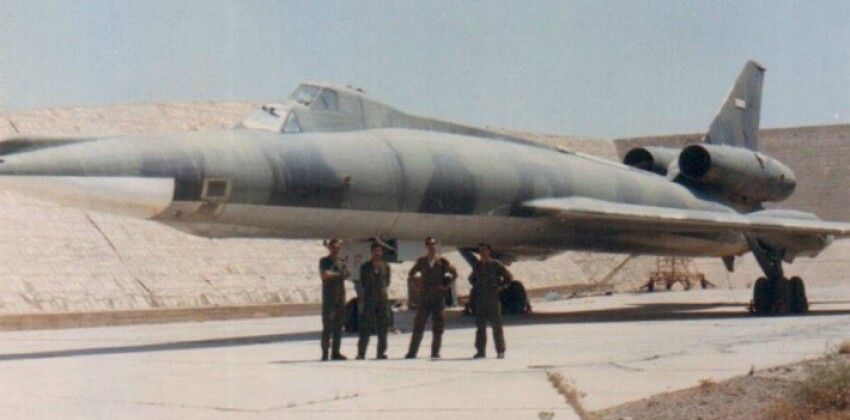
Iraq also deployed a formidable fleet of dedicated strike aircraft, which at the high end included 10 Tu-22 and 4 Tu-16 Soviet bombers as well as 4 Chinese H-6D bombers. It was the only country other than the Soviet Union to deploy both the Tu-22 and the Tu-16, and the only foreign client for the former other than the Libyan Air Force due to its very high cost. With all its bombers configured primarily to drop gravity bombs rather than use longer ranged standoff munitions, their usefulness was very limited both against Iran, which deployed F-14 fighters ideally suited to intercepting them, and during the Gulf War. Other strike aircraft included 30 effectively obsolete Su-7 jets, around 70 more modern Su-20 variable swept wing wing strike fighters (a variant from the Su-17 and Su-22 series) forming four separate squadrons, and a single elite squadron formed of 16 Su-24 strike fighters - the most capable Soviet aircraft of its kind yet to be developed. These strike assets were complemented by four squadrons of Su-25 attack jets - which were widely referred to as ‘flying tanks’ and are thought to have been purchased with large scale ground engagements with Iran in mind. Iraq’s failure to use its Air Force aggressively during the Gulf War, and its relegation to air defence duties, meant that its strike and ground attack assets saw little service
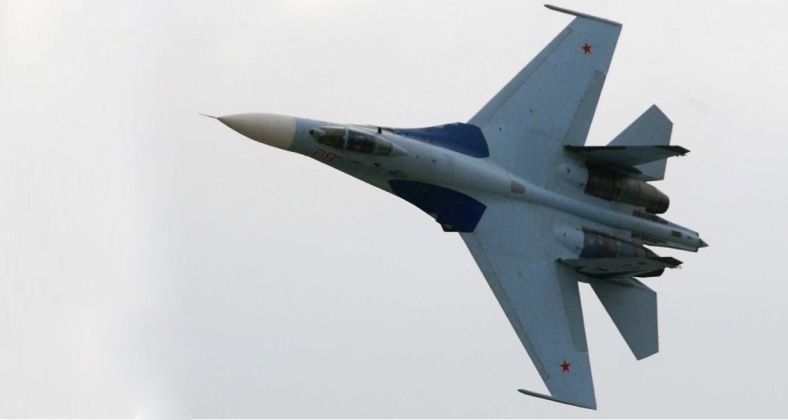
Ultimately while the Iraqi Air Force was large and formidable by regional standards, it lacked the capabilities needed to engage the U.S. Air Force on a peer level. The MiG-29 and MiG-25 squadrons which did see combat, however, often gave a good accounting of themselves and won a number of aerial victories despite their small numbers and lack of AEW&C support, with even the U.S. Air Force’s elite the F-15 Eagles often struggling to counter Iraqi Foxbat squadrons. Had Iraq sustained its peacetime defence spending levels throughout the 1990s it could well have been in a much stronger position to counter the U.S. in the air - replacing its older MiG-21 and MiG-23 units with MiG-29s, acquiring more MiG-25s, and possibly purchasing much higher end Soviet combat jets which were made available for export after 1992 such as the Su-27 and MiG-31. As it was, a Western-drafted UN arms embargo prevented Iraq from modernising its fighter and interceptor fleets or even replenishing its post-war losses, with the Iraqi Military forcibly disbanded by American decree and all aircraft disposed of from 2003. The country’s rebuilt Air Force today fields a negligible aerial warfare capability even compared to that it had 30 years ago.
