
How Capable are the Indian Air Force’s Long Range Air to Air Missiles; A Look at the R-77, R-27, Astra and MICA and the Upcoming K-77 and Meteor
Military Watch Magazine Editorial Staff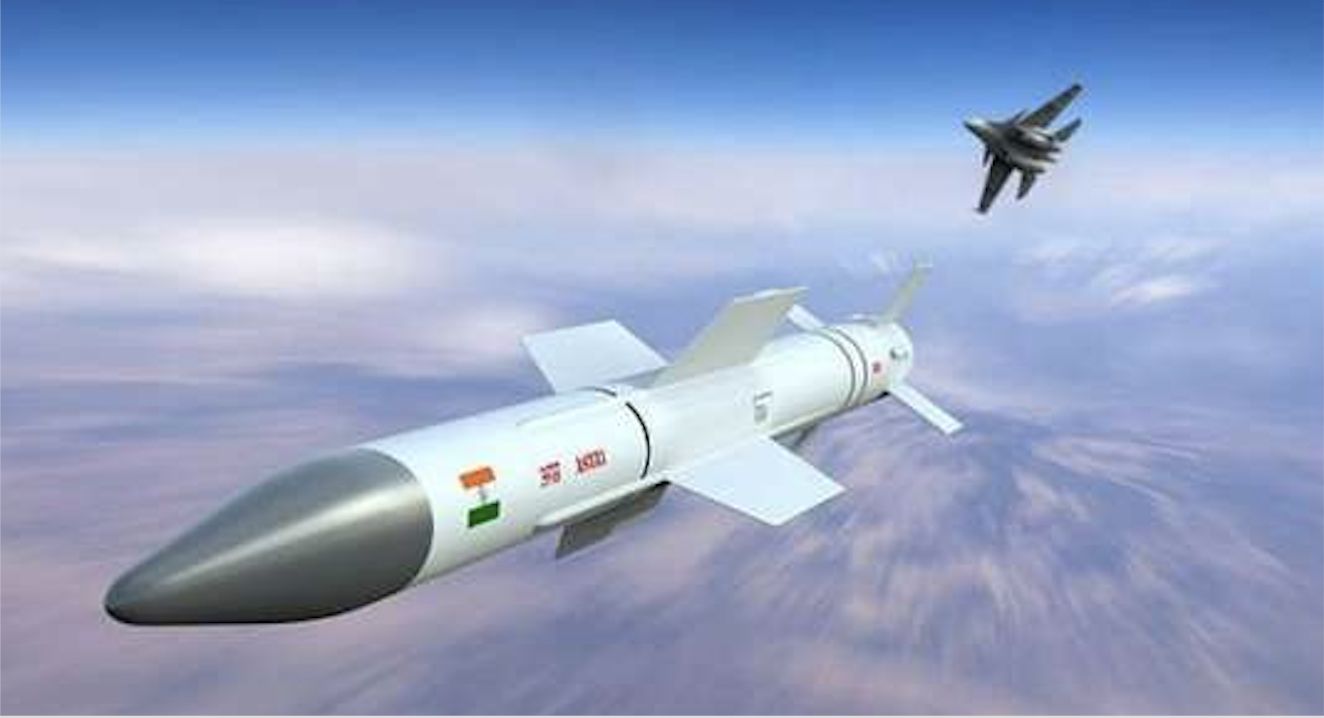
Indian Air Force Su-30MKI Fires Astra Air to Air Missile - Artwork
While the precise munition types used by fighters of the Indian and Pakistani Air Forces in the clashes of late February 2019 remain unconfirmed, employment of high end long range air to air missiles remain highly likely. Access to modern long range air to air missiles are key to any modern Air Force gaining an air superiority advantage - to which these two parties no exception. The development of long range air to air missiles has come alongside modernisation of sensor technology which has allowed aircraft not only to detect targets, but also to engage them, at far longer ranges than previously possible. As radar technology has improved, ever more capable air to air munitions have been developed to extent fighters’ engagement ranges to match their tracking ranges. This has today taken engagement ranges to well over 100km for several medium and light fighter classes - and in the case of high end heavy fighters and interceptors this engagement range can extent to several hundred kilometres.
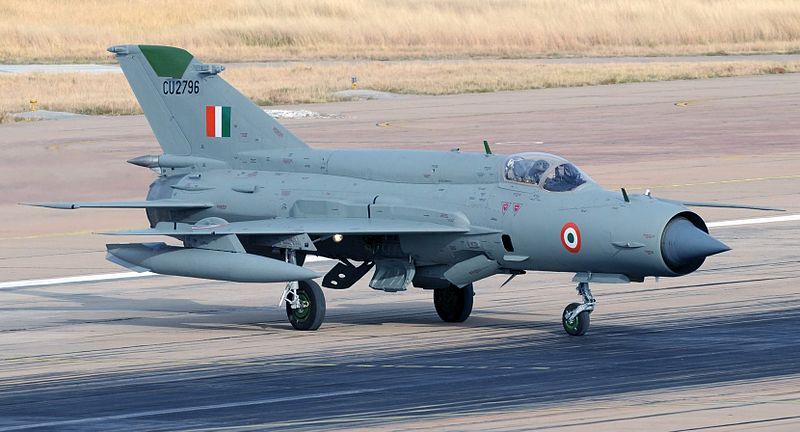
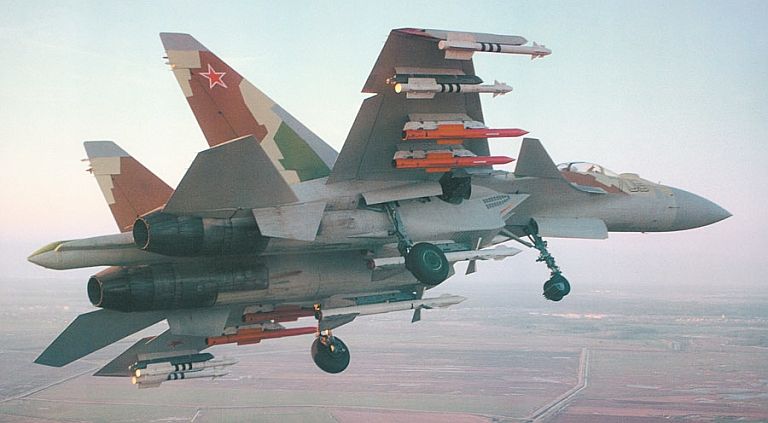
What is notable about India’s Air Force is that all fighters in its inventory are capable of deploying high end long range air to air missiles. Even the MiG-21 Bison is capable of deploying R-77 (up to 110km engagement range) and R-27 (up to 130km engagement range) missiles, as they are extensively modernised variants of the fighters which were designed to go head to head with the elite of the U.S. Air Force’s fourth generation fleet such as the F-16. The exact variants of the R-27 deployed by the Indian Air Force remain unknown - but the ER (130km), ET (120km), EP (130km) and EA (130km) variants all have engagement ranges well over 100km - making them the longest ranged missiles in the Indian inventory. These missiles, alongside the R-77, are currently deployed by the MiG-21, MiG-29 and Su-30MKI in the Indian Air Force - with the indigenous Tejas fighter also deploying the R-77.
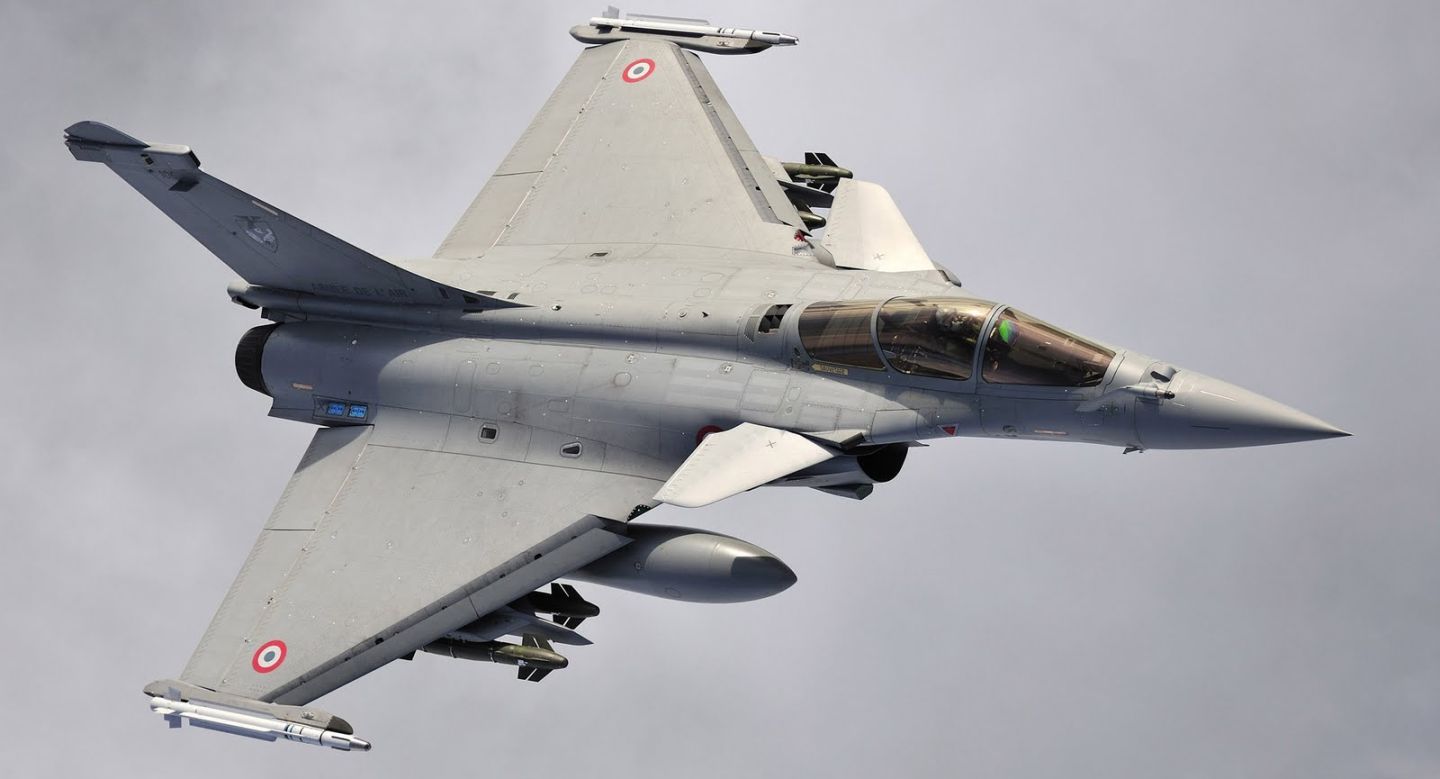
The Indian Air Force’s Rafale and Mirage 2000 currently lack advanced long range munitions with comparable ranges to the R-77 and advanced R-27 variants, instead deploying the French made MICA with an engagement range of just 80km. Other than the remaining MiG-23 training variants in service, the Mirage 2000 is arguably the least capable beyond visual range fighter in the Indian inventory largely as a result of this. The Rafale’s beyond visual range air to air capabilities could be enhanced substantially with addition of the Meteor beyond visual range air to air missile, with an engagement range of several hundred kilometers making full use of the aircraft’s powerful AESA radar, though whether India will be sold this technologically sensitive munition and the performance specifications of export variants remain to be seen.
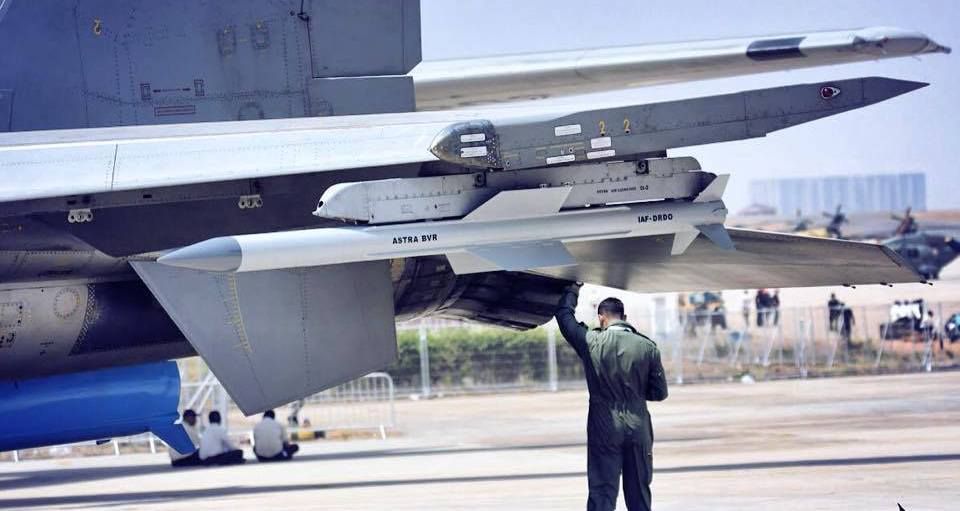
To supplement the capabilities of existing Russian made beyond visual range air to air munitions, the Indian Air Force has commissioned the Astra long range air to air missile developed by the national Defence Research and Development Organisation. The indigenous missile, developed with considerable Russian assistance, makes use of mid course inertial guidance with terminal active radar homing. It is capable of engaging targets at ranges of up to 105km, and is currently in limited service deployed by the country’s elite Su-30MKI air superiority fighters. The Astra is set to also be integrated onto the Mirage 2000 - providing a much needed boost to beyond visual range capabilities - as well as the medium weight MiG-29. Whether this missile can be developed into a platform capable of matching the R-77 and R-27 remains to be seen, but many of the technologies from these advanced munitions were transferred to India by Russia to support the Astra's development.
Another high end long range air to air missile the Indian Air Force can expect to induct in the near future is the K-77 - with a formidable 193km range. This missile is likely to become the most capable in the Indian inventory, and was designed for the Su-57 fifth generation air superiority fighter - acquisition of which is currently under negotiation. The missile is also repeatedly compatable with the MiG-35 - a leading contender in India’s medium weight fighter competition which many analysts have speculated will come out the winner. The powerful sensors of the Su-30MKI could also see it perform well if modified to deploy the K-77. One of the K-77’s most notable features is the sophisticated radar system in its missile's nose , the active phased array antenna (APAA), which is capable o denying enemy fighters the ability to evade it by overcoming the missile radar’s “field of view” - a longstanding weakness of all other long range air to air missiles which limits their success rate at extreme ranges against manoeuvrable targets. This will give the K-77 one of the longest ‘no escape ranges’ of any long range air to air missile in the world - and will provide the Indian Air Force with a considerable advantage over the fighter fleets of both China and Pakistan which currently lack comparable technologies themselves.
