
India's New Ramjet Powered Air to Air Missile; What the Astra Means for Delhi's Fighter Fleet
Military Watch Magazine Editorial Staff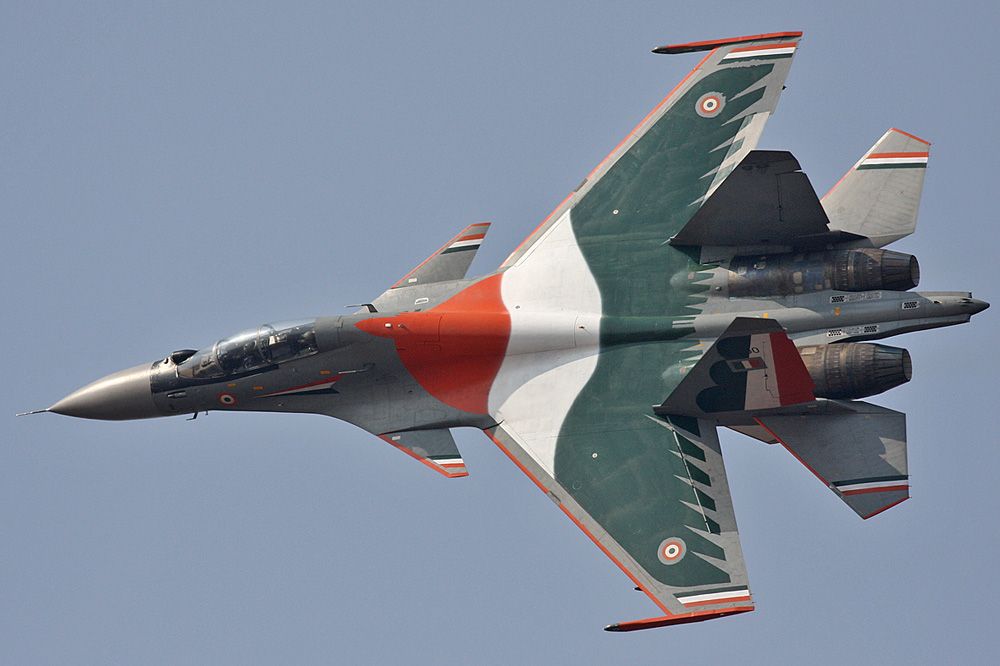
Indian Su-30MKI Elite Heavy Fighter
A joint Russian-Indian defence program to develop a new ramjet powered air to air missile platform for the Indian Air Force has see its fist successful flight test. The missile, known as Astra, is set to be deployed by India’s Russian made Su-30 heavy air superiority fighters and the lighter MIG-29, as well as by the French built Mirage 2000 light platforms, to significantly enhance the beyond visual range air to air combat capabilities of these platforms. The missile incorporates a number of cutting edge systems including ramjet technologies, which allow it to travel at high speeds of Mach 4.5 and strike airborne targets at distances of up to 110km - a similar range to that of the Russian R-77 but inferior to advanced variants of the R-27. The Astra's range and speed are superior the American AIM-120C, the most advanced Western made long range missile currently in service. While the missile’s payload is rather small at just 15kg, with other air to air platforms deploying warheads of 100kg or greater and the American AIM-120 deploying a larger 23kg warhead, the Astra’s high precision and manoeuvrability is set to largely compensate for this. The use of an advanced high explosive pre fragmented warhead is also set to make up for its relatively small size.
According to the Indian Defence Ministry, the Astra managed to achieve speeds of Mach 3 during testing - still 33% lower than the final requirements for the platform but nevertheless demonstrating a steady pace of progress. A Defence Ministry source stated in an interview with Russian media: “It was a booster phase test of the missile and the mission was a major milestone for the strategic missile program. The nozzle, less booster, and SFDR was tested successfully.” An unnamed Indian official further stated in an interview with local media regarding the capabilities of the country’s new missile: "The new technology will help both surface to air and air to air missiles perform better and enhance their strike range, making the weapons more lethal. Now India can have the fastest long range missiles in the two categories, providing full fledged and multi layered aerial protection from hostile attacks.” Development of a joint Russian-Indian surface to air missile based on the Astra remains a significant possibility in the near future, with such a platform potentially playing a highly complementary role alongside the S-400 air defence batteries Delhi is expected to contract from Russia by the end of 2018.
With a surface to air missile platform likely to serve in India’s ground forces, the Indian Navy may well also make use of the Astra to equip its carrier based MiG-29K fighters, which are capable of deploying the same weapons systems as ground based MiG-29 variants and could benefit from a new long ranged air to air missile. The Astra is set to follow in the footsteps of the Brahmos cruise missile, another world leading high speed platform developed jointly by Russian and India for air, ground and naval deployments. The platform’s success represents key progress towards greater self reliance in the Indian military and a strengthening of the defence sector by commissioning Russian assistance. India’s French built Mirage 2000 fighters in particular are set to benefit from the induction of the new missile, as they are currently unable to engage hostile targets over 50km away due to the limitations of French made air to air missile technologies and deployment of the Astra missiles is set to more than double this range. India fields approximately 50 Mirage 2000 fighters, and the addition of the new missile is set to make them far more capable in long range engagements that the fighters currently deployed by France itself. The missile's light weight means several can be deployed by even light fighters such as the Mirage, while the heavier Su-30 is expected to deploy up to a dozen - a considerable threat to India's adversaries allowing its heavy fighters to engage numerous less capable light platforms such as Pakistan's F-16C and JF-17 Block 2 simultaneously.
