
New Footage Shows How China’s YY-20 Tanker Supports Its New Nuclear Strike Capability Against the U.S. Mainland
Military Watch Magazine Editorial Staff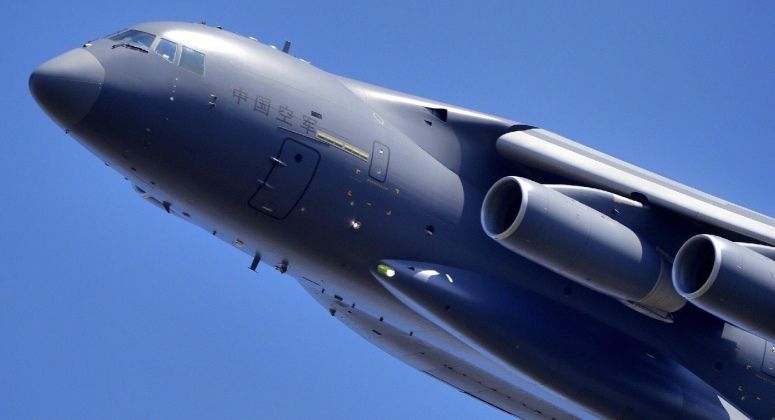
Y-20 Strategic Airlifter
Footage released by Chinese state media to mark the tenth anniversary of the Y-20 strategic transport aircraft, which has throughout the past decade been the largest aircraft of its kind in production in the world, has highlighted its role in supporting the air arm of the country’s strategic nuclear deterrent against the United States. Specifically, the YY-20 variant of the airlifter was designed to revolutionise the Chinese People’s Liberation Army’s capacity to conduct aerial refuelling operations, extending not only the ranges of important support and tactical aircraft such as the KJ-500 AEW&C system and J-20 fighter, but also of H-6 nuclear-capable bombers. The H-6 is in service in much larger numbers than any other bomber type in the world, and while the latest variants are in many respects more modern than U.S. and Russian bombers, they are much smaller aircraft with more limited ranges and weapons payloads.
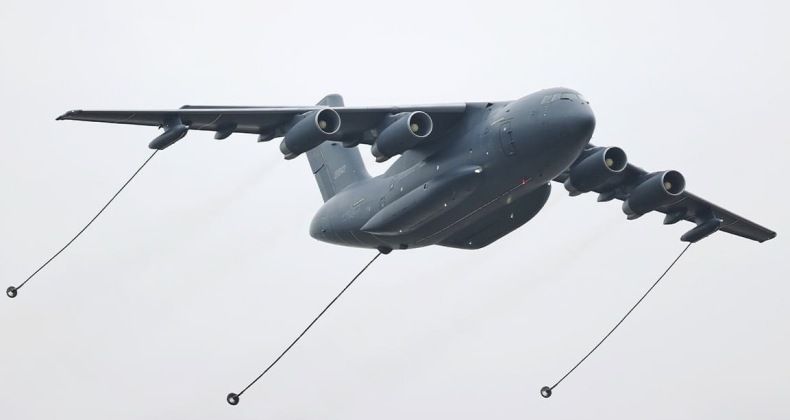
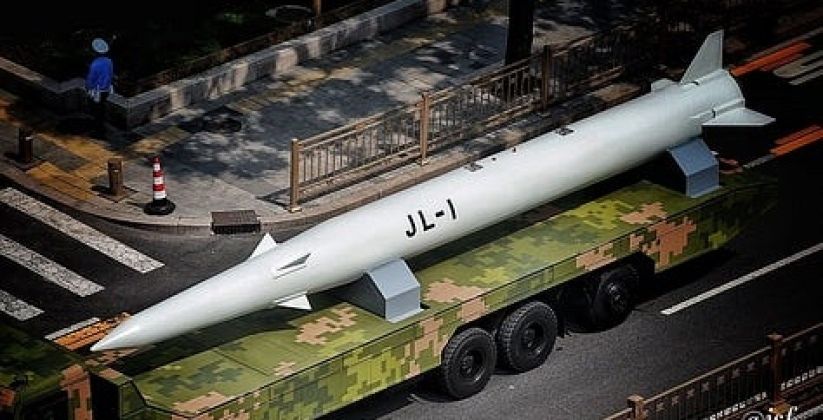
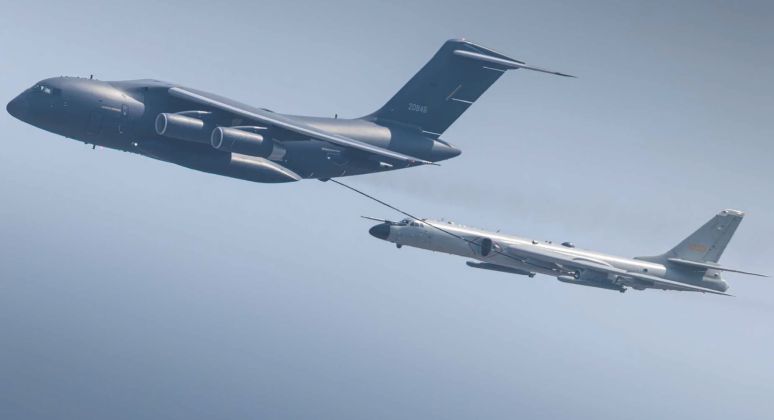
While Russian and U.S. bombers such as the Tu-160 and B-2 are capable of operating over intercontinental ranges without aerial refuelling, the H-6 was designed for theatre operations, and requires extensive support from the YY-20 and significant upgrades to be able to strike such distant targets. Footage released on the wider Y-20 program showed a YY-20 operating alongside an H-6N bomber, which is a variant of the H-6 designed specifically to integrate long range nuclear-capable ballistic missiles. This includes the JL-1, which has been specifically presented as part of the Chinese nuclear triad, and is thought to be capable of striking targets across most of the U.S. mainland when fired from the mid-Pacific. To position H-6N bombers within range to fire these missiles against targets on the U.S. mainland, however, the Air Force relies heavily on support from the YY-20 fleet.
The prioritisation of YY-20 aircraft for aerial refuelling roles mirrors the similar prioritisation of Il-78 and KC-135 tankers in Russia and the United States to escort their own strategic bombers, despite both fielding much longer range bombers that can operate over significantly longer distances without such support. Beyond allowing H-6N bombers to strike more distant targets, YY-20 support also enhances the survivability of the airborne leg of China's nuclear deterrent. Rather than taking direct routes from China, H-6Ns can remain farther from hostile air defences, use more unpredictable flight paths, and launch from multiple directions, complicating an adversary’s planning by making it more difficult to anticipate where nuclear bombers may operate.
The YY-20 also increases the persistence of China’s airborne nuclear force, allowing bombers to loiter for much longer periods during crises, and thus enabling the sustainment of continuous or near-continuous airborne readiness if required. Although China has not traditionally maintained airborne nuclear alert patrols, the significant expansion of aerial refuelling capabilities as a result of the YY-20 program provides the capability to do so. By allowing bombers to wait in holding areas, reposition in response to changing intelligence, or approach targets from unexpected directions, the YY-20 plays a vital role in providing China with a viable airborne nuclear deterrent, particularly in the years before the country’s first intercontinental range bombers, at least one of which is now in flight testing, can be brought into service.
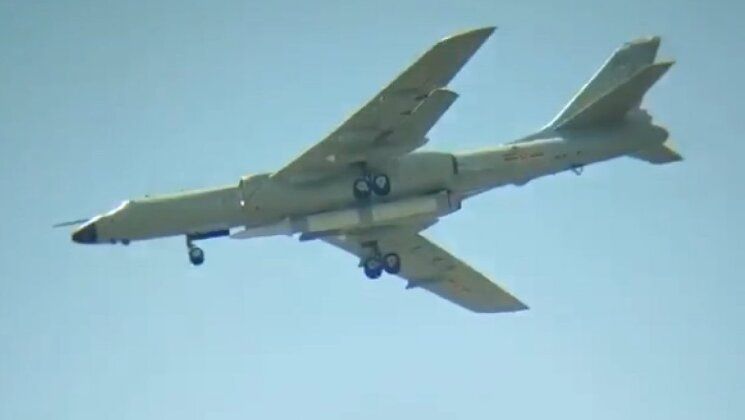
The development of the YY-20 has been highly complementary to that of the new H-6N variant of the long serving bomber as a specialised strategic nuclear delivery platform. Unlike previous H-6 variants, the H-6N incorporates an in-flight refuelling probe, a removed internal bomb bay, and a recessed centreline station capable of carrying a very large missile. The aircraft’s design builds on advances made over decades integrating more efficient engines, superior composite materials, and new avionics. The JL-1 is China's first publicly acknowledged nuclear-capable air-launched ballistic missile, and has a range of approximately approximately 8,000 kilometres, travels at hypersonic speeds, and possesses a terminal manoeuvring capability, making interception significantly more difficult. Together, the development of the YY-20, JL-1, and H-6N have been key to giving China an airborne intercontinental range strategic deterrent.
