
First Republic of China Air Force F-16 Block 70 Fighter Seen Flying Over Texas as First Deliveries Loom
Military Watch Magazine Editorial Staff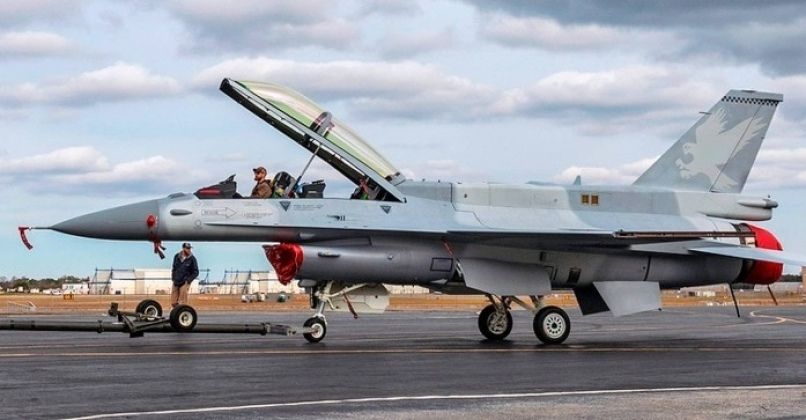
F-16D Block 70 First Production Fighter
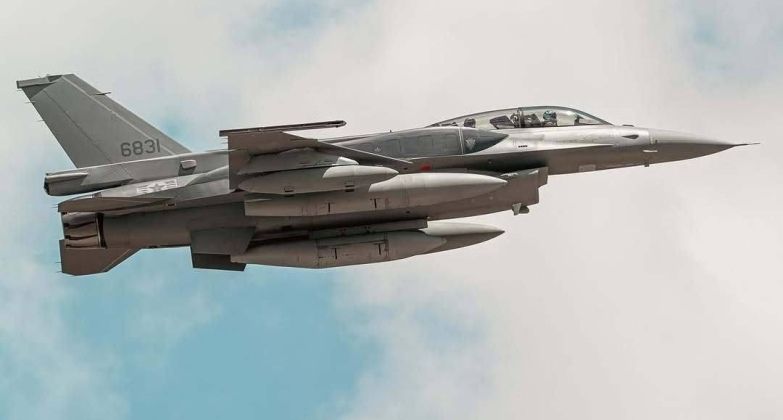
The first F-16 Block 70 fighter built for the Republic of China Air Force was seen taking off from Fort Worth Naval Base in Texas, integrating conformal fuel tanks and three external fuel tanks. The aircraft is question is a twin seat F-16D variant, and is expected to cross the Pacific Ocean via aerial refuelling to Hualien Air Force Base on Taiwan Island later in June. Although the aircraft was officially handed over in March 2025, it has yet to be ferried to Republic of China Air Force facilities. Sixty-six F-16C/D Block 70 fighter aircraft were ordered under an $8.2 billion contract in 2019, and were initially expected to begin arriving at bases on Taiwan Island in 2024, and to complete deliveries in 2026.
The Republic of China Defence Ministry has repeatedly raised concerns over major delays to F-16 deliveries, which were initially intended to be completed in 2027. Premier Cho Jung-tai in October stated that the government did not rule out “taking legal action against the manufacturer,” although cautioning that the U.S. Foreign Military Sales process did not provide for direct compensation claims. The first significant delays to F-16 deliveries became public in May 2023, when the Republic of China Ministry of Defence announced that software integration issues in the U.S. had postponed deliveries. These problems involved the integration and testing of advanced avionics unique to the Chinese configuration, which required additional development and validation before aircraft could be accepted.

By 2024, officials acknowledged that the delays extended beyond software. Shortages of components, supplier delivery problems, and adjustments to the assembly schedule at Lockheed Martin’s Greenville, South Carolina production facility pushed back the planned handover of the first aircraft. Throughout 2025, the Defence Ministry repeatedly warned that completing delivery of all 66 aircraft by the end of 2026 had become increasingly unlikely. Officials cited continuing supply chain disruptions, and limited manufacturing capacity within the U.S. defence industry. By March 2026, Republic of China officials announced that deliveries would finally begin during the year, after inspections of the production line confirmed that manufacturing was operating at full capacity.
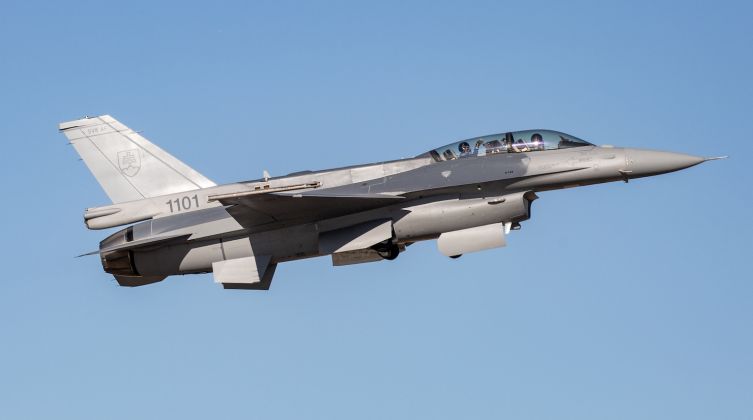
Deliveries of the F-16 Block 70 have remained far behind the original timetable, with officials having acknowledged that the delays had stemmed from software development issues, production challenges, and integration testing required for Taiwan’s customised configuration. U.S. officials also established dedicated efforts to accelerate weapons deliveries to the Republic of China Armed Forces amid growing regional security concerns. In December 2025, data from the Taiwan Arms Sales Backlog Tracker has provided an indication of the major delays in arms supplies to the Republic of China Armed Forces, with outstanding backlogs having reached over $21.45 billion. In May acting U.S. Secretary of the Navy Hung Cao confirmed that the delivery of $14 billion worth of further defence equipment to the Republic of China Armed Forces had been temporarily suspended, in order to allow for the replenishment of U.S. stockpiles following the 39 day U.S.-led war against Iran. Delays to deliveries of F-16s thus reflect part of a far broader trend of issues in the U.S. defence sector delaying the deliveries of a wide range of armaments.
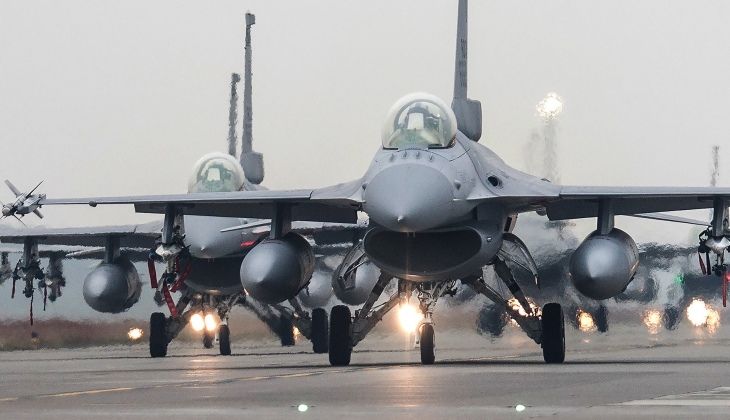
Deliveries of the F-16 Block 70 will provide the Republic of China Air Force with one of the largest F-16 fleets in the world at over 200 fighters, after 140 F-16A/B aircraft were delivered to the service from the mid-1990s. Although the large majority of F-16s in service around the world today are considered obsolete, the F-16 Block 70 is the most capable variant and boasts an enhanced variant of the F110 engine, the F110-GE-129, as well as a high composite airframe that reduces maintenance needs, and an AN/APG-83 AESA that revolutionises the type’s situational awareness. Aircraft built for the Republic of China Air Force each also integrate an Infrared Search and Track (IRST) system, enabling passive detection and tracking of aircraft without emitting radar energy.
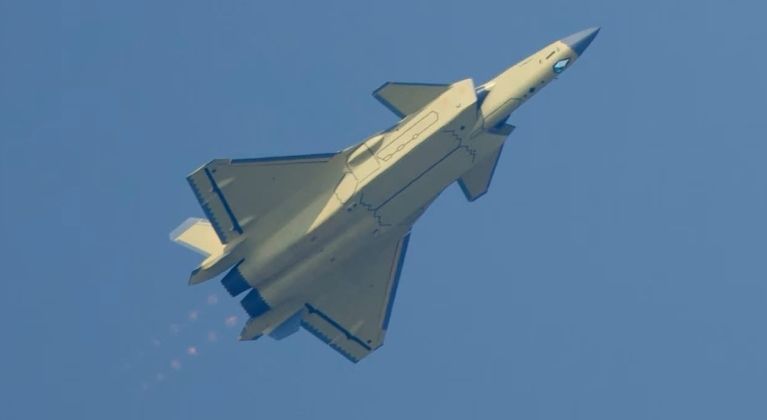
Republic of China Air Force F-16s’ infrared search and tracking capabilities are particularly valuable against stealth aircraft or in environments where electronic emissions could reveal the fighter’s position. Although significantly more capable than Cold War era F-16 variants that began to enter service in the 1970s, the F-16 Block 70 variant is still considered far from cutting edge, particularly compared to that advanced fifth generation fighters such as the J-20A deployed by the Chinese People’s Liberation Army, which remains in a state of civil war with the Republic of China Armed Forces. The choice of the F-16 Block 70 is widely assessed to have been a direct result of the Defence Ministry’s inability to order more F-35 fifth generation fighters from the United States, although efforts to place orders for the F-35 are projected by analysts to persist.
