
European Effort to Compete with the F-35 Fighter Fails: U.S. Stealth Fighter to Further Expand Market Share
Military Watch Magazine Editorial Staff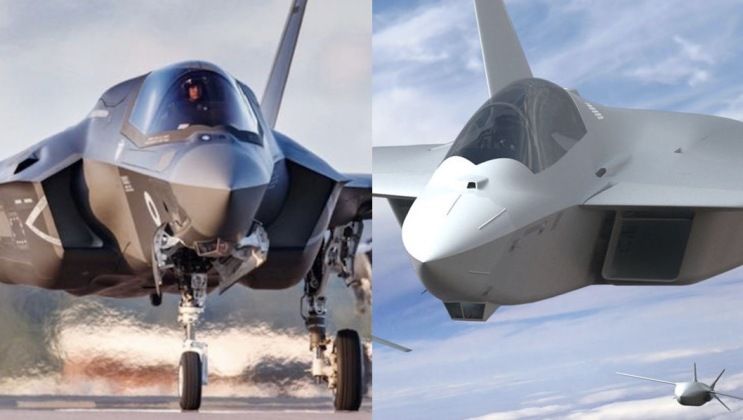
F-35 (left) and Future Air Combat System Fighter Artwork
Following confirmation of the collapse of the Franco-German-Spanish Future Combat Air System (FCAS) fighter program, analysts have widely anticipated that this will further expands markets for the F-35 fifth generation fighter in Europe, both among the program’s partner countries and more broadly across the continent. The F-35 has consistently won every tender in which it has competed against European fighter types, with competitions from Canada, to Finland, to South Korea, all seeing the American stealth fighter win by very wide margins as a far more capable and cost effective aircraft with incomparably greater modernisation potential. The FCAS program was intended to develop a more robust European competitor to the F-35, albeit one that would enter service around 30 years later, competing on a peer level to future enhanced variants of the American aircraft.
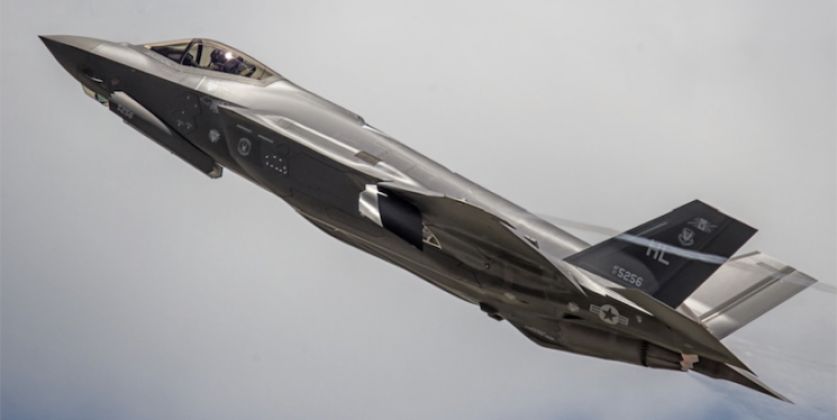
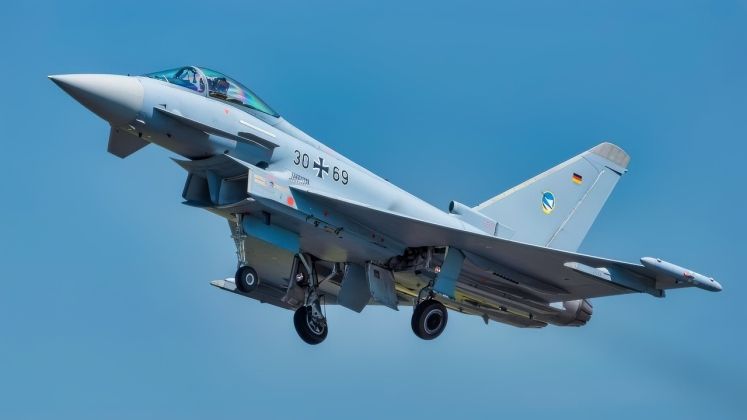
While multiple European states such as Germany and Spain had previously planned to hedge between local and U.S. fighter types, with Germany initially having firmly rejected any possible purchase of F-35s, the failings of European programs have led the American stealth fighter to increasingly emerge as the only option that is not decades behind the cutting edge. For major operators of the Eurofighter such as Germany and Spain, which had expected FCAS to eventually replace many of these aircraft, the program’s collapse leaves uncertainty over their long-term replacement strategy, and makes it highly possible that the F-35 will be selected to replace them. The German Defence ministry in 2022 placed a reluctant first order for the F-35 for nuclear delivery roles, before gradually expanding orders as it became increasingly clear that the aircraft offered a far more potent combat capability than European fighter types could.
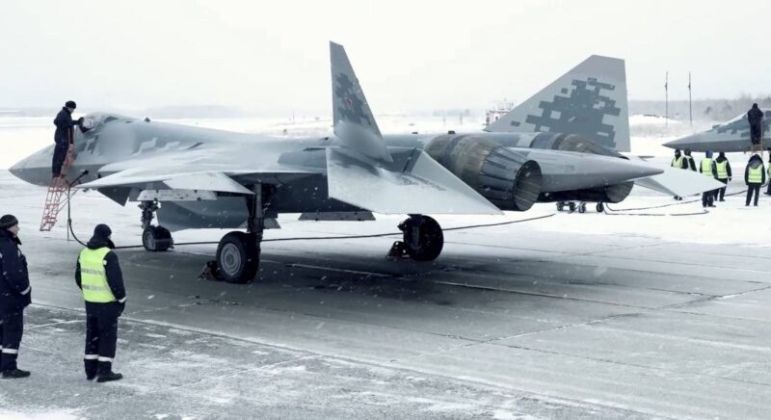
While in peacetime European states could afford to finance uncompetitive indigenous fighters to support domestic industry, the growing intensity of conflict with Russia has made the F-35’s capabilities increasingly highly prized. This is particularly the case since although Russia remains far behind the Untied States and China in fifth generation fighter development, its Su-57 fighter is still widely considered the most capable fighter type developed outside the two superpowers, and is a fully fifth generation aircraft that enjoys vast superiority over aircraft like the Eurofighter and Rafale. With the Su-57 benefitting from rapid incremental modernisation, the F-35 is the only Western fighter type of the same generation that is likely to be available before the 2040s, meaning that the faster Russia makes progress improving the aircraft and expanding its numbers, the greater the perceived need for European states to prioritise F-35 procurements will be.
Beyond the Su-57 program, European states including Germany have increasingly sought to expand operations into the Pacific, deploying fighters to Australia, Japan and elsewhere in the region as part of a collective Western containment effort against China. While even the F-35 is in many respects outmatched by Chinese J-20 fifth generation fighters, China is also poised to become the first country int he world to field sixth generation fighters in the early 2030s, with a lead of close to a decade over the United States. Although the F-35 will likely be increasingly outmatched in the Pacific, it remains the most viable option both for the U.S. and for its regional and NATO allies to operate in the region, with fighters like the Eurofighter considered particularly unviable in this more competitive region, to an even greater extent than they are in Europe. Thus while the trend towards a declining market share for European fighter programs, and declining interest from European states in financing them, long predates the FCAS program’s collapse, the end of the program is expected to accelerate this, and further cement the F-35’s position as the primary fighter of the U.S. and its strategic partners globally.
