Chinese Supercarrier Fujian Seen with Full Deck of World’s Longest Ranges Naval Fighters
Military Watch Magazine Editorial Staff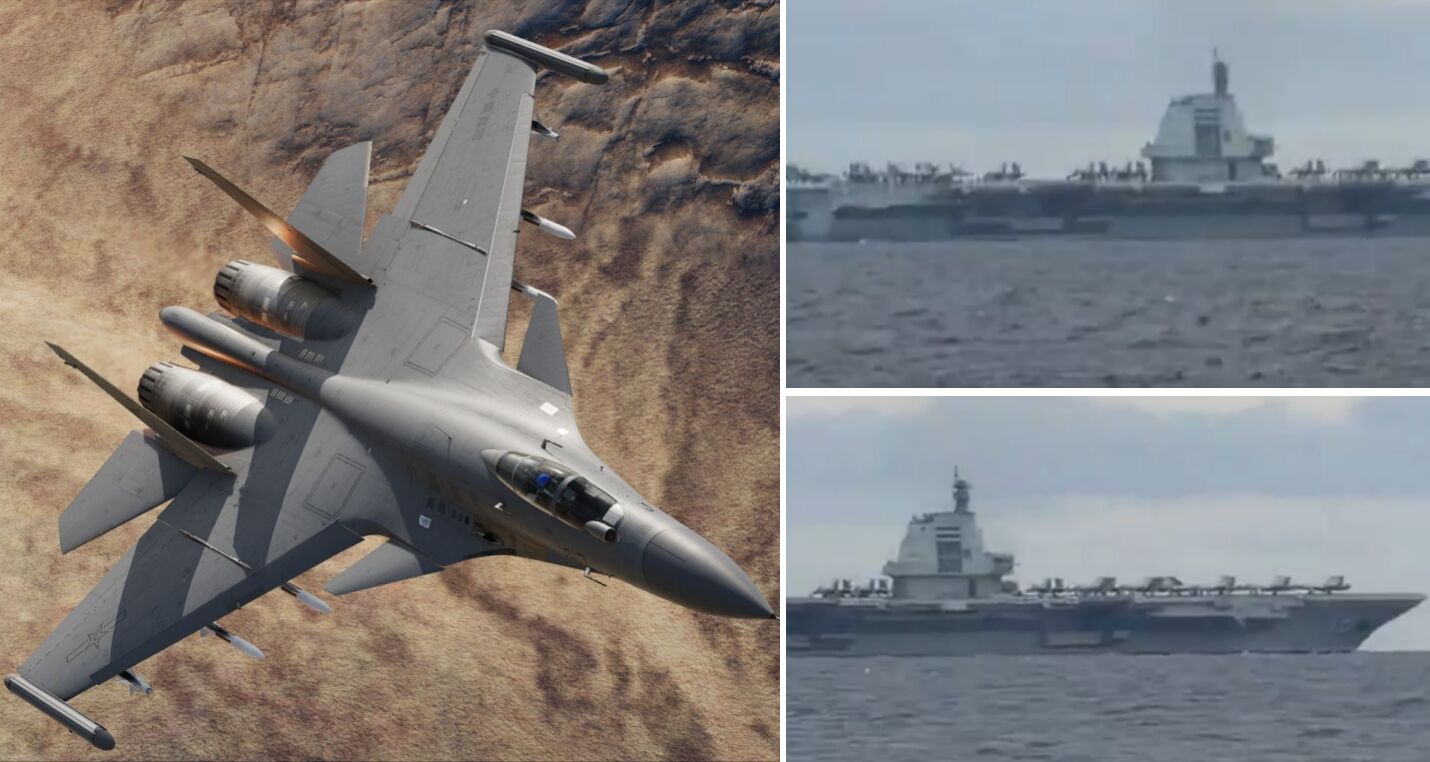
J-15 and J-15s on the Deck of the Fujian
New footage of China’s first supercarrier Fujian has shown the ship at sea with a fully flight deck of J-15 Flying Shark combat jets, highlighting the progress of the People’s Liberation Army Navy’s efforts to develop its carrier aviation capabilities. Although the aircraft was commissioned in November 2025, it has not previously been seen with such a large number of aircraft on deck, indicating progress in bringing it to a full operational status. The Fujian is by far the largest aircraft carrier outside the U.S. Navy, at 85,000 tons, which combined with its more efficient flattop design allows it to accommodate a particular large air wing. Its three catapult launch systems also allow multiple aircraft to be launched simultaneously.
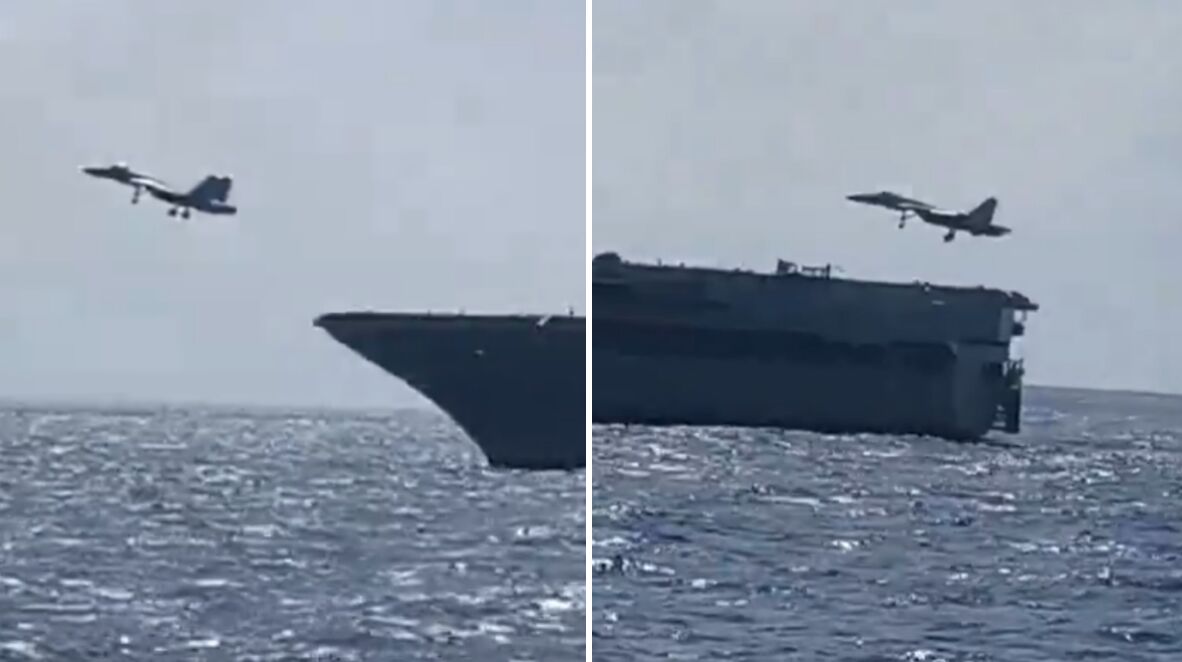
The J-15 is the longest ranged carrier-based fighter type in service anywhere in the world, and is considerably heavier than either the J-35 fifth generation fighter also deployed on Chinese carriers, or that the F-18E/F or F-35C in the U.S. Navy. While the original J-15 entered service in the early 2010s as a derivative of the J-11B fighter, with relatively basic fourth generation capabilities, the new J-15B variant was confirmed to have entered service in 2024 as a much more capable ‘4+ generation’ fighter with a longer range, superior flight performance, and fifth generation level avionics and weaponry. The aircraft’s exceptionally long range, high weapons carrying capacity, and large radar make it particulalry highly prized for a wide range of operations.
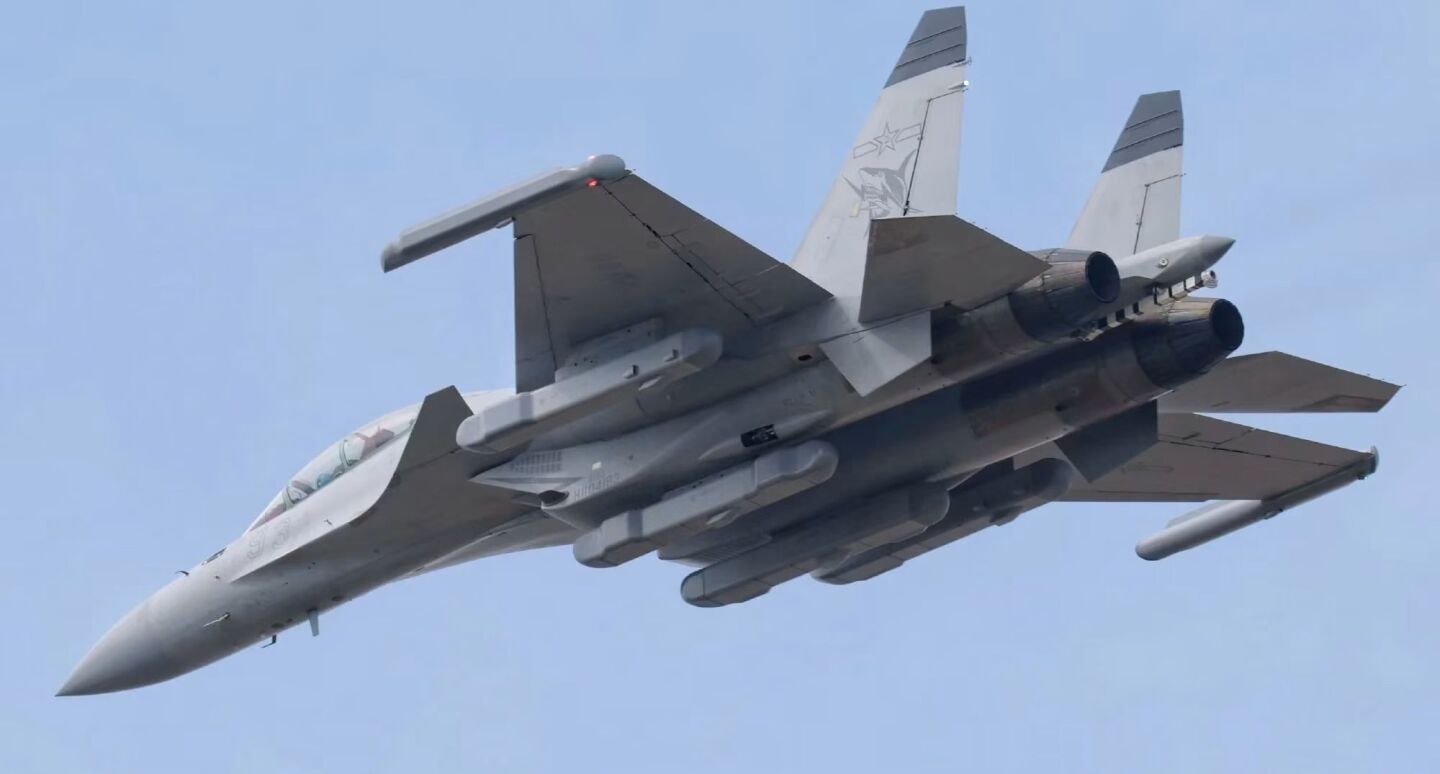
Although the J-15B’s air-to-air performance has gained particular attention, the Navy in July revealed its anti-shipping configuration for the first time, with the aircraft seen carrying four YJ-83K anti-ship cruise missiles. The YJ-83K is a well-established subsonic anti-ship cruise missile weighing approximately 700 kilograms, and with a 230 kilometre range. A J-15 carrying four such weapons therefore departs with roughly 2.8 tonnes of anti-ship ordnance before accounting for air-to-air missiles or external fuel tanks. It is notable that the YJ-83K is not the most capable anti-ship missile type which has been integrated onto the J-15T, with unofficial photographs taken by Chinese aviation enthusiasts in February having captured one of the fighters carrying two YJ-15 hypersonic missiles during what appeared to be flight testing.
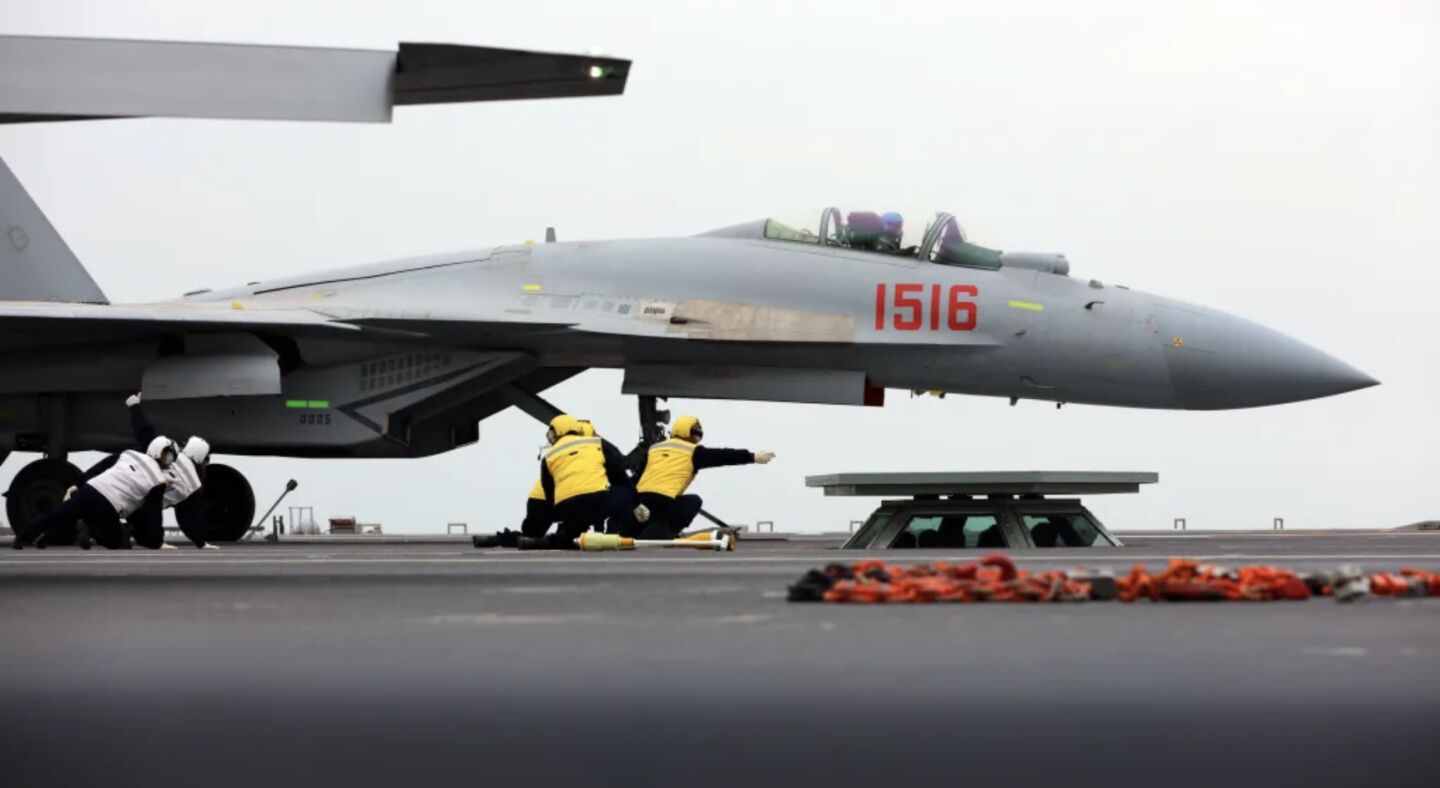
The first footage showing the Fujian conducting launch and recovery operations involving the J-15 and J-35 was released in September 2025, confirming the ship’s electromagnetic catapults and arresting systems could accommodate several major types of fixed-wing aircraft. The carrier’s operational development also has wider implications for China’s ability to sustain naval air operations at greater distances from its coastline. Unlike ski-jump carriers, which impose limitations on aircraft take-off weights, a catapult-equipped vessel can launch a broader range of aircraft and provide greater flexibility in how they are configured for individual missions. The Fujian is the first of multiple supercarriers planned, with two more currently under construction of which one is nuclear powered. Operational experience with the ship is thus expected to be invaluable for China’s fast progressing carrier program. At a time when the U.S. Navy’s own fleet is fast ageing and suffering from declining availability, while its new carriers face serious delays and cost overruns, this has significant implications for the balance of power at sea.