
China’s FC-31 Stealth Program Bearing Fruit: State Media Says First Flight of Next Generation Fighter Expected in 2021
Military Watch Magazine Editorial Staff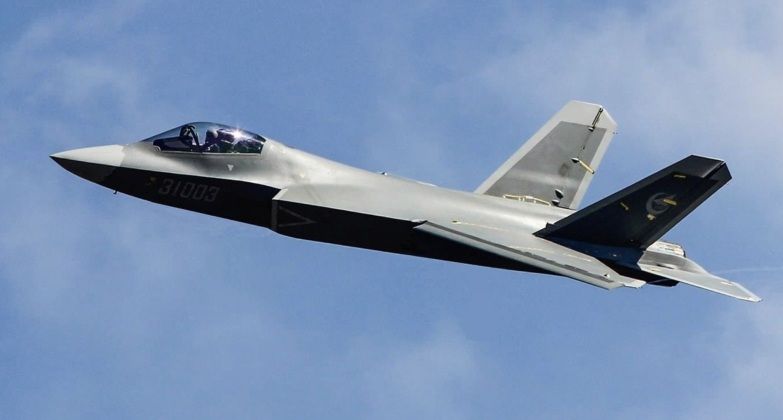
Chinese FC-31 Stealth Fighter Prototype
Experts cited by Chinese state media outlet the Global Times have confirmed that the first flight of a new class of next generation Chinese fighter jet is expected to take place in 2021. Although the specific class of fighter is unknown, it has been speculated that the aircraft will be based on the FC-31 prototype — otherwise known as the J-31 — which is a twin engine medium weight design. Until December 2020 China was the only country in the world to have developed and fielded an indigenous fifth generation fighter other than the United States, with the J-20 heavyweight platform entering service from March 2017 and the enhanced J-20B entering production in 2020. Although the new next generation fighter referred to could be the J-20B, which is not yet thought to have flown, it was implied that an aircraft based on an entirely new airframe design will be flight tested. The fighter based on the FC-31 (from here on referred to as ‘J-31’, although the final designation has not been confirmed) is expected to benefit from many of the same technologies as the J-20B, including a distributed aperture system, sophisticated stealth coatings, PL-15 AESA radar guided air to air missiles and some of the most advanced electronic warfare systems, sensors, and data links In the world.
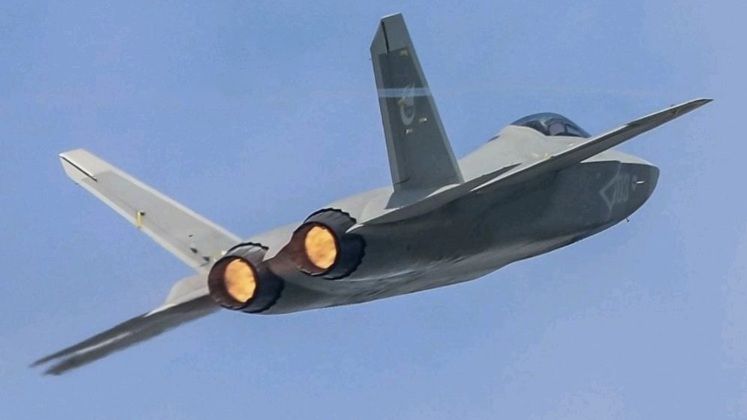
It is far from clear what role a ‘J-31’ fighter could have in service in the Chinese People’s Liberation Army (PLA), with no medium weight fighters currently operational which the design would serve as a clear successor to. The aircraft could potentially replace J-8 II medium weight fourth generation interceptors which are among the oldest aircraft in the PLA inventory, although Air Force fighter squadrons have in the past transitioned between fighters from very different weight ranges as part of modernisation efforts. Much will depend on both its performance and its operational cost, as if the former is considered high enough to succeed heavyweight aircraft from the ‘Flanker’ family such as the Su-27 or J-11A then it could have an important position in modernisation plans. The new fighter is expected to be considerably cheaper to operate than the J-20, meaning it could be fielded as a cheaper complement and allow the PLA to transition more quickly away from reliance fourth generation fighters. The possibility also remains that the ‘J-31’ could be offered for export, as while the J-20 is reserved for domestic use only as a very elite platform, and Flanker derived jets such as the J-11B and J-16 are not offered abroad due to agreements with Russia regarding rights to the design, the J-31 could be marketed to compete with the American F-35 and Russian Su-57. China is also thought to be developing a third stealth fighter class with a lightweight single engine design, potentially using the same engine as the 'J-31', primarily for foreign clients in the third world such as Pakistan, Nigeria and Myanmar.
