
Chinese Ground Forces Simulate Urban Warfare in Taiwan to Test Type 96 Tanks’ Offensive Capabilities
Military Watch Magazine Editorial Staff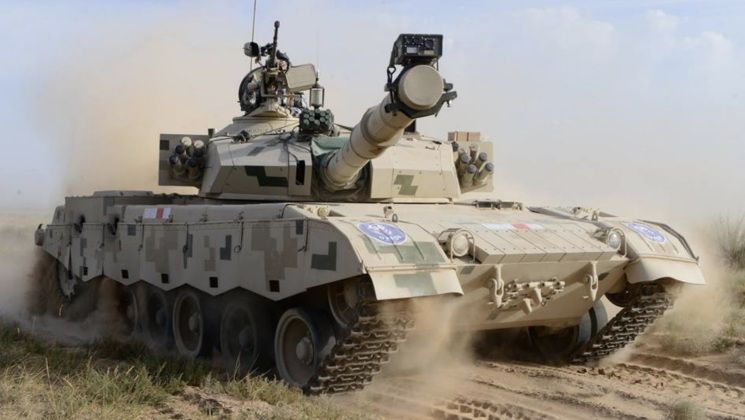
Chinese Type 96 Battle Tank
China’s People’s Liberation Army (PLA) Ground Forces have simulated conditions for city fighting in Taiwan to train mechanised infantry units for potential offensive operations. The tests come amid rising tensions in the Taiwan Strait, with the Tsai Ing Wen government in Taipei boosting security ties with the Western world and moving the country steadily towards what many analysts have interpreted as a path to declaring full independence. Taiwan, officially the Republic of China, is not a UN member state and is recognised by the United Nations and by all its member states as a part of China, which has been divided from the mainland for over 70 years due to a technically ongoing civil war. Potential moves to declare official separation from China and establish a ‘Republic of Taiwan’ are expected to be met with a massive military response from the mainland to capture the territory and reunify China under a single government for the first time since the Second World War. While China’s PLA today has overwhelming qualitative superiority both in the air and at sea, using assets such as Su-35 and J-10C fighters and Type 055 Class destroyers, a campaign on the ground will also need to be waged as quickly as possible to capture the territory and minimise chances of Western intervention on Taipei’s behalf.
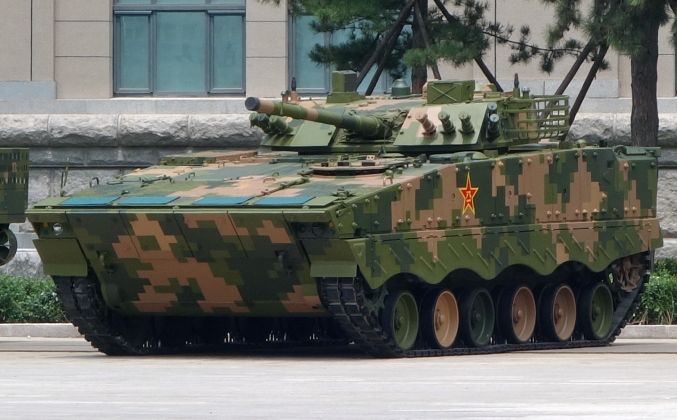
PLA training for city fighting in Taiwan has included used of Type 96A battle tanks and Type 04 infantry fighting vehicles, both of which are among the most widely fielded in the country’s ground forces. Exercises covered by Chinese state media outlet CCTV involved a combat brigade from the ground forces’ 72nd Group Army based in Huzhou in Zhejiang province, which were overseen by the Eastern Theatre Command. 230 personnel equipped with 30 tanks and combat vehicles formed a ‘red team’ and went up against a ‘blue team’ of 70 soldiers and six tanks in simulated city combat. The attacking team succeeded in capturing the city in under three hours after removing landmines, roadblocks and other obstacles simulating the kind of defences the Republic of China Armed Forces would be expected to put up on Taiwan. The CCTV report highlighted that training for city fighting was meant to help personal from mechanised infantry units lots “some bad habits” from their training for mountain warfare. The 72nd Group Army is expected to play a leading role in a potential campaign for Taiwan, and has reportedly been training for such operations for many years and recently done so with increased intensity.
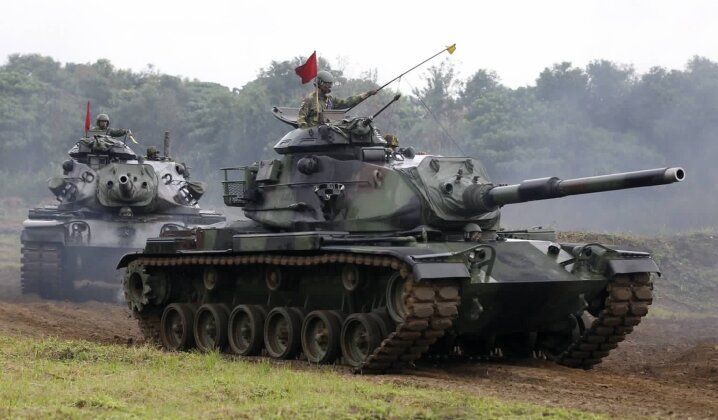
The choice of the Type 96A tank is somewhat surprising, as while it is a formidable design it is neither the most powerful Chinese tank, that being the newer and slightly heavier Type 99A, nor is it the lightest or easiest to transport and land on Taiwan, which is the newer Type 15. The Type 96A remains more than capable of going head to head with Taiwanese armour however, even if seriously outnumbered. The bulk of Taiwanese armour units are comprised of enhanced variants of the light M48 tank, a design which has served since 1953, with more modern units comprised of the newer but also long since obsolete M60 which dates back in its service to 1960. While both of these are American designs, they have long since been phased out of service in the U.S. Army and out of frontline service in the militaries of all developed countries. Taiwan is set to receive a small contingent of 108 M1A2 Abrams battle tanks from the United States, which is a much heavier and more advanced design than its other armoured platforms and is considered a peer level competitor to the Type 96A. The underwhelming nature of investments in armoured warfare by the Republic of China Armed Forces reflect the fact that, should the Chinese mainland’s People’s Liberation Army gain control of the air, all armoured units on the ground will be left highly vulnerable to airstrikes, forcing Taiwanese forces to priorities investments towards air defences.
