
China Expands Key Fighter Training Facility to Support Sixth Generation Programs
Military Watch Magazine Editorial Staff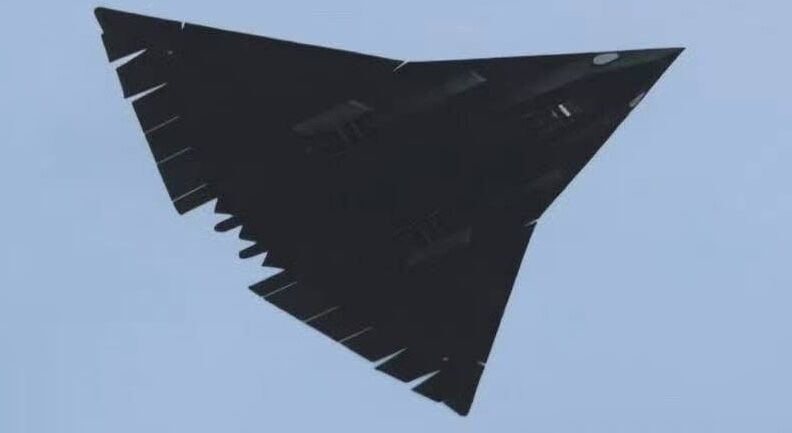
Fourth Flight Prototype of China’s Ultra-Long Range Sixth Generation Fighter
China is rapidly expanding a highly secretive flight-test facility near the Lop Nur nuclear test site, creating a major new centre for the development and evaluation of advanced military aircraft. The expansion is particularly significant because the base has already hosted China’s two known sixth generation fighter types, which have been in flight testing since late 2024, suggesting that the facility is being prepared for a much larger role in China’s next generation air combat programs. China is positioned to bring sixth generation fighters into service close to a decade before any other country, with the larger of its two fighter types developed by the Chengdu Aircraft Corporation expected to enter service around 2030.

The fighter test facility is located in the Xinjiang region of northwestern China, with its exceptionally remote location providing considerable isolation for sensitive aerospace programs, while its enormous runway, measuring approximately gives it the ability to accommodate aircraft substantially larger than conventional fighter aircraft. Satellite imagery shows that construction at the remote installation has accelerated substantially, with the base now featuring multiple large hangars, new taxiways, aircraft turning areas and possible fuel-storage infrastructure, transforming what was once a relatively austere airfield into an increasingly sophisticated flight-test complex.
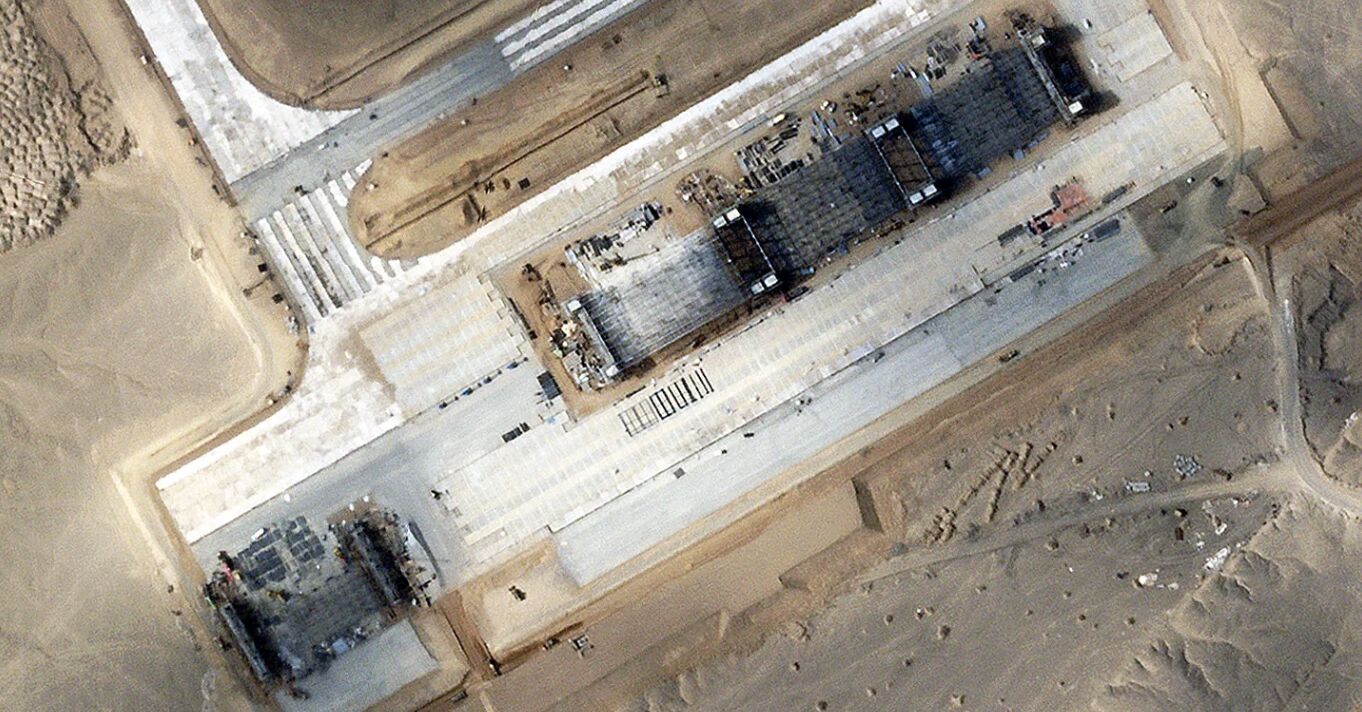
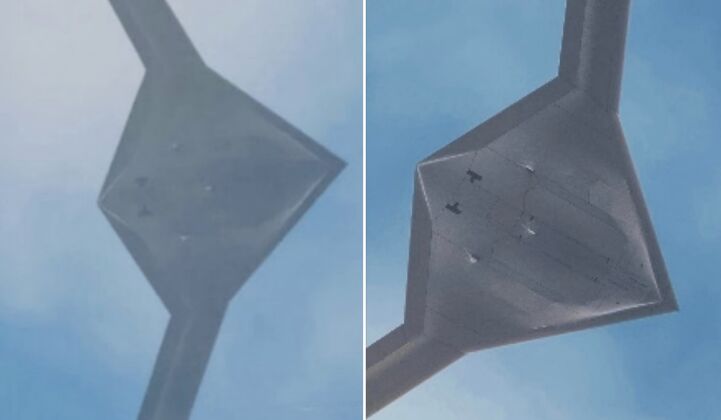
One of the most striking developments is the construction of four large hangars on the southern side of the main airfield. Three of them are grouped together and each measures approximately 80 by 40 metres, while another nearby facility has different dimensions. Their unusually wide proportions make them suitable for aircraft with large wingspans, rather than conventional fighter-sized platforms. The dimensions have fuelled speculation that the facilities could eventually accommodate China’s first intercontinental range stealth bombers, which have been seen in flight testing for over a year.
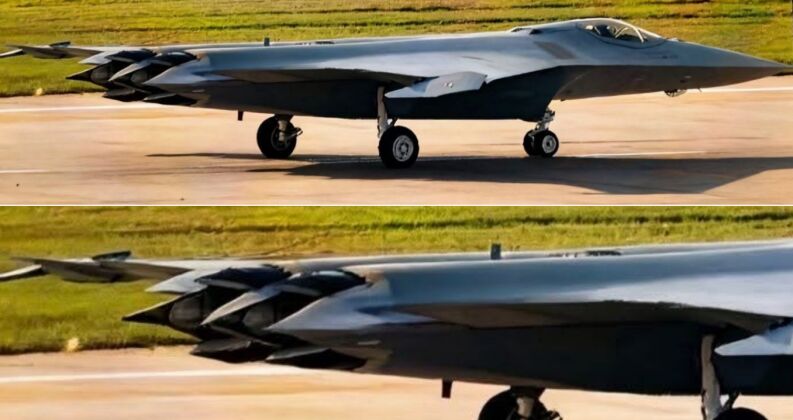
The heavier of China’s two sixth generation fighter types has recently repeatedly been observed performing a complex high-alpha, high-energy manoeuvre, rapidly pitching over before diving almost vertically, then recovering sharply and climbing back upwards. It is the first tailless fighter type to ever do so, which required China’s aviation industry to cross major technological hurdles. The manoeuvres performed were particularly outstanding as the fighter is by far the largest and heaviest in the world, with major advances in Chinese engine technologies, and the unique integration of three separate engines, allowing it to maintain a high thrust-to-weight ratio. The fighter’s extremely long range makes the ability to operate over vast areas particularly valuable. The program has rapidly made major advances, and rapidly proceeded to its fifth flight prototype.
The growing infrastructure at Lop Nur can provide a common location where different advanced platforms can undergo testing in a relatively isolated environment. This could be particularly valuable as China moves towards an air-combat architecture combining crewed fighters, long-range aircraft, unmanned combat aircraft and networked sensors. The facility previously gained publicity when it played a key role in facilitating the smooth service entry of the J-20 fifth generation air superiority fighter. The base’s remoteness could also provide security advantages, as sensitive aircraft can be moved there away from the main manufacturing centres, reducing the number of people and facilities involved in testing and placing experimental platforms far from major population centres.
