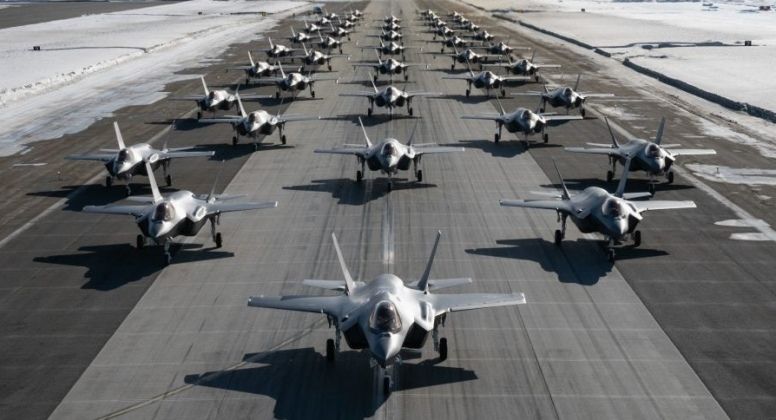
Canada Begins Payments For 88 Percent Expansion of F-35 Fleet: Does the U.S. Stealth Fighter Compromise Its Defences?
Military Watch Magazine Editorial Staff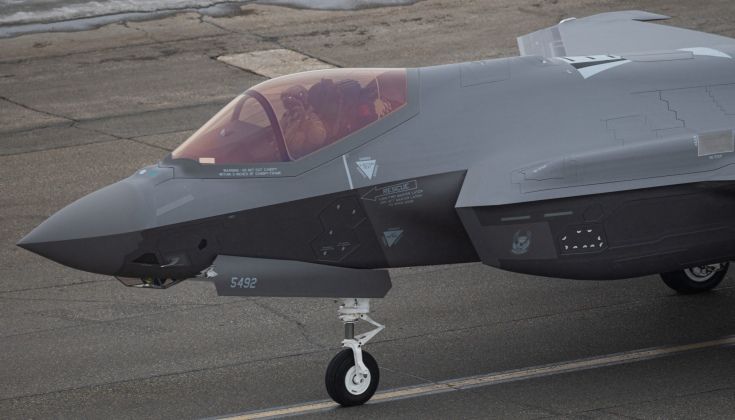
U.S. Air Force F-35A at Eielson Air Force Base Alaska
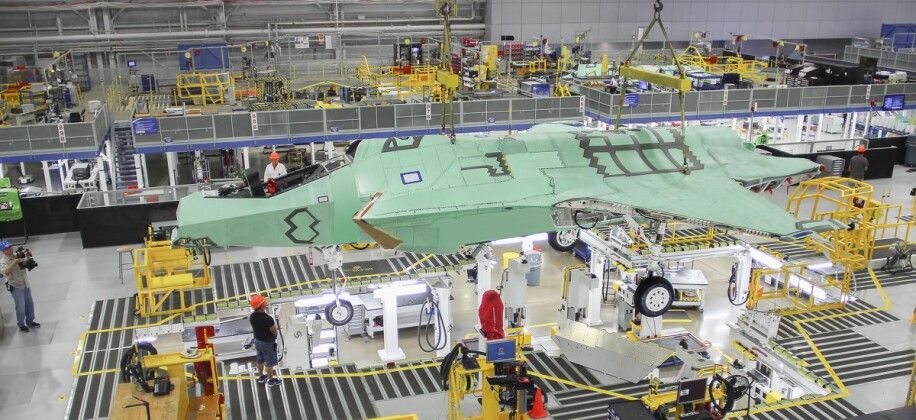
The Canadian Defence Ministry has initiated payments for long-lead items associated with the procurement of 14 additional F-35A fifth generation fighter aircraft, expanding the country’s fleet beyond the first 16 fighters that have already been paid for and approved for delivery. The components paid for include structural assemblies and avionics systems, which must be ordered years in advance to retain Canada’s position in the production sequence. While delaying payments would have placed the Royal Canadian Air Force at risk of receiving the aircraft considerably later, the decision to make the payment may signal Ottawa’s limited willingness to consider serious reductions to F-35 procurements, thus limiting its leverage in its ongoing trade dispute with the United States. A federal review of future fighter acquisitions currently remains underway, with the Swedish Gripen E/F lightweight fourth generation fighter considered the leading alternative.
The current review of Canada’s full F-35A order, which was previously planned at 88 fighters, was initiated in 2025 under Prime Minister Mark Carney following trade and security tensions with the United States. Carney in January stressed that forceful U.S. threats to annex Greenland and Canada itself signalled end of the rules-based international order, indicting a willingness to protect Greenland against a possible U.S. invasion. Tensions were also fuelled by the imposition of tariffs on Canadian steel, aluminium, and automotive exports to the United States. Domestic polling commissioned by Ekos Politics has indicated that 72 percent of Canadians supported incorporating the Gripen into the Royal Canadian Air Force, with offers to domestically co-produce the less popular fighter expected to create thousands of domestic jobs and strengthen the national aerospace industrial base.
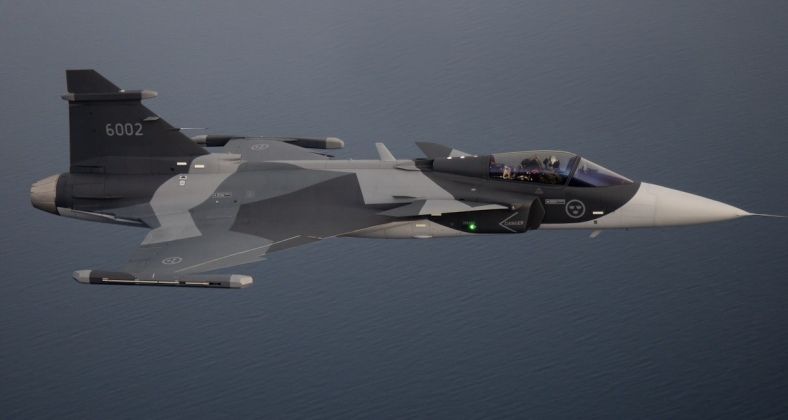
Despite the political and economic advantages of the Gripen, internal Canadian Defence Ministry reports obtained by Radio Canada in December 2025 confirmed that the F-35 was assessed to be overwhelmingly superior to rival fighter types in the Future Fighter Capability Project tender. The aircraft scored 57.1 out of 60 points, a 95 percent score, while the Gripen E/F achieved just 19.8 points, a 33 percent score, with their performances diverging particularly sharply once rated operational criteria were applied. Such results were far from unexpected, with the F-35 having been favoured by similarly overwhelming margins in recent tenders in Belgium, Finland and Switzerland, and having consistently won every tender in which it has completed against European aircraft. The F-35’s capabilities are considered in a league of its own in the Western world as the only fifth generation fighter type in production, with even the preceding F-22 fifth generation fighter being far behind in terms of its network-centric capabilities, active and passive sensors, electronic warfare suite, and stealth capabilities.