
Maintenance Cost Overruns Killed America’s First Fifth Generation Fighter Program the F-22
Military Watch Magazine Editorial Staff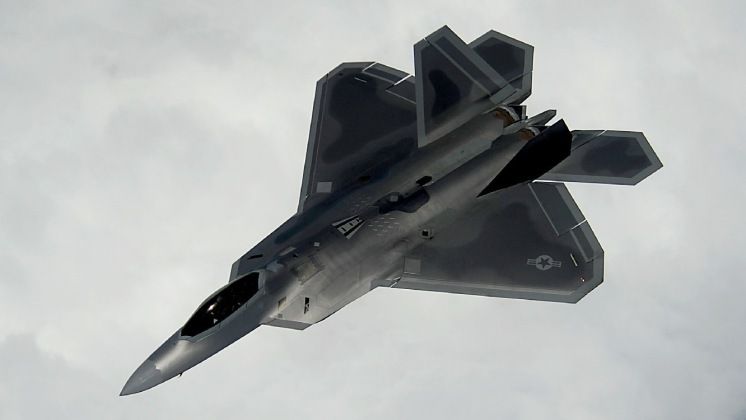
U.S. Air Force F-22
The F-22 Raptor is one of three new fighter types to have entered service in the U.S. Armed Forces since the end of the Cold War, and began development in the mid-1970s to provide the U.S. Air Force with a fifth generation successor to the F-15 Eagle for high intensity air-to-air missions. It is today considered one of the least successful fighter programs of the post-Vietnam War era, with the aircraft’s capabilities having been gradually watered down after the end of the Cold War, while deep cuts to planned orders meant only 187 serial production aircraft were ever built. The Air Force has from 2022 sought to begin retiring F-22s from service just a fraction of the way through their service lives, while availability rates have remained by far the poorest in the American fighter fleet despite the aircraft being among the newest airframes in service.
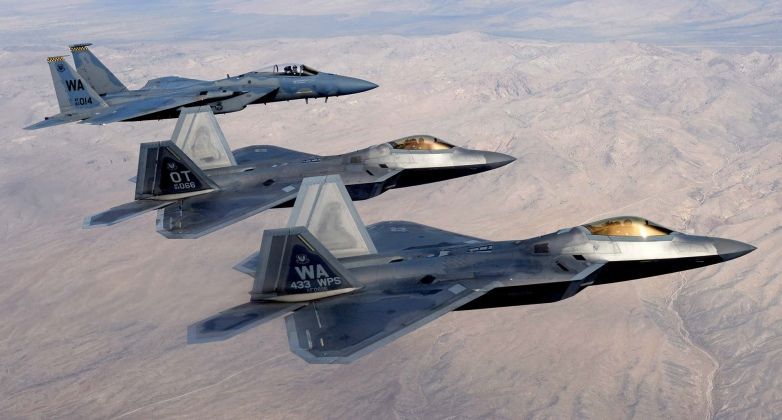
A primary shortcoming of the F-22 program has been its major overruns in maintenance needs, and as a result in operational costs, which are by far the highest of any fighter type in the Western world. The fighter was initially intended to have lower maintenance needs than the F-15, allowing it to maintain higher availability rates and making it more affordable to operate. Although the F-22’s cost per fighter was close to triple that intended due to major overruns, overruns in sustainment costs, which make up the large majority of any fighter’s lifetime costs, were the primary factor which made it unaffordable. It was highlighted in early 2023 that keeping the fleet of an estimated 184 remaining F-22s in service for the next six and a half years to 2030 would cost the Air Force $9 billion, equivalent to the cost of procuring another 110 new F-35As, which raised further questions regarding the cost effectiveness of the Raptor fleet.
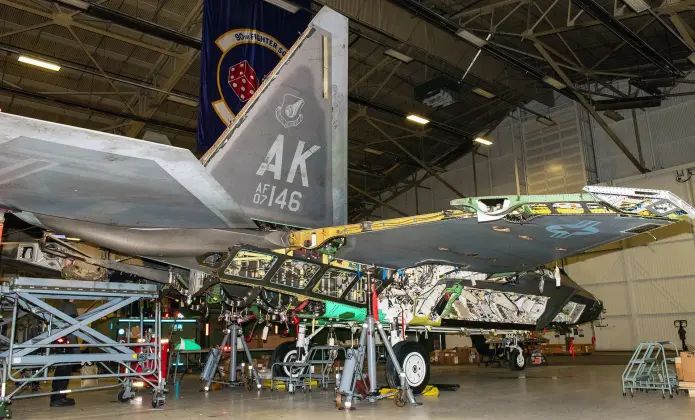
The F-22's mission capable rate has been around 50 percent since the fighters were first inducted by the U.S. Air Force in December 2005, and is expected to continue to fall as the aircraft age, particularly as the Air Force is increasingly forced to cannibalise them for spare parts. With the number of aircraft in service already being small, this seriously limits the F-22’s ability to contribute to a major conflict. Low availability rates, and the limited number of combat coded aircraft, mean only around 70 fighters will be available for combat operations, which is a limited number when considering the immense costs of the wider fleet. Although the newer F-35 has also suffered from major overruns in operational costs and maintenance needs, which have similarly forced the services to reduce planned procurement numbers and cut flying hours, these issues were more extreme on the F-22.
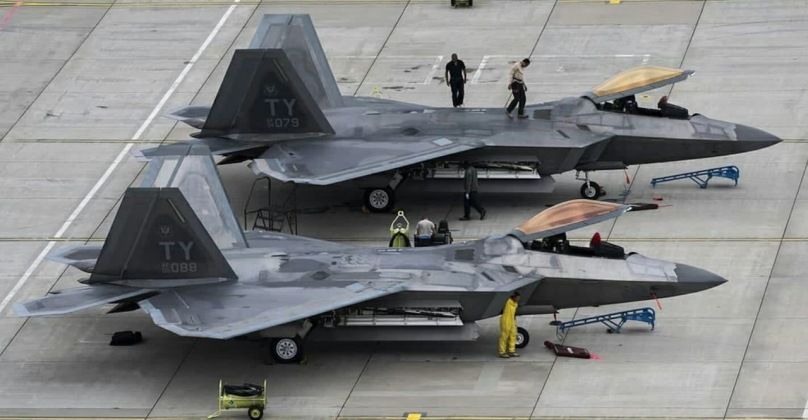
Had the F-22 fleet been more affordable to sustain, and required less maintenance to do so, it would likely have appeared cost effective to expand production beyond 2011, allowing the aircraft to phase out Cold War era F-15C/D fighters that suffered from decades of wear that increased their own operational costs. A longer production run, in turn, may have allowed many of the obsolescence issues facing the fighter, and particularly its avionics, to be addressed on later production batches. With the F-22 being impractical to field particularly in greater numbers, and far from cost effective especially compared to the newer F-35A and F-15EX, however, the cutting short of production was highly beneficial for the Air Force’s overall combat potential.
