
Breakthrough: American F-35 Stealth Jets Transmit Live Tracking Data to Ground Based Air Defences
Military Watch Magazine Editorial Staff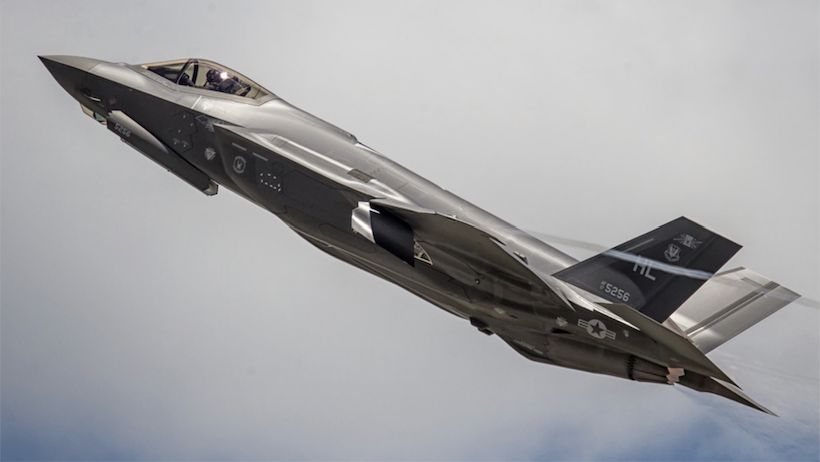
F-35 Fifth Generation Fighter
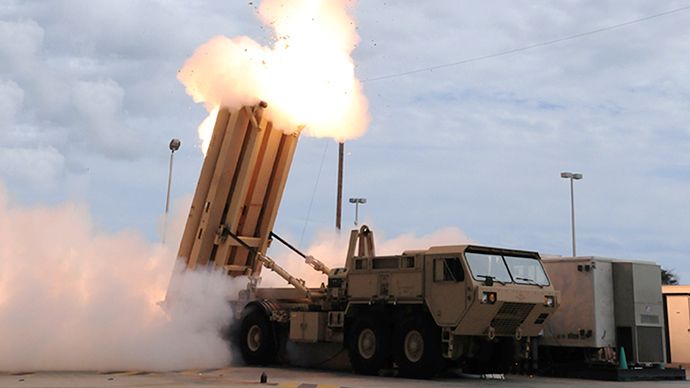
In April 2018 it was reported that the U.S. Military intended to develop the Lockheed Martin F-35 fifth generation multirole fighter to be able to perform a role in strengthening the country’s missile defences, which was viewed as particularly critical in light of recent developments in the Russian, Chinese and North Korean ballistic missile programs with all three having recently developed new and more survivable tactical and intercontinental range designs. The U.S. has long sought to use overseas assets to provide live tracking data to its ground based air defence network to improve their ability to intercept enemy missile attacks, and this was speculated by a number of analysts to have been the primary purpose of the deployment of the THAAD missile system and its powerful sensors to South Korea. Reports that the F-35 succeeded in transmitting live tracking data to the U.S. Army’s Integrated Air and Missiles Defense Battle Command System for the first time thus mark a major milestone in the program and will potentially seriously strengthen America’s future air defence capabilities.
Speaking regarding the breakthrough, Lockheed Martin's deputy of integrated air and missile defence Scott Arnold stated: “This demonstration represents a significant growth in capability for the Army IAMD [Integrated Air and Missile Defence] program and Army for multi-domain operations. The capability creates additional battlespace awareness, and the ability to track incoming targets and take action, if necessary… The F-35, with its advanced sensors and connectivity, is able to gather and seamlessly share critical information, enabling greater joint force protection and a higher level of lethality of Army IAMD forces.” The implications for the U.S. missile defence network are very significant, as the F-35 not only deploys one of the most advanced sensor suites in the world but the fighter itself is also deployed extremely widely. Over 3000 F-35 jets are planned for production, and will be deployed both overseas by the U.S. Military to bases in South Korea, Japan, the Middle East and elsewhere as well as by a number of U.S. allies. Thee branches of the U.S. Military will deploy the fighter, with the Navy and Marines deploying them extensively from aircraft carriers overseas. It is likely that F-35 fighters will also be able to provide data to allied air defence systems in future - for example U.S. and Israeli F-35s in the Middle East could conceivably provide cueing data on an Iranian missile attack to an Israeli David’s Sling or Barak 8 system. No other state has demonstrated a similar capability from its own combat jets, although China’s own fifth generation fighter the Chengdu J-20's demonstrated ability to integrate high end technologies means that it could conceivably begin to test similar capabilities in the near future - if it has not done so already. The U.S. withdrawal from the INF Treaty and plans to deploy new longer ranged missiles to the Asia-Pacific region aimed at China will likely accelerate this process.
