
U.S. Military Plans to Adapt New F-35 Stealth Fighters for Missile Defence Role
Military Watch Magazine Editorial Staff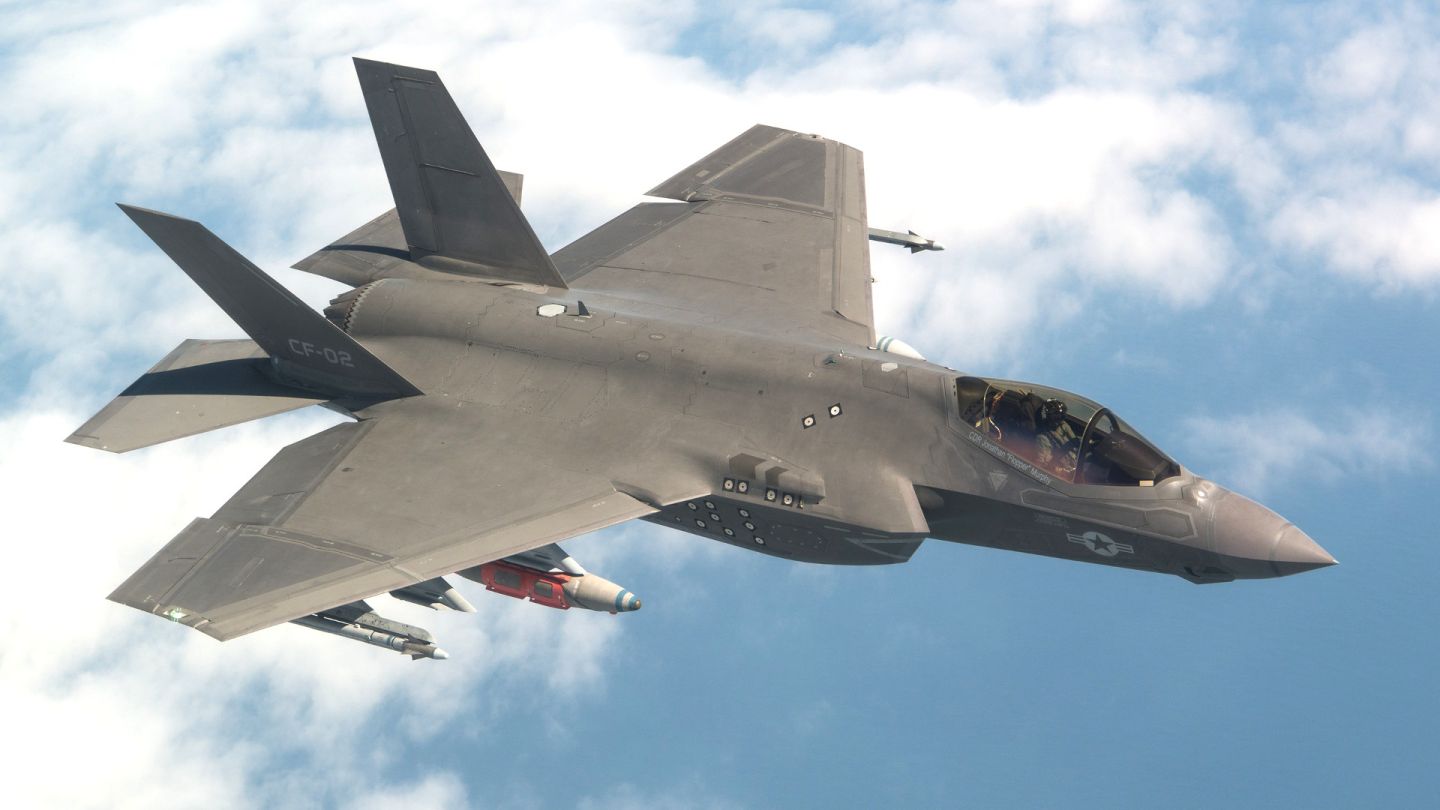
F-35 Stealth Fighter
The Drive
Recent developments in the ballistic missile capabilities of a number of potential U.S. adversaries have left the United States military’s assets increasingly vulnerable in the event of a future war. These include both tactical missiles aimed at undermining the U.S. military’s ability to wage war, destroying military and command centres from Guam and Hawaii to Western Europe with both conventional and tactical nuclear warheads, and strategic missiles carrying high payload nuclear warheads aimed at destroying targets on the U.S. mainland should war break out. Examples of the former include the North Korean Musudan, Russian Iskander and Iranian Shehab-3, while examples of the latter include the Korean Hwasong-15, Russian Sarmat (Satan 2) and Chinese Dongfeng-41.
With U.S. ground based low altitude missile defences having left much to be desired in their performances during both testing and recent combat deployments in the Middle East, and with Russia in particular inducting ever more capable hypersonic missile platforms which are near impossible to intercept, the U.S. Department of Defence (DoD) has bee forced to consider new ways to protect its cities and its assets from missile attacks. U.S. Strategic Command chief General John Hyten himself stated that the U.S. was essentially defenceless against Russia’s recently developed ballistic missiles, and as a result the need for new means of interception are needed now more than ever. Alongside the potential revival of a Reagan era weapons program to deploy anti missile lasers in space, the DoD is also set to modify its new F-35 fifth generation light fighters to fulfil a missile defence role. With the F-35 set to comprise the mainstay of the U.S. combat aircraft fleets, replacing the F-16, F-18 and Harrier jet, the fighter will be deployed to facilities across the world by America and several of its allies and could well prove an invaluable defensive asset if successfully adapted for such a role.
Lt. Gen. Samuel Greaves, director of the Defence Department's Missile Defence Agency (MDA), has advocated for the F-35’s use as an anti missile platform and promised that the light stealth fighter will by 2025 have the ability to shoot down ballistic missiles. Speaking to lawmakers from the Senate appropriations subcommittee on defence, the director stated: “I’d say six to seven years to essentially work out the Concept of Operations (and) develop the capabilities — (whether) it's sensor-based or a new fast missile that's hung on the bottom of an F-35 for the BMDS (Ballistic Missile Defense System) mission — to integrate those capabilities, test them and deliver them into a theatre of operations.”
Director Greaves noted that new missile intercepting capabilities for the F-35 would be "if not a game changer, then a significant contributor to future ballistic missile defence." He further stated that the MDA saw the F-35 equipped for a missile defence role as a viable alternative to a “classic missile defence system" such as the Patriot, THAAD, Aegis or the U.S. mainland’s GMD system. Lockheed Martin, the F-35’s developer, has for its part long promoted its new fighter as a possible missile interceptor, though the Pentagon never indicated whether it intended to develop the fighter for such a role and when such development would be complete. With Russia’s unveiling of the new Sarmat and Avangard missile platforms in early March 2018, which came just months after North Korea flight tested its Hwasong-15 ICBM capable of striking targets as far as New York with a nuclear payload of several megatons, the United States has been forced to redouble its efforts and more seriously consider Lockheed’s proposition. China’s induction of the DF-41 nuclear capable solid fuelled ICBM into active service in 2017, which holds the entire U.S. mainland well within its range, has caused further concern among the United States military. Defence of forward operating bases in the Pacific on Okinawa, Guam and Hawaii against rapidly growing Chinese and North Korean intermediate range strike capabilities has also been a pressing security threat, one which the F-35 may well also be pressed into service as a solution to.
