
U.S. Confirms INF Missile Treaty Withdrawal Aimed at China and N. Korea; What is Washington’s Endgame?
Military Watch Magazine Editorial Staff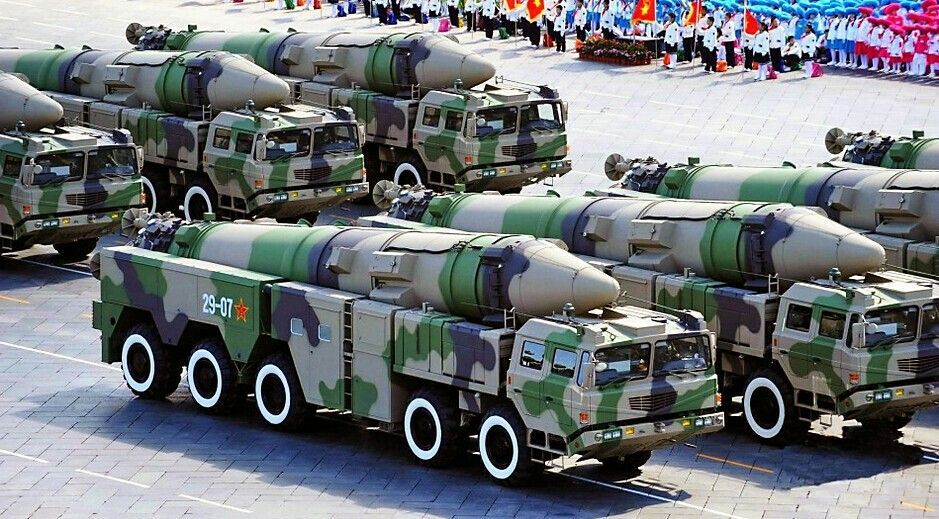
People's Liberation Army DF-21D 'Carrier Killer' Ballistic Missiles
The circumstances of the United States’ withdrawal from the Intermediate Range Nuclear Forces (INF) Treaty have confirmed earlier assessments that Washington’s decision was motivated primarily by developments in Northeast Asia, the new region of primary focus for the U.S. Military, rather than developments in Europe or Russia. The INF Treaty first came into effect on June 1st 1988, a time when United States and the USSR were by far the world’s most militarily powerful nations, with neither country perceiving any considerable threats to their military primacy from third parties. No third parties at the time retained ballistic missile technologies of remotely comparable sophistication. The treaty served to seriously restrict the diversity of the two superpowers’ arsenals, and prevented either from deploying any ground based missiles other than ICBMs (over 5,500km range) or very short ranged tactical missiles (under 500km range).
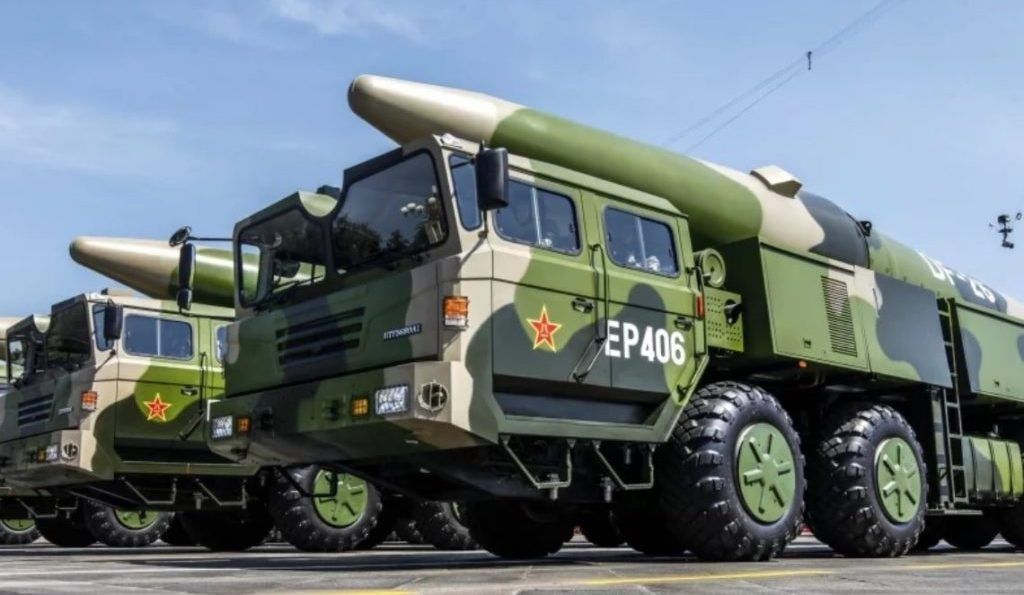
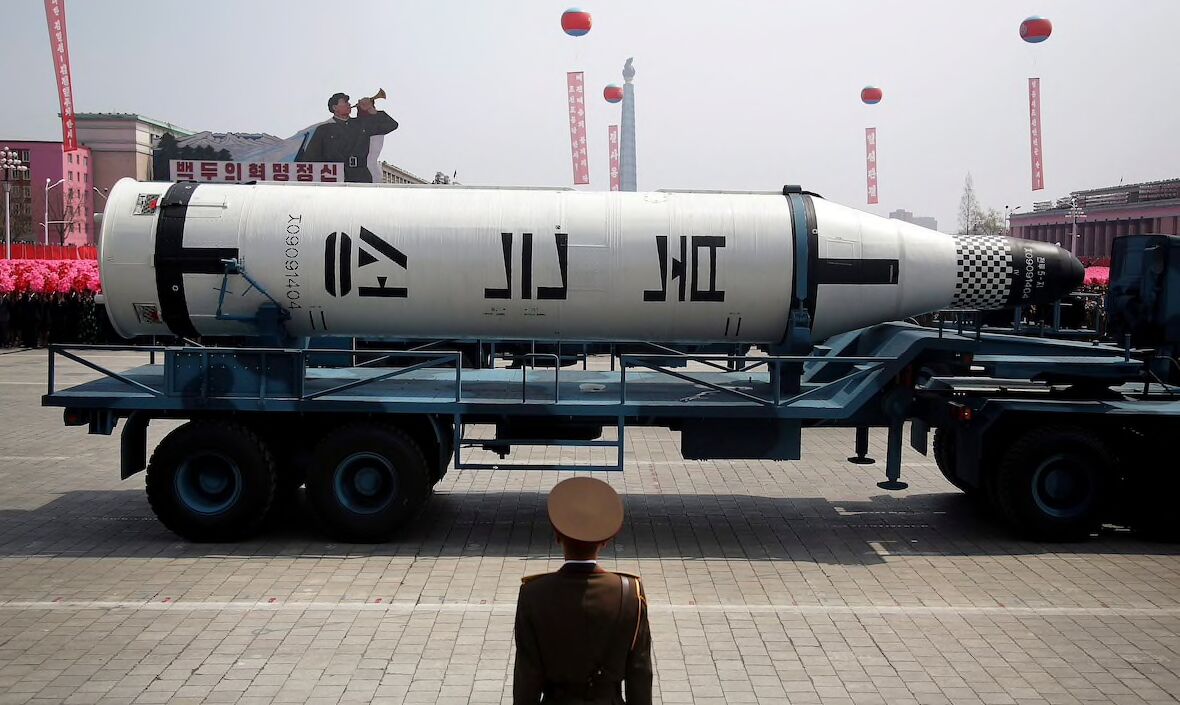
The deployment of an advanced and very diverse ballistic missile arsenal by China’s People’s Liberation Army (PLA), and to a lesser extent by the (North) Korean People’s Army (KPA), has increasingly undermined the United States’ position of military primacy in Northeast Asia throughout the 2010s. The INF treaty has meanwhile left the U.S. unable to respond in kind with deployments of similar missile systems of its own. Both East Asian states, for example, deploy anti-ship ballistic missiles - the best known which are the DF-21D‘carrier killer’ and DF-26which can strike American warships at extreme ranges and at hypersonic speeds with conventional or nuclear warheads. Reports from the U.S. Naval Institute confirm that the service’s heaviest and most valuable warships currently have no defence against such attacks, which places the PLA at a considerable advantage. Another example is the deployment of the DF-26 and Korean Hwasong-12 ballistic missiles, both named ‘Guam Killer’ for their highly similar roles. Attacks from these missiles are assessed by a Rand Corporation study to be able to seriously damage and very likely disableU.S. military facilities on the island territory. The U.S. is far from totally defenceless, and can deploy subsonic cruise missiles from bombers, cruisers and destroyers in the region, but these pack less punch and are more easily intercepted than ballistic missiles. Unlike mobile ground based ballistic missiles on transporter erector launchers like the aforementioned Chinese and Korean platforms, which are highly survivable and can fire from almost anywhere, the effectiveness of bombers and destroyers can be seriously diminished by destroying naval bases and airfields in the region. Thus unless going head to head with Russia - and Russia alone - in Northeast Asia, the United States would always face a unilateral constraint on its capabilities and a major handicap if fighting a ‘great power competitor’ in the region while operating under INF constraints.
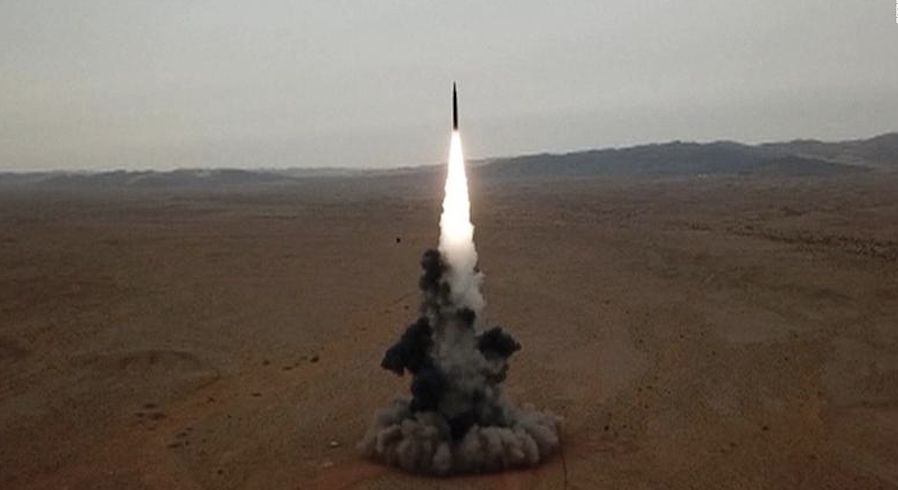
Three recent statements from official sources in the United States and NATO have confirmed that the American withdrawal from the INF treaty was in fact aimed primarily at countering China and North Korea in Northeast Asia - rather than countering Russia in Europe.
- The first was a statement by NATO head Jens Stoltenberg that the alliance had “no intention to deploy new land-based nuclear missiles in Europe” - even if Russia itself deployed such platforms as it is expected to do following the American withdrawal from the treaty.
- The second was a statement from U.S. Defence Secretary Mark Esper on August 3rd, confirming that that the U.S. Military would deploy new missiles to East Asia “sooner rather than later” - preferably within months.
- Third was a statement on August 3rd by President Donald Trump reiterating that the United States would be willing to consider a new treaty along the lines of the INF so long as it also included China as a third party. China previously indicated that it would have no interest in such an agreement.
Taking these three statements into account together, it is evident not only that the American withdrawal from the INF treaty is based on its security concerns in Northeast Asia, but also that it willingness to consider a new treaty is conditional primarily not on Russia’s actions - but on China’s willingness to accept the same constraints on its own missile capabilities.
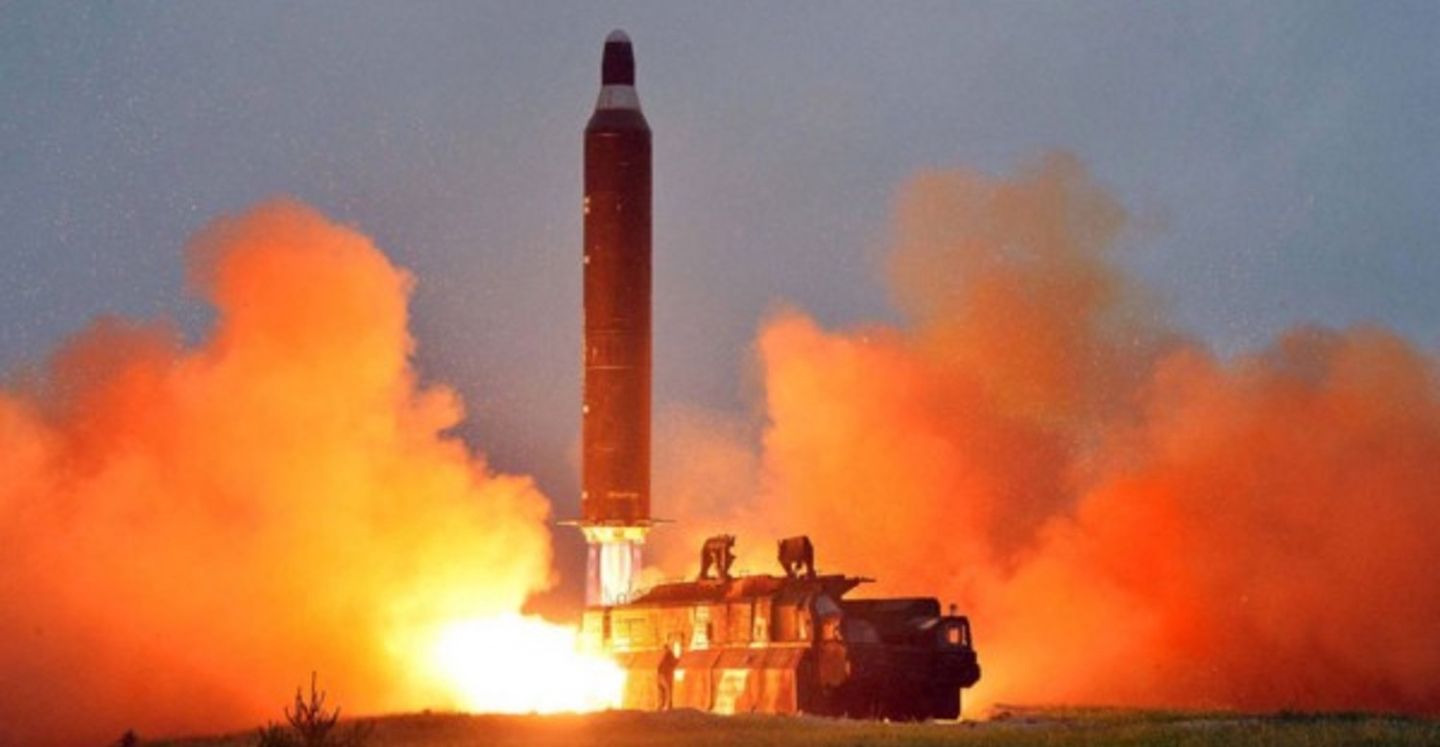
According to Russian sources, the United States has been developing intermediate range ballistic missiles for some years but has refrained from deploying them, which does not technically violate its INF Treaty obligations. This means that the U.S. is likely in a strong position to conduct a major show of force in Northeast Asia aimed at both Beijing and Pyongyang by deploying new longer ranged ballistic missiles of its own in short order. Deployment to Guam would send a strong signal to these states, and the possibility of later deployment to Japan or even to the Asian mainland through bases in South Korea would significantly increase the threat. Washington may intend to shock China into entering a new trilateral treaty with such a show of force. Ongoing negotiations with North Korea meanwhile, while unlikely to force complete denuclearisation, could potentially impose INF-like restrictions on the country’s ground based missile arsenal in exchange for sanctions relief. Disarmed of the Musudan, Pukkuksong-2 and Hwasong-12, the KPA would be unable to strike Guam using land based launchers, and considering the territory’s importance as a hub of U.S. air, naval and very soon marine operations in the region this would mark a major concession.
Ultimately while it is apparent that the focus of the United States’ INF treaty withdrawal is Northeast Asia, America’s final intentions remains ambiguous. Does Washington hope to use the withdrawal as leverage to gain concessions from China and possibly place pressure on North Korea regarding their own missile programs - the end goal being a region free of intermediate range missiles capable threatening Guam and American warships? Or is the purpose to deploy long range missiles capable of retaliation against targets across China and North Korea and of striking Chinese warships at sea? Offers of a new treaty seem to indicate the former, but it as of yet remains uncertain. Whatever the case, the balance of power in Northeast Asia looks to be considerably more favourable to the United States after its withdrawal from the INF Treaty. The same cannot be said of the balance of power in Europe, but considering the current trends in American foreign policy and prioritisation of a ‘Pivot to Asia’ this may well be seen as price well worth paying.
