
'Like a Meteorite, Like a Fireball'; Russia's Game Changing Mach 20+ Hypersonic Glide Vehicle Avangard Completes Ready for Deployment
Military Watch Magazine Editorial Staff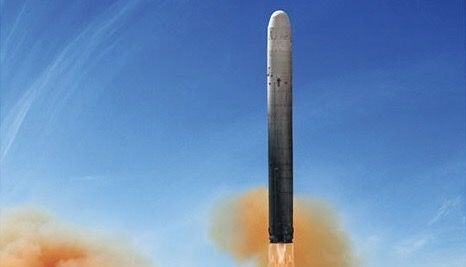
Russian UR-100UTT Launch Vehicle - Used for Avangard Hypersonic Glide Vehicle
The Russian Defence Ministry has announced the final successful test of the new Avangard hypersonic nuclear delivery vehicle, a cutting edge weapons platform announced in March by President Vladimir Putin and one of a number of new armaments intended to revolutionise the country's deterrent capabilities. The weapons system was unveiled alongside the Kh-47M2 Kinzhal hypersonic ballistic missile - a platform deployed by Russian MiG-31 and Tu-22M combat jets tailored towards tactical strike roles such as carrier hunting - and the RS-28 Sarmat (Satan 2) hypersonic ballistic missile among other new hardware. The glide vehicle was fired on December 26th from the Dombarovsky site in southern Russia's Orenburg, and struck its intended target at the Kura test range in the country's Far East demonstrating a high level of precision. The Avangard performed both vertical and horizontal manoeuvres successfully in flight, and accurately struck its intended target at hypersonic speed. The development of a highly manoeuvrable system capable of travelling at high speeds makes the Avangard effectively impossible to intercept by any air defence system likely to be developed for several decades to come - with no existing platform currently capable of intercepting even basic unmanoeuvring hypersonic munitions at relatively low speeds of Mach 5. The Avangard is estimated to have a speed of between Mach 20 and Mach 25.
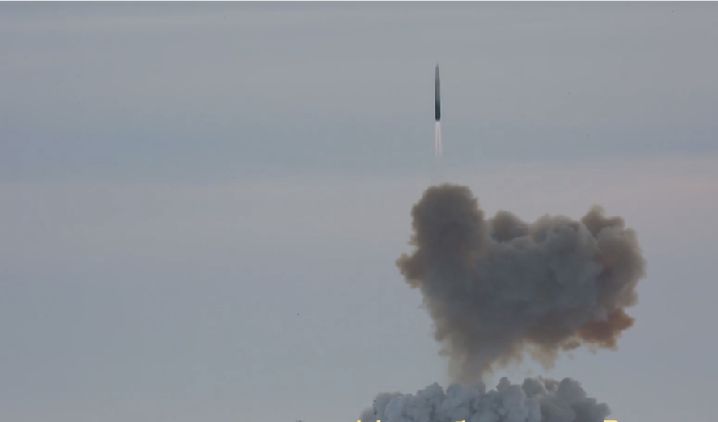
Test Launch of Avangard Hypersonic Glide Vehicle on December 26th, 2018 (Source: Russian Military of Defence)
The Avangard is reportedly set to be manufactured in relatively small numbers, as its extremely high survivability and reliability means that close to 100% of the vehicles launched will deliver payloads to their designated targets - thus eliminating the need for large numbers of delivery vehicles to overwhelm enemy air defences. Unlike the RS-28 Sarmat, which will make use of multiple independent reentry vehicles to deliver several nuclear warheads simultaneously - capable of neutralising an area the size of France or Texas with a single missile, the Avangard will deploy a single higher payload warhead capable of destroying a smaller but still significant area. The sheer speed with which the glide vehicle can travel is unparalleled anywhere in the world, and the impact of a strike by the Avangard was said to be "like a meteor, like a fireball" when announced by President Putin in March.
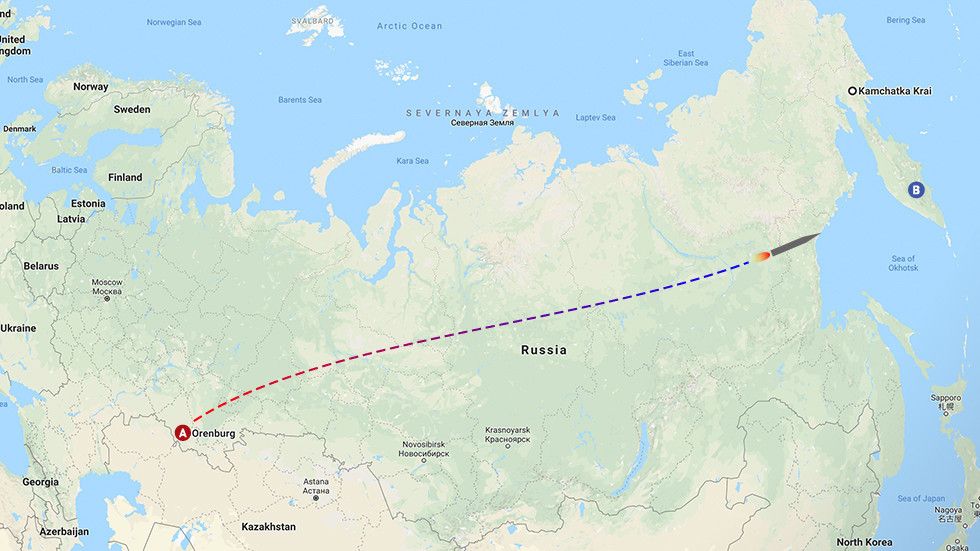
Flight path of Avangard Hypersonic Glide Vehicle Tested on December 26th, 2018 (Source: RT)
With Russia increasingly perceiving itself to be encircled by Western air defence systems since the United States' withdraw from the ABM treaty, the development of the Avangard will leave existing air defence systems essentially obsolete and thereby considerably strengthen the country's strategic nuclear deterrent. Commenting on the successful testing of the platform, President Putin stated: “The test was finished just now in a complete success... all its specifications were confirmed. It is a big event for the armed forces, and probably for the entire country. Russia has a new kind of strategic weapon." While the Avangard was expected to be deployed in limited numbers by the end of 2018, the first regiment armed with the hypersonic munitions will be deployed in 2019. The United States for its part has responded to the deployment of the Avangard by drastically investing investments to develop of hypersonic missiles of its own - though whether it will be able to overcome the considerable technological gap separating it from its rival remains to be seen.
