
U.S. Plans to Surround Russia with 400 Anti Ballistic Missiles; Why Moscow Prioritises Strengthening its Deterrent with Hypersonic Missiles
Military Watch Magazine Editorial Staff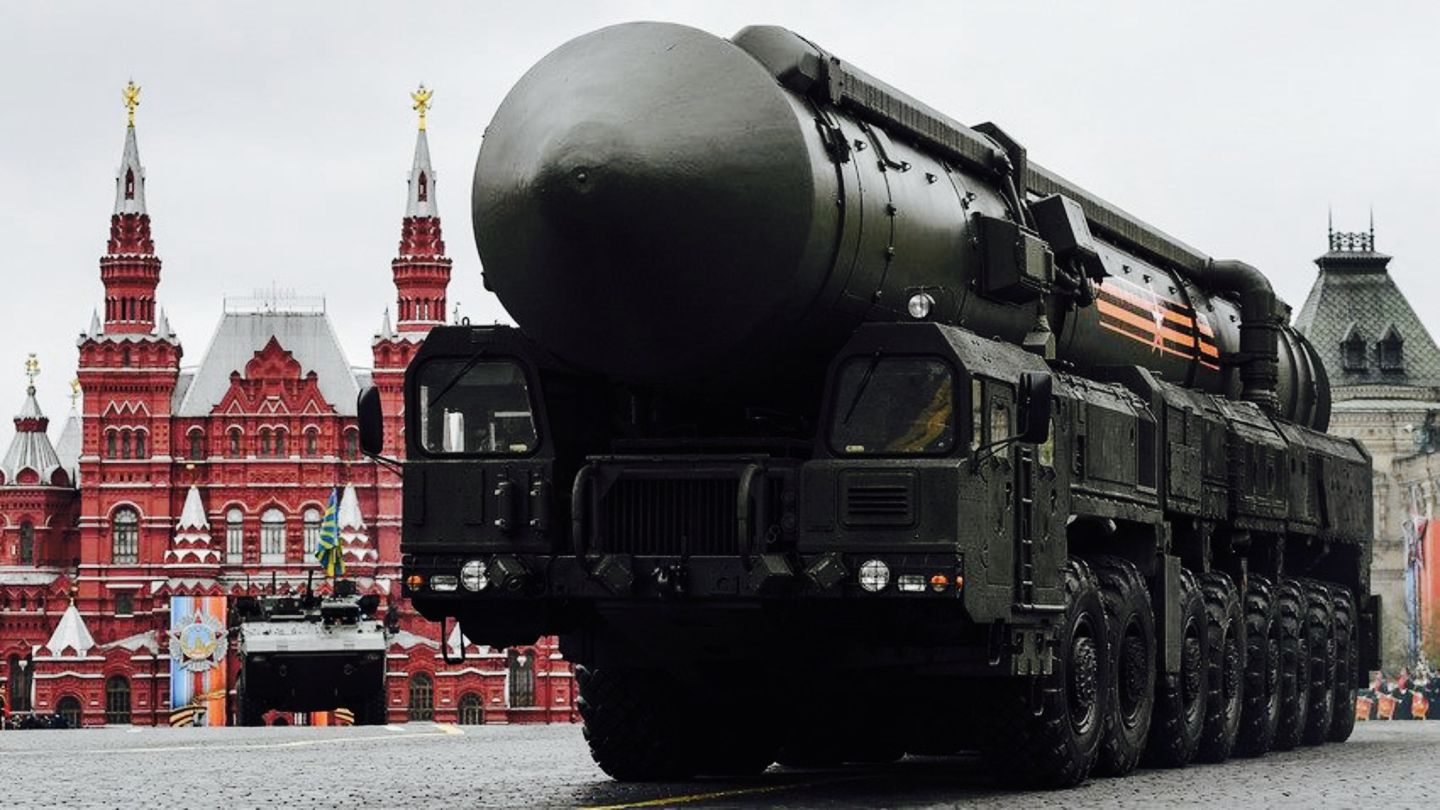
Russian Nuclear Capable ICBM on Parade
The United States has since the end of the Cold War made extensive deployments of its most sophisticated anti missile systems near Russia's borders, a move Moscow has strongly apprehended. These deployments significantly escalated following the United States' unilateral withdrawal from the Anti Ballistic Missile (ABM) treaty in 2002, and have continued ever since. Air defences include Patriot and Aegis Ashore batteries in Europe and Japan, THAAD systems in South Korea, and Aegis systems on U.S. warships in the waters surrounding Russia's eastern and Western coasts, among others. According to Russian President Putin, the U.S. Navy has five cruisers and 30 destroyers deployed “in the immediate vicinity of the territory of Russia” as part this anti missile defence network. The aim of this development has been, according to Moscow, to deny Russia its strategic nuclear missile deterrent and thus put the country at a significant disadvantage in any future conflict with the Western bloc. Alexander Fomin, Russia’s deputy defence minister, stated regarding the Western bloc's efforts led by the United States: “A large-scale effort is ongoing to encircle Russia with an anti-missile shield." He noted that alongside air defences deployed near Russia's borders, which numbered some 400 anti ballistic missiles: "Anti-missile defense sites have been already seat up on US soil in California and Alaska. Anti-missile defense sites in Japan and South Korea will join this circle." Upon its completion, this surface to air missile network would have the effect of "significantly diminishing the potential of Russia’s nuclear deterrent.”
Alongside the deployment of the Aegis Ashore to Romania in 2016, the most sophisticated of the United States' anti missile systems, in 2017 the U.S. military for the first time deployed Patriot missile batteries to the Baltics, the former Soviet Union, for use in large scale war games in Lithuania. In July of the same year U.S. Vice President Mike Pence indicated the country was considering deploying further Patriot batteries to Estonia. Poland, a former Warsaw Pact member in the Soviet sphere of influence, is also set to deploy Patriot batteries - as is the formerly no aligned Sweden.
Russia's response to the Western bloc's growing deployment of sophisticated missile defence systems near its borders has been to develop more effective delivery systems for its strategic nuclear weapons capable of reliably evading U.S. made anti missile systems. Hypersonic platforms in particular have been key to Russia's strategy, as while U.S. air defences struggle to intercept missiles travelling at over Mach 5, by travelling at speeds of Mach 10 and in some cases reaching Mach 20 interception is made effectively impossible regardless of the quantities of anti missile systems deployed. Platforms such nuclear powered long range cruise missiles, heavily armed nuclear powered underwater drones, the hypersonic Sarmat heavy ICBM and the Mach 20 Avangard ICBM have all contributed to a strengthening of Russia's deterrent forces, effectively nullifying gains made by the U.S. in undermining Russia's deterrent force. Developing and deploying new air defence systems capable of intercepting even Mach 10 platforms, if possible, will likely take several decades and will cost several times more than developing the missile itself ever did. Doing so will still leave the Western bloc vulnerable to strikes by the Mach 20 Avangard, against which the development of a reliable defence system is all but impossible for the foreseeable future. Russia has by developing hypersonic delivery systems thus managed to guarantee the viability of its deterrent forces, thus its own security, for decades to come if not indefinitely.
