
Australia Receives Final P-8 Long Range Anti-Submarine Warfare Jet to Counter Chinese Undersea Fleet
Military Watch Magazine Editorial Staff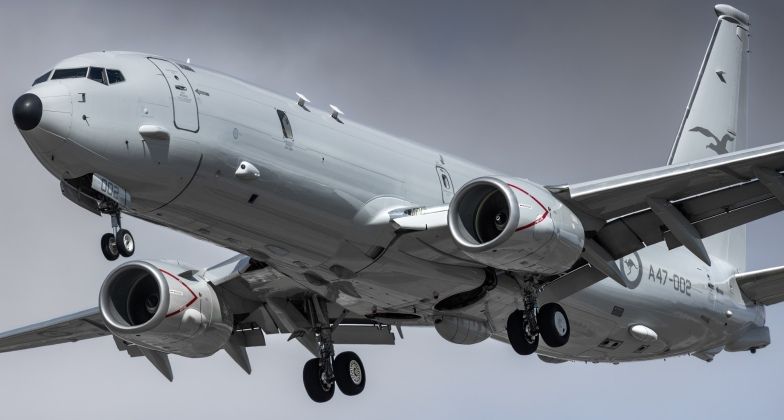
Royal Australian Air Force P-8 Poseidon
The Royal Australian Air Force on May 27 received the last of 14 Boeing P-8A Poseidon maritime patrol aircraft ordered from the United States, replacing its aging AP-3C Orion fleet to significantly expand its surveillance and anti-submarine warfare capabilities across the Western Pacific. Australia is currently conducting a major military buildup that analysts have widely assessed is aimed at maximising capabilities to engage Chinese forces in the event of a U.S.-led war effort in the Pacific, with Australian territory itself having become an increasingly critical staging ground for U.S. forces to project power into East Asia. The new aircraft are divided between three units, No. 11 Squadron, No. 12 Squadron, and No. 292 Squadron, with protracted deliveries having extended for close to a decade from November 2016.
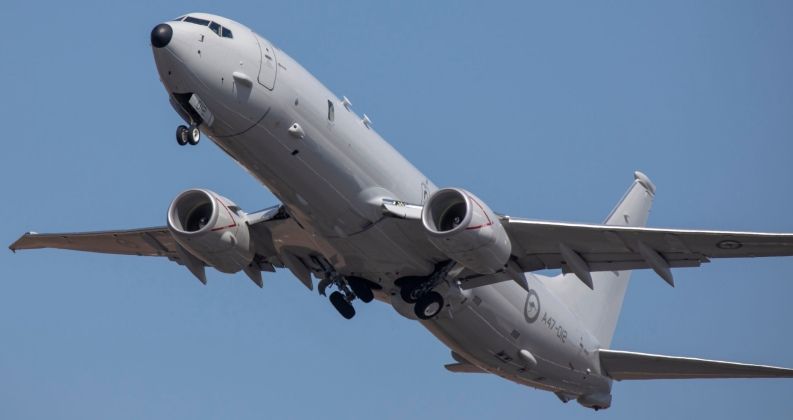
The P-8 was designed primarily as an anti-submarine warfare aircraft, although it is also capable of intelligence, surveillance, reconnaissance, and search-and-rescue operations, and can carry a limited armament for striking surface targets. The aircraft’s advanced acoustic sensors and high speed data links allow it to work alongside other anti-submarine warfare assets to achieve high levels of situational awareness for a joint network. Approximately 125 currently in service in the U.S. Navy alone, making it the most numerous maritime surveillance jet in the world. When operating against hostile submarines, the aircraft drop sonobuoys in patterns to establish acoustic coverage, with data from these sensors fused by onboard processors to classify and track potential targets.
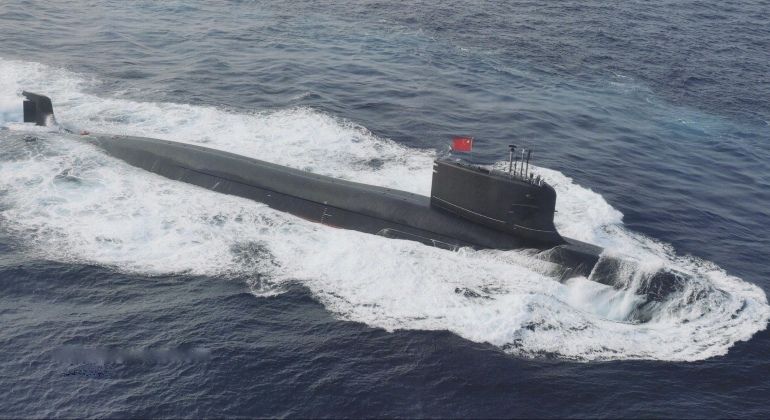
The major buildup of Australia’s anti-submarine capabilities has occurred as Chinese nuclear submarine capabilities have continued to improve rapidly, with the country assessed in 2025 to have surpassed the Untied States in construction rates for the vessels. The enhanced Type 093B class attack submarine significantly improved on the capabilities of prior vessels, while the first vessel of the next generation Type 095 class was assessed in early 2026 to have been launched, representing a major landmark that places the Chinese fleet at the cutting edge worldwide. The service entry of new generations of hypersonic cruise and ballistic missiles, which Western navies are yet to field an equivalent to, has further strengthened Chinese capabilities. The U.S. Navy has perceived a much greater challenge from the capabilities of the Chinese submarine fleet than in the past, with improved quietness singled out as an area where performance had made particularly major advances.
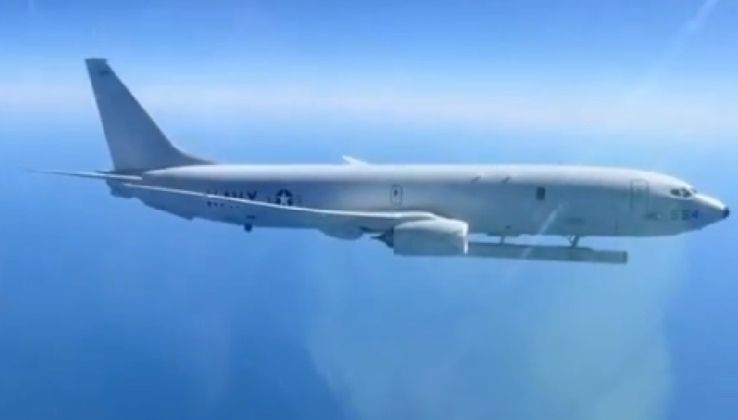
The P-8 integrates the Link 16 data link system allows the vessels to share data with satellite networks, which is vital to facilitating continuous tracking in coordination with other assets such as nearby Australian or allied destroyers. The development of new sensor pods is expected to continue to increase the P-8’s versatility for other roles, with the new AN/APS-154 Advanced Airborne Sensor radar pod allowing the aircraft to track moving targets at sea and on land, including providing moving target indication and synthetic aperture imaging. Australian P-8s are expected to form part of a broader region-wide network alongside the long range anti-submarine warfare aircraft of other U.S. strategic partners, most notably Japan and Singapore, as well as those of the U.S. Navy itself, to provide a collective force with greater situational awareness in the event of a collective war effort against China. Nevertheless, the ability of aircraft like the P-8 to operate safely in a war effort against China remains in serious question due to major advances in Chinese stealth fighter and very long range anti-aircraft capabilities, with the country expected to operationalise the world’s longest ranged fighter type, and the world’s first of the sixth generation, in the early 2030s.
