
American Warplane Flies Through Taiwanese Airspace: China Quick to Respond
Military Watch Magazine Editorial Staff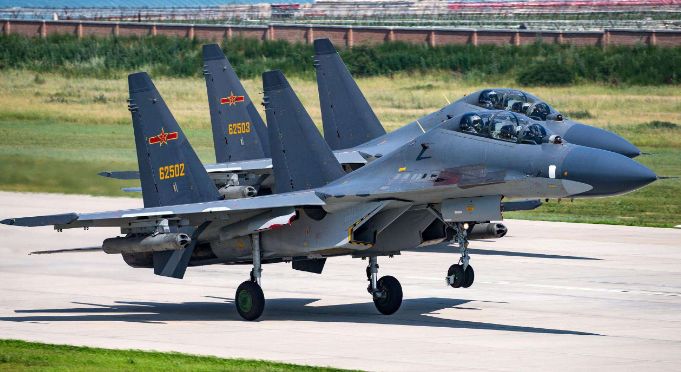
Chinese People's Liberation Army Su-30MKK Heavyweight Fighters
Amid growing tensions in the Taiwan Strait, and more widely between China and the United States, a U.S. Air Force C-40A transport entered Taiwanese airspace and conducted an extended flight over the territory on June 9th. The American aircraft deployed from an airbase in Okinawa, and flew over Taiwan’s Keelung, New Taipei, Taipei, Taoyuan, Hsinchu, Miaoli, Taichung, Changhua, Chiayi and Tainan before flying over the Taiwan Strait and towards the Bashi Channel. Taiwanese military spokesman Shih Shun-wen confirmed that the American aircraft had flown across Taiwan, stating “the military has full control of the activities around Taiwan and the present condition is normal.” While Taiwan is officially recognised as part of the People’s Republic of China by the United Nations and the vast majority of countries, it continues to maintain a separate government with its own military and has increasingly moved towards a formal independence from Beijing.
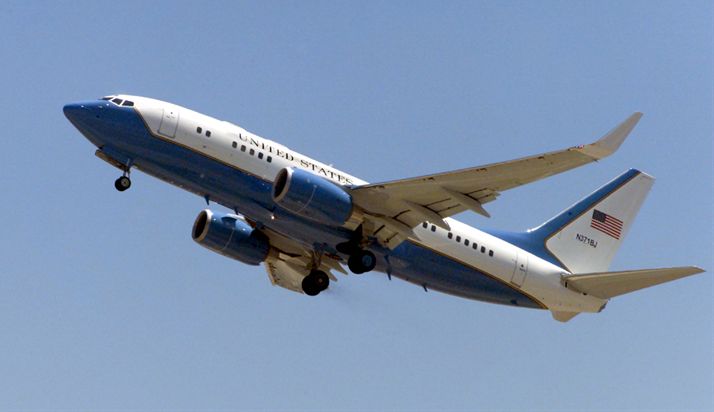
The American overflight comes amid growing calls in the United States to provide direct support to Taipei in order to ensure its continued independence from the Chinese mainland, and follows multiple major arms sales ini 2019 which notably include M1A2 Abrams heavyweight battle tanks and F-16V lightweight ‘4+ generation’ fighters. Recent American arms sales have amounted to over $10 billion. China notably responded to the U.S. Air Force operation with a show of force, deploying Su-30 fighter jets over the Taiwan Strait and into southwestern Taiwanese airspace which led Taiwanese forces to scramble its own fighter aircraft. The Su-30 is a heavyweight twin engine fighter acquired from Russia in the late 1990s and early 2000s, and China's Air Force and Navy between them field little under 100 of them including both MKK and MK2 variants. The fighters carry more powerful radars and longer ranged missiles than any in Taiwanese service, and are considerably faster, can fly at higher altitudes and integrate much larger and more powerful radars than Taiwanese jets such as the F-16A and Mirage 2000. It remains to be seek whether the U.S. will seek to stage more regular overflights of Taiwan, possibly later including combat capable aircraft such as bombers and fighters, and how China’s armed forces will respond in future.
