
Su-30MKK: Designing an Elite Fighter to Protect Chinese Coasts and the Beginning of Chinese Maritime A2AD
Military Watch Magazine Editorial Staff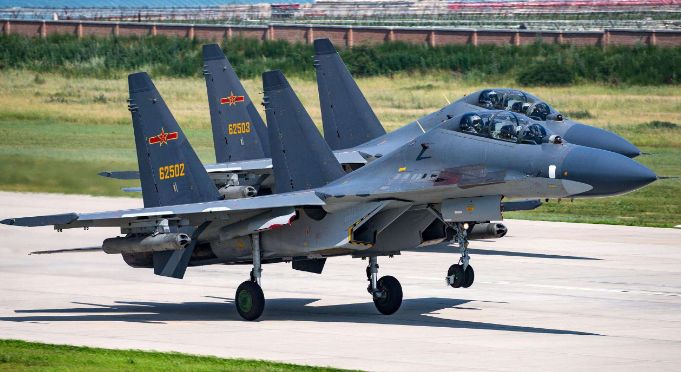
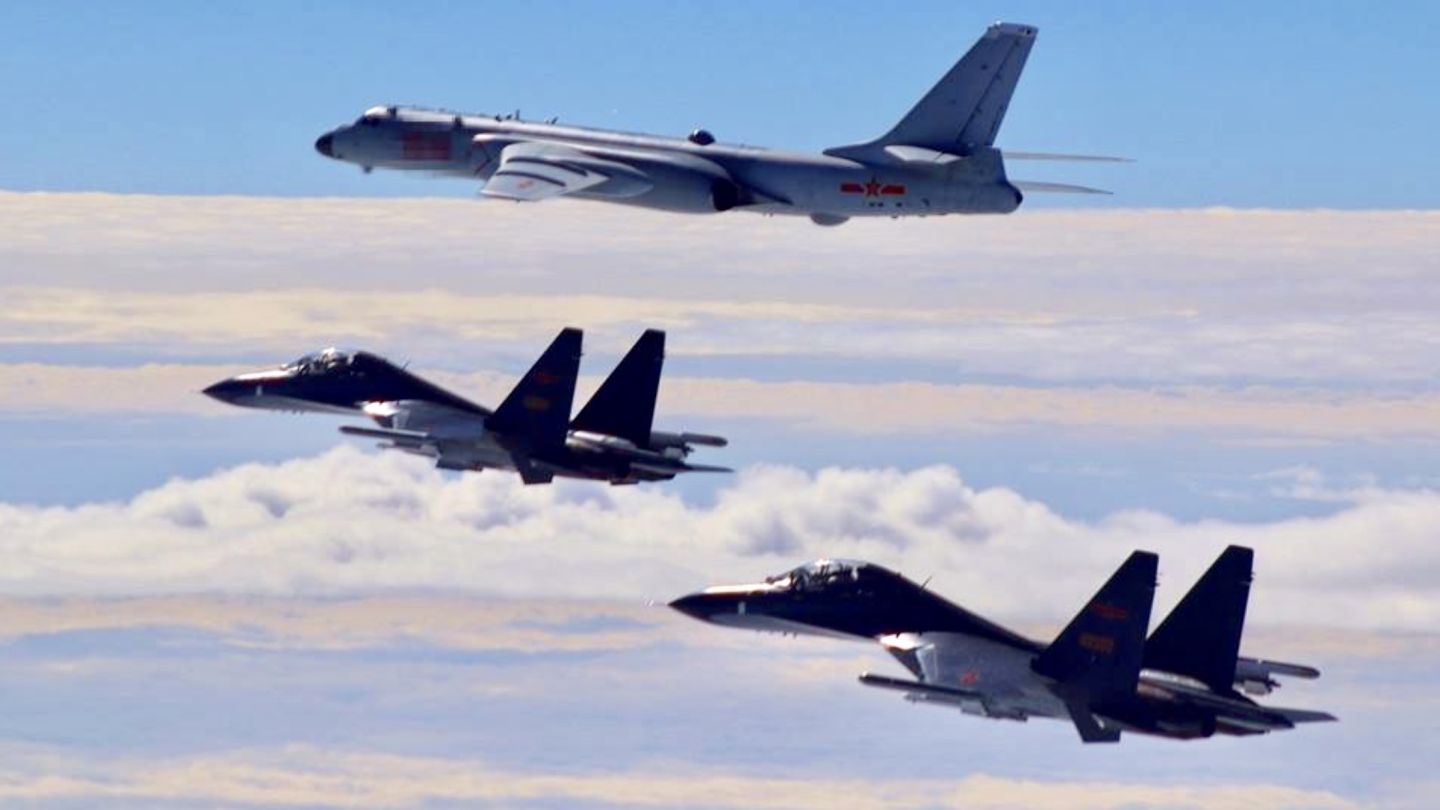
Chinese People's Liberation Army Air Force Su-30MKK Strike Fighters
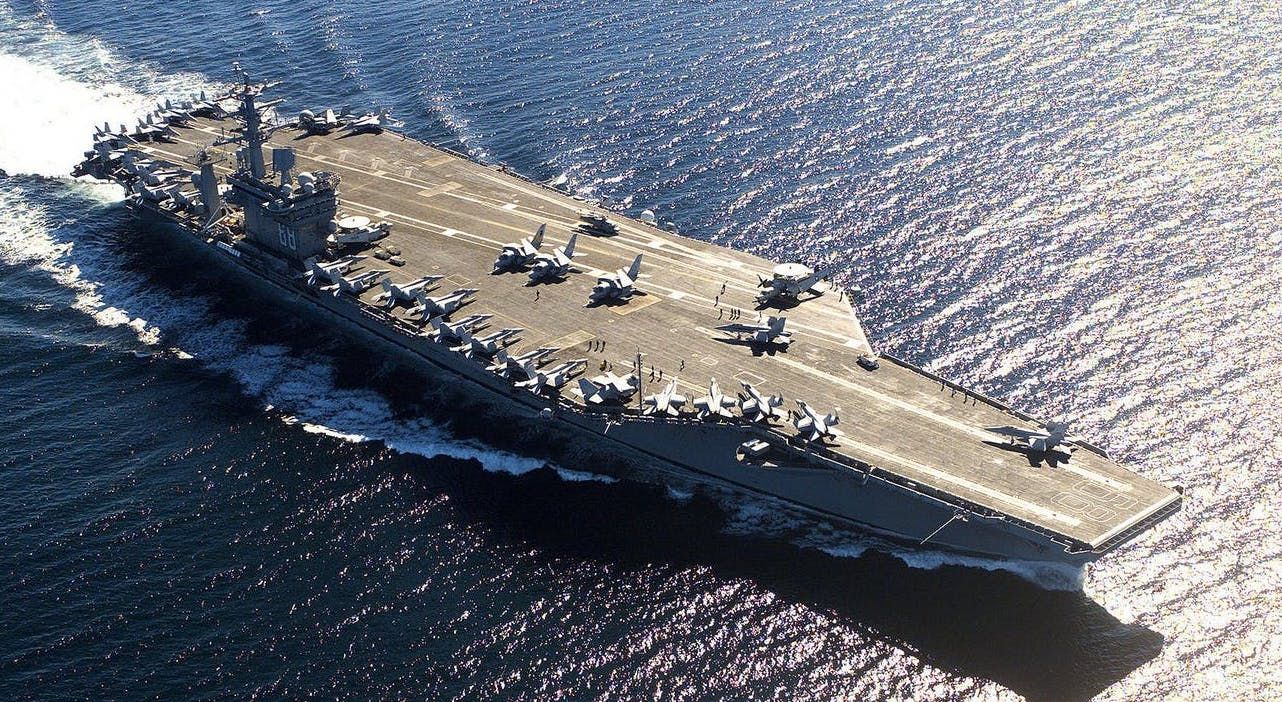
The end of the Cold War and collapse of the Soviet Union saw tensions between the Western Bloc and the People’s Republic of China escalate, and a potential conflict with the Western Bloc and particularly the United States thus emerged as the primary focus of Chinese defence planning. The U.S. bombing of the Chinese embassy in Yugoslavia, reports of Western support for anti government riots which killed several PLA soldiers in 1989, and U.S. threats of war against North Korea, all led the People’s Liberation Army (PLA) leadership to escalate preparations for the possibility of U.S. military action in northeast Asia. Tensions came to a head in the third Taiwan Strait Crisis from 1995 to 1996, in which Beijing feared that Western-aligned government in Taipei would seek a formal independence from the Chinese mainland with the support of Europe and the United States, and the West in turn feared a Chinese invasion of their longstanding East Asian partner. With China mobilising its forces and testing missiles near the Taiwan Strait in a demonstration of its power, the United States responded with a massive show of force - deploying three aircraft carriers and their battle groups to the region. While China’s armed forces had undergone some basic modernisation since 1991, acquiring some of the latest Soviet weapons systems from successor states Russia and Ukraine, the modernisation program was still in its infancy and Beijing was increasingly aware of its inability to meet the United States head on or even deny the U.S. Navy access to its coastal waters. This weakness was strongly emphasised when two U.S. aircraft carriers, the USS Belleau Wood and USS Nimitz, sailed through the Taiwan strait alongside a full strike group - a demonstration of American might which emphasised the PLA's weakness. This demonstration forced Beijing to back down - at least temporarily.
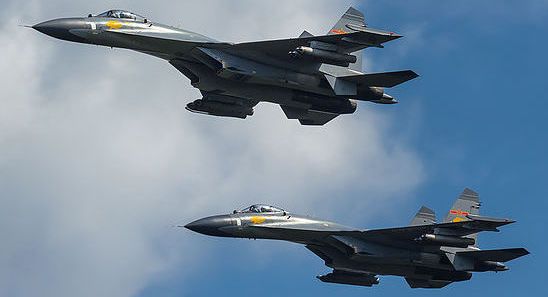
In response to the Taiwan Strait crisis, the PLA escalated efforts to modernise its forces and particularly to strengthen its maritime anti access area denial (A2AD) capabilities to protect itself from naval attacks. The PLA turned to Russia, which at the time fielded what were widely considered the most capable heavyweight fighters in the world - the Su-30. Acquiring these fighters was a potent and highly cost effective means of strengthening Chinese defences and compensating for existing weaknesses. While the PLA Air Force had already begun to acquire Su-27 fighters from Russia from 1992, which it went on to build indigenously and develop into a number of domestic platforms such as the J-11B, the Su-30 represented a far more capable derivative of the same design incorporating two dimensional thrust vectoring for higher manoeuvrability, more powerful sensors, superior avionics, and a twin-seat configuration ideally suited to strike and anti shipping roles.
Among a number of Su-30 variants developed, the Su-30MKK was the most capable at the time and was Russia's most advanced fighter. Facing economic crisis, Moscow was willing to sell these aircraft to China despite the sensitivity of their technologies. The Su-30MKK was tailor made to suit Chinese defence needs, and Chinese Premier Li Peng signed a $1.8 billion contract to purchase the world leading air superiority platforms. While the initial order was for 38 fighters, their impressive capabilities led to further orders and the PLA would eventually come to deploy 73 fighters. State of the art long range communication systems, fly by wire controls, a glass cockpit, heads up display, helmet mounted sights, state of the art mission computers, and navigation systems capable of utilising both the GPS and GLONASS were among the features included on the fighters. They made use of a significantly higher percentage of composite materials relative to other Su-30 variants, and new aluminium alloys helped to reduce the aircraft’s weight while carbon fibre composite rudders increased their strength. The airframe of the Su-30MKK somewhat resembled that of the Su-35 '4++ generation’ air superiority platform - an advanced fighter which would not enter service until 2014.
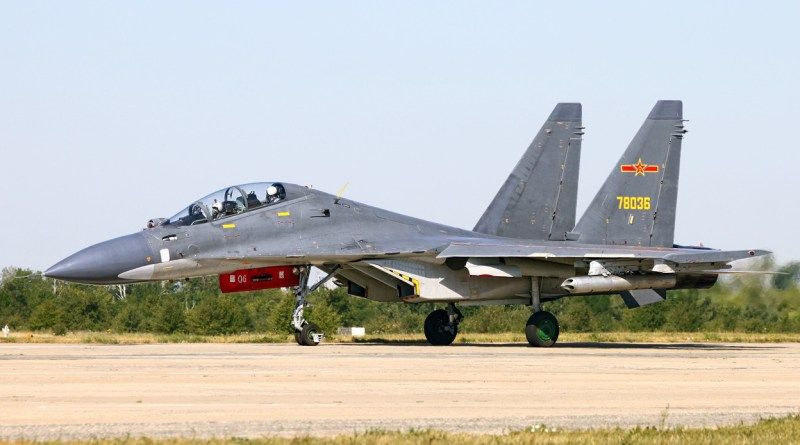
Alongside their potent air superiority capabilities inherited from the original Su-30, the MKK variant were designed to fulfil a maritime strike role. The fighters were thus operated by China’s PLA Navy rather than the Air Force, and were delivered swiftly to ensure the defence of Chinese coasts could be quickly shored up. The fighters featured additional fuel tanks and aerial refuelling capabilities, allowing them to better operate in a maritime strike role against distant targets. The Su-30MKK’s radar warning receivers were could provide targeting information to new Kh-31 anti ship missiles without using other detection systems, thus allowing the fighter to better undertake a maritime strike role with a high degree of survivability. Each fighter could carry several Kh-31 anti ship missiles, the latest Soviet platforms of their kind which entered service in 1988 just three years before the state’s dissolution. Impacting at approximately Mach 3 and carrying a warhead of over 100kg, they posed a serious threat to U.S. warships within their range, and the Su-30MKK was the ideal platform to deploy them. The fact that the fighter had a greater weapons payload than than original Su-30 and a higher endurance meant it was all the more dangerous in such a role.
The Su-30MKK remains in service with the PLA Navy today, and the fighters remains the most advanced in Chinese service until the induction of the indigenous J-16 in 2013. Since the Taiwan Strait crisis, Chinese A2AD capabilities have grown significantly, and now extend far out into the South China Sea. Weapons systems such as the DF-21D 'carrier killer’ ballistic missiles continue to extend this past 1,500km, while other platforms such as the YJ-12 anti ship missile and HQ-9B recently deployed to fortified outposts in the South China Sea further complicate naval and air operations near Chinese territory. The PLA Air Force has meanwhile continued to grow in both size and sophistication, with its latest aircraft matching and in many cases surpassing the capabilities of the Su-30. New anti ship munitions systems continue to be tested, while the Navy’s vastly enhanced capabilities have made Chinese waters among the best defended globally. The Su-30MKK has been seen equipped with indigenous PL-12 air to air missiles following modifications to their fire control systems, and are expected to deploy a wider range of indigenous munitions in future. This are likely to include YJ-12 anti ship cruise missiles, more capable platforms than the Kh-31, and newer PL-15 air to air missiles to replace the R-77 and R-27s acquired from Russia. Integration of these new superior weapons, combined with with improvements electronic warfare systems, will keep the Su-30MKK ahead of most competition for years to come. Ultimately the Su-30MKK played a pivotal role in the 1990s, and while the burden of protecting Chinese interests in the South and East China seas has largely been transferred to other weapons systems which have since entered service, the platform’s highly sophisticated maritime strike capabilities combined with its elite air superiority airframe will make it a valuable asset for the People’s Liberation Army for decades to come.
