
China’s Stealthy J-20 Fighters Conduct Maritime Combat Training: Readiness No Longer in Doubt as Growing Numbers Enter Service
Military Watch Magazine Editorial Staff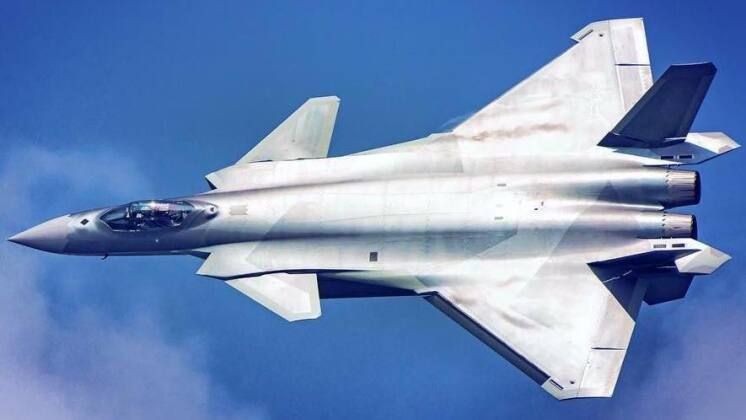
Chengdu J-20 Heavyweight Fighter
Little over a year after the new fighter class entered service in March 2017, the Chinese People's Liberation Army (PLA) Air Force has deployed its J-20 air superiority fighters to conduct maritime combat training missions for the first time. While the fighter joined the fleet years before the majority of Western analysts predicted, it has demonstrated high levels of combat readiness in a number of exercises of which this is but the most recent. PLA Air Force spokesperson Shen Jinke stated on May 9th regarding the exercises: "The J-20 has conducted a combat training mission in sea areas for the first time, and this has further strengthened the comprehensive combat capability of the People's Liberation Army Air Force. The J-20's combat training at sea will help the PLAAF better execute its duty to safeguard national sovereignty, security and territorial integrity.”
The J-20 is the first fifth generation combat aircraft to be developed anywhere in the world outside the United States, and provides the PLA with a counterpart to the American F-22 Raptor. With the F-22 having long since seen production cut, however, the small American Raptor at under 25% of its former projected size has seen efforts to upgrade and modernise its capabilities, the combat performance of the J-20 has continued to improve rapidly - leading to concerns in the West that the Chinese platform is set to soon surpass the combat its capabilities repeatedly frustrated. The J-20 is from them same weight range as the F-22, has a similar focus on air superiority, and also uses a twin engine configuration. It has integrated the latest Chinese air to air missile classes the PL-15 and PL-10 which have few rivals in the world in terms of performance, and is set to integrate indigenous WS-15 engines in future which are expected to be the most powerful ever integrated onto a twin engine fighter..
The J-20’s maritime combat tests hold particular significance due to China’s growing tensions at sea with the United States and a number of its Western partners. The fighter’s induction was observed with particular apprehension in the United States for its ability to seriously hinder the U.S. Navy and Air Force’s ability to operate combat aircraft at sea, with its long range air to air missiles optimised to destroy U.S. aircraft at ranges beyond retaliation range. It has been speculated since the fighter was unveiled, although not yet confirmed, that the J-20 will deploy the very long ranged PL-XX air to air missile optimised for to neutralising critical support aircraft such as aerial tankers and airborne early warning and control (AEW&C) aircraft, without which American air power would be extremely limited particularly over the fast distances of the Pacific. With these support aircraft vital to facilitating any potential U.S. offensive operations against China from the air, the importance of the J-20 as a new combat aircraft very well suited to threatening them and thus serving as an inhibitor to American attacks is very significant for China's security.
The J-20’s maritime combat tests come just days after Beijing deployed YJ-12 anti ship missiles and HQ-9B air defence systems to island outposts in the South China Sea, and a few weeks after advanced electronic warfare systems were deployed to fortify these positions. The PLA Air Force had deployed advanced Su-35 '4++ generation' fighters, another higher end heavyweight combat aircraft, for overflights of the South China Sea shortly beforehand. The J-20 provides a significant enhancement to Chinese anti access area denial (A2AD) capabilities in the South China Sea, and gives the PLA the ability to deny hostile aircraft access to the strategically critical region in the event of war. As Western countries have significantly expanded their military presences in this region, where China maintains significant territorial claims, they have conducted several patrols in waters and airspace claimed by Beijing. These actions have been seen as highly provocative. Demonstrating the J-20’s ability to operate at sea, particularly given its long range, advanced strike capabilities and high survivability in beyond visual range engagements, sends a strong signal to the U.S. and its partners regarding China’s resolve to protect its territorial claims and continue to expand its A2AD capabilities. As the J-20 enters service in the PLA in growing numbers doubts regarding its combat readiness have increasingly been dispelled, which has significant strategic implications due to ongoing tensions with Western interests in the region.
