
One of America’s Troubled B-1B Bombers Suffered Serious Engine Damage on Mission to Norway
Military Watch Magazine Editorial Staff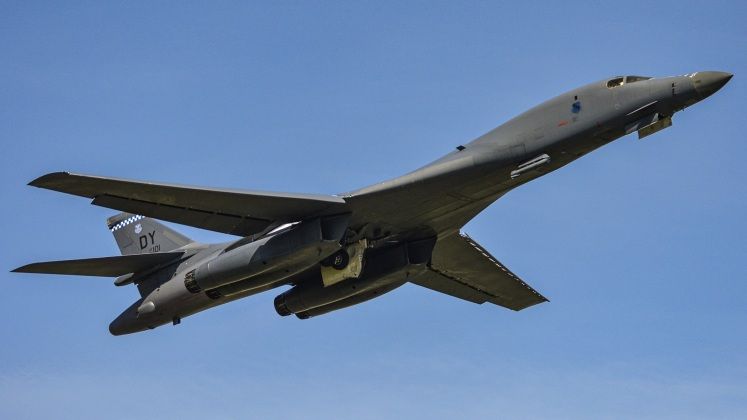
U.S. Air Force B-1B Bomber
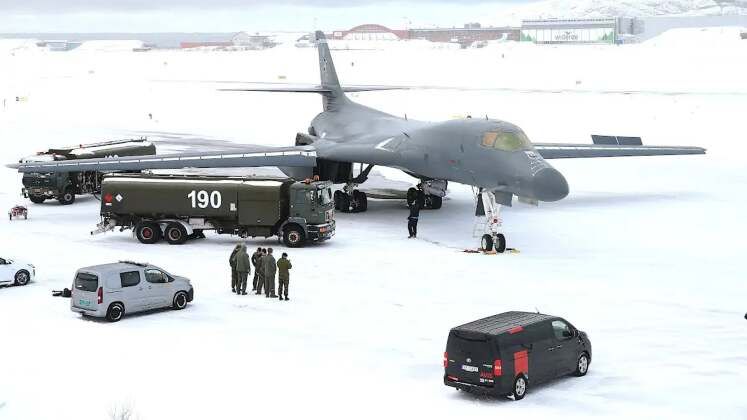
Following the deployment of four B-1B Lancer heavy bombers from the U.S. Air Force’s 7th Bomb Wing to Norway, one of the aircraft reportedly suffered serious damage. The Supersonic aircraft arrived at the Royal Norwegian Air Force's Ørland Main Air Station in February, before leaving the following month, with the deployment widely seen as a show of force aimed at Russia particularly over the Arctic region. The deployment of a B-1B bomber above the Arctic Circle in particular was seen to be directed at Russia, although the aircraft could not remain in the extreme climates there in the medium or long term — unlike Russia’s own Su-34 and MiG-31K strike aircraft which are deployed permanently to the region. Problems with the B-1B reportedly included damage to the engine, and while the incident remains under investigation a squadron commander already removed from his post in relation to it.
The U.S. Air Force has continued to face difficulties operating the B-1B, which is its only class of supersonic bomber and its only post-Vietnam War era bomber fielded in multiple large squadrons. The aircraft’s very high maintenance requirements and operational costs left 90% of the fleet out of service in 2019, and while the B-1B fleet was initially scheduled for complete retirement in the mid 2030s, when it would be replaced by larger numbers of B-21 Raider stealth bombers, ongoing reliability issues and rising operational costs may force the Air Force to retire the aircraft early. At least some Lancers are expected to leave service before 2025, which could force the Air Force to temporarily make do with a much smaller bomber fleet. The aircraft currently comprise four of the eleven serving bomber squadrons alongside five Vietnam War era B-52H squadrons and two small B-2 Spirit squadrons. Russia is currently expanding its fleets of Tu-22M and Tu-160M supersonic bombers, with the former being restored from storage and the latter being produced from newly reopened production lines. The bulk of Russia’s bomber fleet was produced in late 1980s or in the 1990s, meaning the B-1B airframes are on average much older than their competitors.
