
Would Chinese JF-17 Fighters Outperform Eurofighters in Defending Saudi Arabia’s Airspace?
Military Watch Magazine Editorial Staff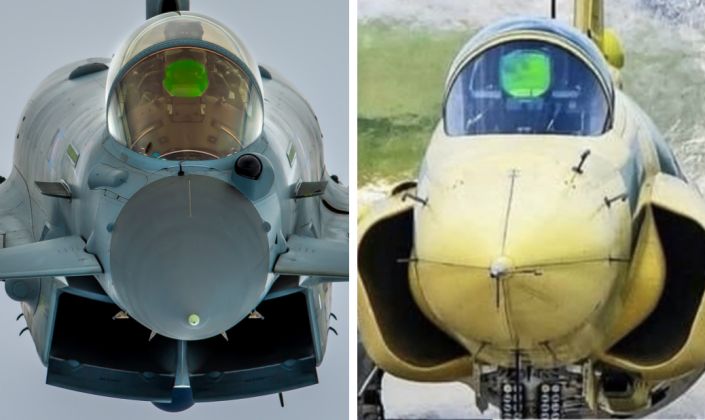
Eurofighter (left) and JF-17 Block 3 Fighters
In the first week of January multiple reports emerged that the Saudi Defence Ministry was considering procuring Chinese JF-17 fighter aircraft under a deal valued at $4-6 billion, which would mark the first major procurement of non-Western fighters in the country’s history. Should the aircraft indeed be purchased, it would raise serious questions regarding both their role in the Royal Saudi Air Force, and how their capabilities would compare to other fighter types that are already in service. The Air Force currently fields four fighter types including an estimated 152 F-15s, 72 Eurofighters, and 80 Tornados, of which an estimated 84 F-15SA fighters are by far the most modern and capable, and the only fighters in service with ‘4+ generation’ capabilities.
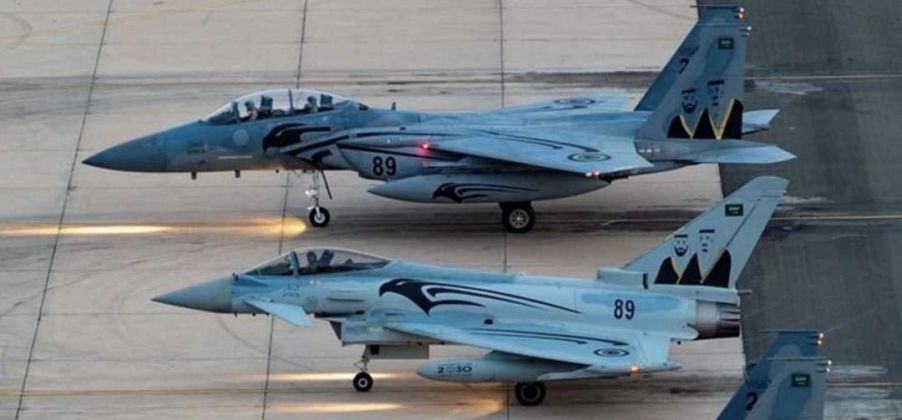
Much like the F-15SA benefited from a wide range of technologies previously developed for fifth generation fighter aircraft in the United States, the JF-17 Block 3 has also integrated a wide range of technologies from China’s J-20 fifth generation fighter. China and the United States are the only countries that field indigenous fifth generation fighters in significant numbers, and are considered effectively the only competitors in developing sixth generation fighters, with China’s projected to enter service in the early 2030s around 3-6 years ahead of their U.S. counterparts. Although the JF-17 Block 3 is by far the lightest and least costly Chinese fighter type in production, the world leading status of the country’s combat aviation industry is strongly reflected in the sophistication of the technologies integrated onto the aircraft.
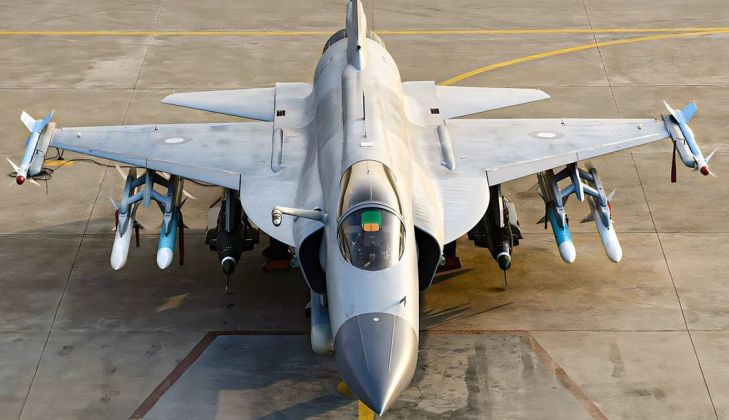
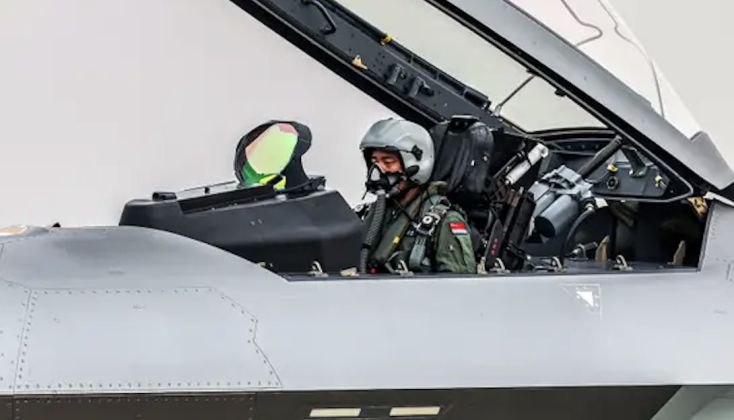
The JF-17 Block 3’s avionics suite including its controls and cockpit displays bear strong resemblances to those of the J-20. The fighter’s helmet mounted sights and heads up displays are more advanced than those of early fifth generation fighter models such as the F-22, allowing it to capitalise on a new range of armaments which are deployed by both it and the J-20. The development of materials for the aircraft’s high composite airframe are reported to have benefitted greatly from the major advances made in the field to develop the J-20, while the aircraft’s data links and active electronically scanned array radar also use advanced fifth generation level technologies comparable to those of the F-15SA. The aircraft uses the same primary air-to-air weapons as the J-20, the active radar guided PL-15 and infrared guided PL-10, which provide overwhelming advantages over all Saudi fighters other than the F-15SA, while the PL-15 itself remains totally unmatched within the Middle East.
Although the JF-17’s flight performance is conservative, and its radar remains significantly smaller and less powerful than that of the F-15SA, it is a highly capable fighter in many respects more capable than older Cold War era F-15 variants, and very significantly more capable than the Eurofighters and Torandos in service. The Eurofighter was one of the last two fighter programs in the world alongside the Swedish Gripen to transition from production with a mechanically scanned array radar to one with an electronically scanned array radar. Mechanically scanned array radars are today considered highly straightforward to jam, while requiring several seconds to scan an area, and being highly limited in their ability to scan while tracking or to engage multiple spaced out targets. This seriously limits Saudi Eurofighters’ viability for medium or high intensity combat.
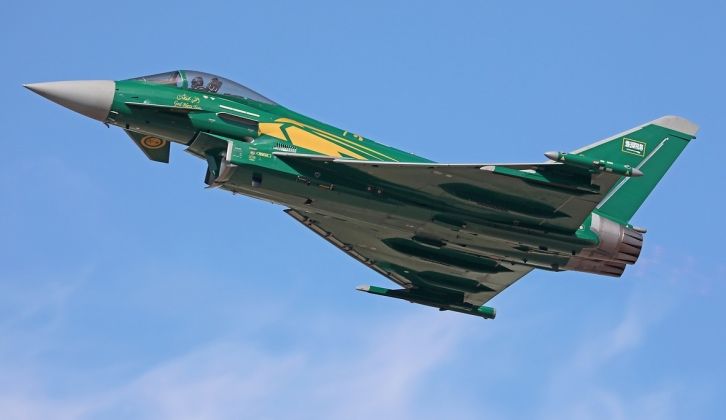
The reliance on obsolete mechanically scanned array radars on all its fighter types other than the F-15SA has left the Royal Saudi Air Force constrained in its air defence capabilities, with the JF-17 Block 3’s combination of a radar, data links, and air-to-air missiles that are technologically well over a decade ahead of those of the Eurofighter being a very major advantage. The Eurofighter’s primary air-to-air missile, the AIM-120C, notably also uses an older mechanically scanned array radar design, while the PL-15 benefits from a modern AESA radar in its seeker for greater immunity to jamming and superior power and efficiency. This complements the advantages provided by the Chinese missile’s range which is over double that of the AIM-120C. A further important advantage for the Chinese fighter type is its much lower maintenance requirements, which allow it to be sustained at very high availability rates. The Eurofighter by contrast has been notoriously maintenance intensive, with even the United Kingdom and Germany which have played the most central roles in its production having struggled to keep the aircraft flyable at acceptable rates in their own fleets.
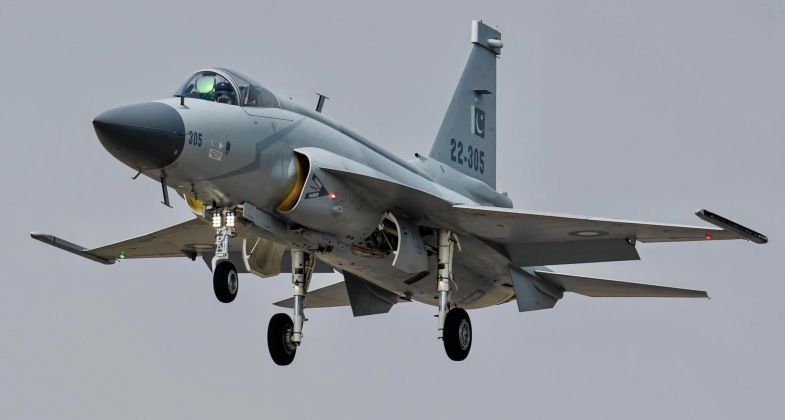
The JF-17 Block 3 is expected to overall provide a significantly superiority air defence capability to the Eurofighter for the Royal Saudi Air Force, with its attributes being highly complementary to those of the F-15SA. Retirement of the Eurofighter to procure the fighters would result in significant savings due to the vast differences in sustainment costs between the two aircraft, which could in turn allow the Royal Saudi Air Force to expand its fighter fleet by several squadrons without compromising its budget. While fighter procurements in the Gulf region have consistently been strongly shaped by political factors, shifting power dynamics could lead the JF-17 to also be favoured for political and strategic reasons to avoid overreliance on Western armaments, and to provide greater autonomy in operations than is permitted for operators of Western fighters.
