
What Role Will Chinese JF-17 Fighters Play in the Royal Saudi Air Force? Talks For Major Procurement Underway
Military Watch Magazine Editorial Staff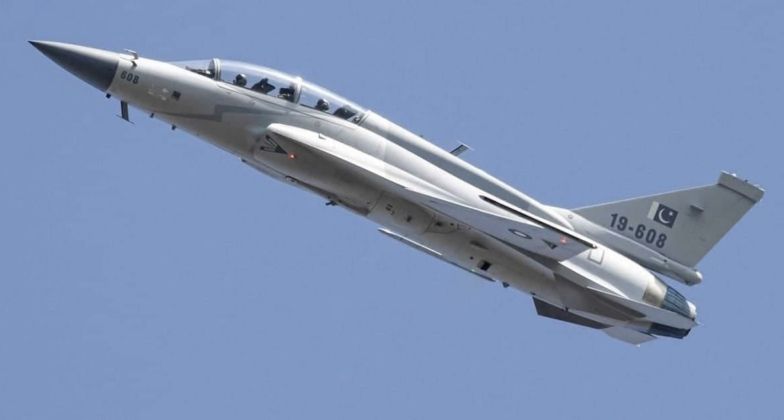
JF-17B Fighter
Multiple media outlets have reported that talks are currently underway for a $6 billion procurement of Chinese JF-17 fighter aircraft to equip the Royal Saudi Air Force. A portion of JF-17s are currently assembled under license and partly produced in Pakistan, with the delivery of the aircraft reportedly being considered to help Islamabad pay back part of its loans to Saudi Arabia. A report by Reuters cites two different Pakistani sources, one of whom said the JF-17 is the “primary option” being considered for procurement. The deal under consideration would see $4 billion allocated to offsetting the loan, while the Saudi Defence Ministry spends an additional $2 billion to fully cover procurement costs. The reported deal follows the signing of a strategic defence pact between Riyadh and Islamabad in September 2025, and comes shortly after confirmation that the Saudi Defence Ministry was also holding talks to procure F-35A fifth generation fighter aircraft from the United States.
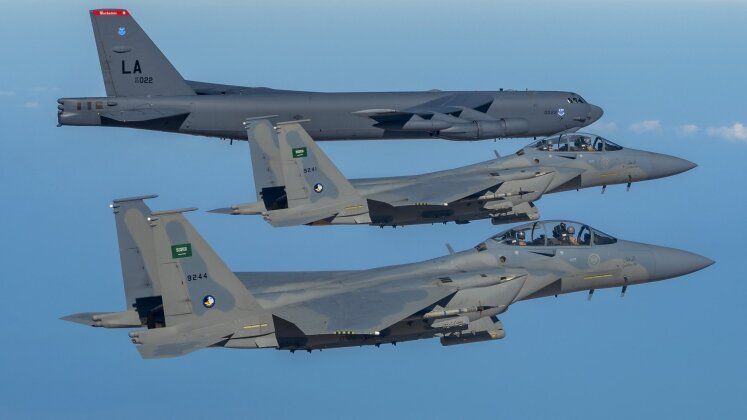
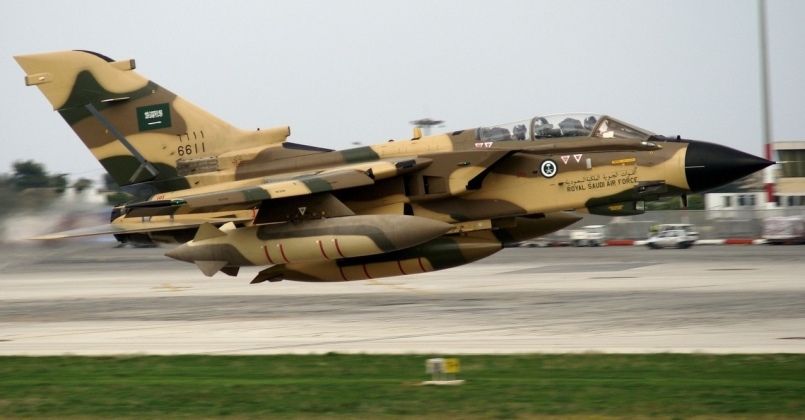
Analysts have widely questioned what role the JF-17 could play in the Royal Saudi Air Force, with the service fielding no single engine fighters and no fighters from a comparable very light weight range which the Chinese aircraft could directly replace. One possibility would be that the aircraft are used to form new air defence regiments. The JF-17 Block 3 is considerably more advanced than the Air Force’s current Tornado and Eurofighter combat jets that are currently in service, both of which Saudi sources have reported were procured primarily for political reasons rather than due to their competitive performances. The F-15SA heavyweight fighter forms the backbone of the Saudi fleet, and while highly capable and likely far exceeding the combat potential of the JF-17 Block 3, the aircraft have particularly high maintenance needs and operational costs, in contrast to the lightweight Chinese aircraft which is among the most maintenance friendly in the world.
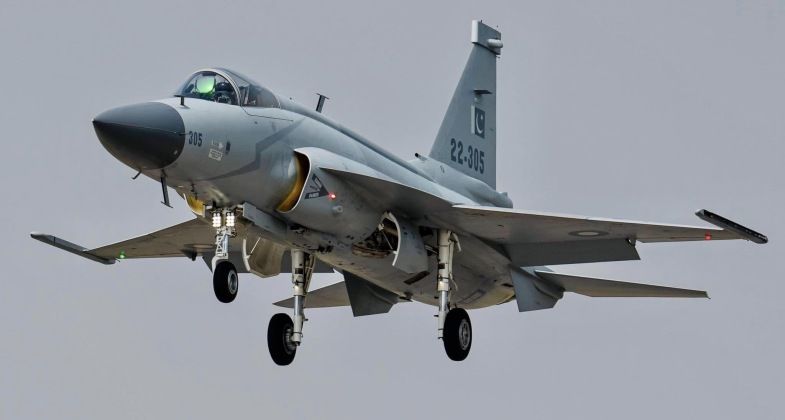
One possibility is that the JF-17 Block 3 could be procured to serve in part of a high-low combination with the F-15SA, with the two potentially being highly complementary in their capabilities. A significant advantage of the JF-17 is that it would provide a greater degree of reliability for the Saudi fleet, since while Western control over source codes and parts supplies for its U.S. and British origin fighters could be used to cripple its defences should this fall in line with Western Bloc interests, the JF-17 Block 3 would provide a secondary air defence capability to fall back on. The JF-17 Block 3 is considered to have comparably advanced ‘4+ generation’ avionics to the F-15SA, although its radar design is significantly newer. A particular advantage is its use of PL-15 and PL-10 air-to-air missiles, which comfortably outperform the AIM-120C and AIM-9X that Saudi F-15s currently use.
A significant possibility remains that the Saudi government will for political reasons refrain from relying on the JF-17 for frontline roles, as the country has consistently come under strong political pressure from across the Western world to almost exclusively procure Western Bloc military equipment. As the world’s largest defence importer, continued control over its markets are strategically vital to finance Western defence sectors. The Saudi Defence Ministry may thus favour procuring the JF-17B, a twin seat variant, to serve as a trainer for its wider fleet. This could help acquaint pilots with fifth generation level avionics, like those of the F-15SA and F-35A, with the JF-17’s own avionics being closely based on those of the Chinese J-20 fifth generation fighter. The JF-17B could also serve as a formidable air defence interceptor equipped with PL-15 missiles and a modern AESA radar, in which case the second seat for the instructor could operate a navigator or weapons systems officer.
