
World’s Longest Range Air-to-Air Missile Integrated Onto China’s J-10C Fighters
Military Watch Magazine Editorial Staff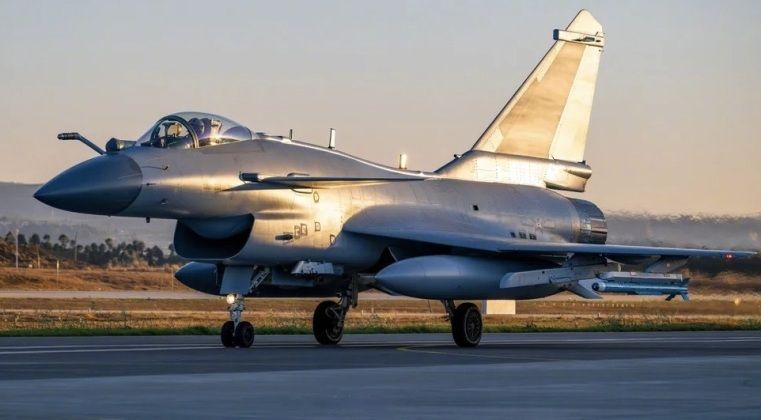
J-10C with DF-4/3 Pylon, External Fuel Tank and PL-10 Missile
Images released on Chinese social media on May 11 have confirmed that the J-10C ‘4+ generation’ fighter has integrated the new DF-4/3 external weapons pylons, which are used to integrate the world’s longest ranged air-to-air missile type, the PL-17, onto J-16 fighters. This has led analysts to widely conclude that J-10C units will very likely also begin to be equipped with PL-17 missiles, which could transform how they are employed. The J-16 and J-10C are fielded a high-low combination of ‘4+ generation’ fighter aircraft, the former a twin engine and the latter a single engine aircraft both powered by the WS-10B powerplant. While both were developed in parallel and are similarly sophisticated, as a significantly smaller fighter J-10C’s much lower weapons carrying capacity, and its far smaller radar and shorter target lock on range, were previously through to have limited its suitability to integrate the PL-17.
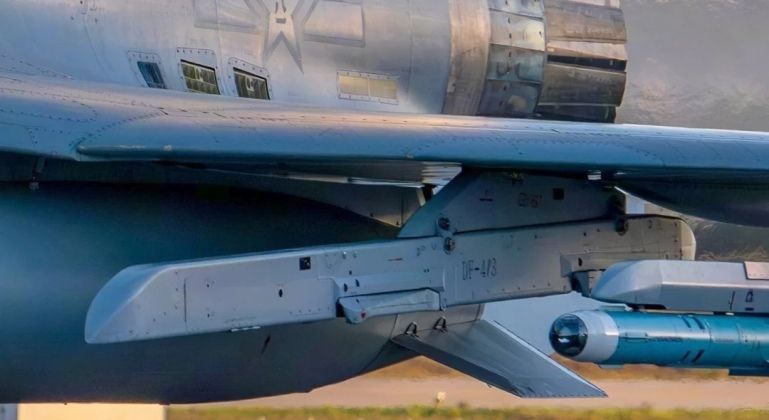
It is likely that a primary rationale for equipping the J-10C with the PL-17 is to better market the fighter type for export. It is notable that the first images of the fighter type equipped with the new fighter were released less than a week after the Pakistan Air Force announced plans to procure both further J-10C fighters, and an unmanned new long range missile type which was at the time speculated to be the PL-17. With the Indian Defence Ministry was reported in April to have ordered Russian R-37M air-to-air missiles, a design which is considered a direct counterpart to the PL-17 albeit a less advanced and shorter ranged one, the Pakistan Air Force’s perceived need for the missile may have been influenced by developments seen in the Indian fleet.
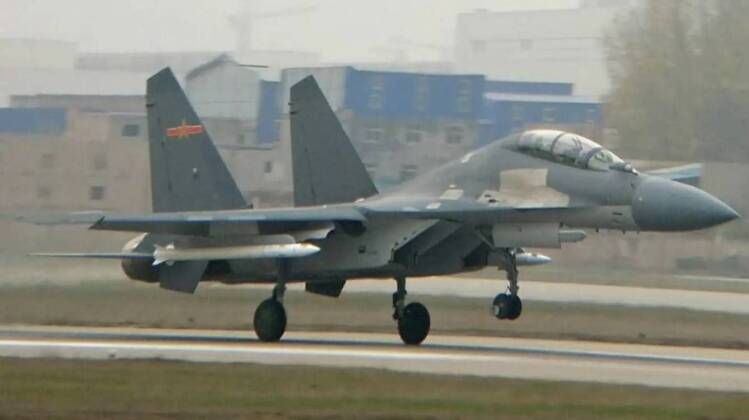
Although the J-10C’s radar is not sufficiently powerful to guide the PL-17 to its target, it is notable that even the J-16, which has been widely assessed to integrate the most powerful radar of any fighter type in the world, is still considered to be unable to guide the extremely long range missile to targets at maximum range. The limitations imposed by the Earth’s curvature are one contributor to this limitation. Thus even the J-16 would under a wide range of conditions rely on targeting data from either fifth generation fighters flying closer to adversary positions using their advanced stealth capabilities, such as the J-20, or on airborne early warning and control (AEW&C) systems with outstandingly large radars like the KJ-500 and KJ-3000. The J-10C will similarly be able to rely on such support to employ such missiles, although it will rely on it more heavily due to the greater limitations of its own onboard sensors.
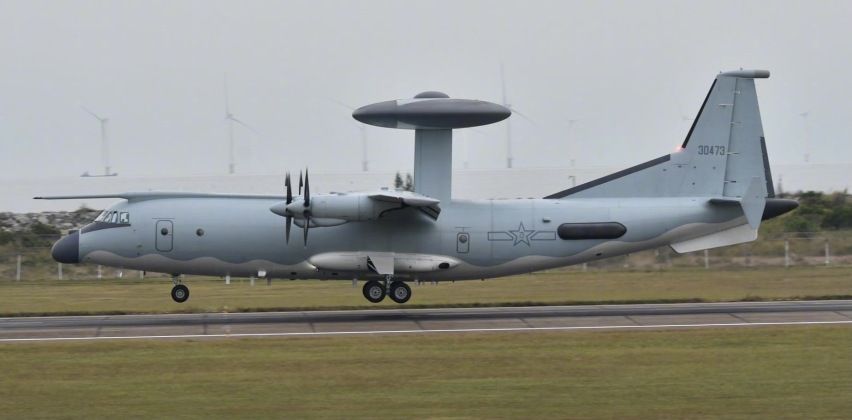
It is notable that the Pakistan Air Force has reportedly already used the J-10C under high intensity air-to-air combat conditions closely integrated with other sensor platforms, including its own less advanced AEW&C systems, to guide the fighter’s PL-15 air-to-air missiles to their targets. This was done despite the J-10C’s onboard sensors being sufficiently powerful to effectively guide the PL-15, since AEW&Cs can do so more effectively and while avoiding activating targets’ radar warning receivers. Experience pairing the J-10C with AEW&Cs for weapons guidance, and possibly with other offboard sensors such as those from ground-based air defence systems, may have resulted in confidence in the Pakistan Air Force that it can effectively utilise the PL-17 with its J-10C fleet. The fact that the Air Force is also expected to receive J-35 fifth generation fighters, which have optimal capabilities to provide targeting data to J-10Cs from forward positions, is likely to be a further major factor.
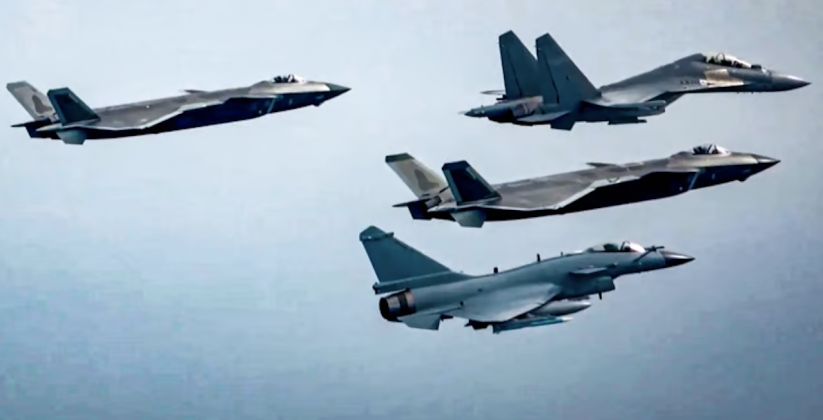
The first images of the PL-17 emerged in 2016, while in late 2023 images for the first time confirmed that it was in active service. Its development occurred as Chinese air-to-air missile development increasingly led the world, as widely attested to by U.S. sources after the PL-15 was seen to have comfortably outmatched its U.S. counterpart the AIM-120D in the mid-2010s. The PL-17 is estimated to have a 500 kilometre engagement range, significantly surpassing rival missile types such as the Russian R-37M and U.S. AIM-174. All three of these very long ranged missile types are oversized, meaning they are optimally carried by large fighter or interceptor types like the J-16 or U.S. Air Force F-15, and if carried by lighter fighter types have a significant negative impact on flight performance. Unconfirmed reports indicate that the new Chinese missile can benefit from satellite course correction via data link, much as new generations of Chinese surface-to-air missiles currently under development can, and that it uses dual infrared and radar terminal seekers.
