
Chinese J-10C Fighter Locked Onto By Hostile Aircraft in Border Engagement: Uses Complex Manoeuvres to Gain Upper Hand
Military Watch Magazine Editorial Staff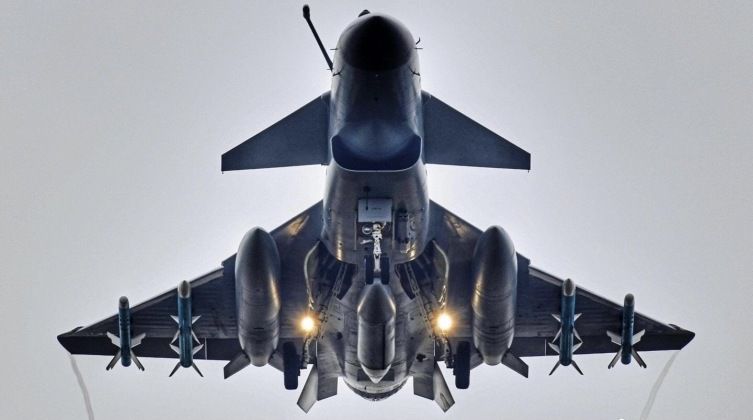
J-10C Fighter with Three External Fuel Tanks and PL-15 and PL-10 Air-to-Air Missiles
A Chinese People’s Liberation Army Air Force J-10C lightweight fighter has engaged an aircraft from an unnamed foreign country, after being locked onto by the aircraft’s radar. Shi Luquan, a pilot from an aviation brigade under the PLA Air Force Central Theatre Command, is reported to have quickly responded to radar illumination, recalling: "This is a kind of provocation. If he were friendly, he wouldn't turn on the radar. This is our own territory—why should I turn away? When the distance closed further and the radar warning disappeared, I immediately switched my radar to standby mode.” Although reports of Chinese fighters’ engagements with hostile military aircraft have grown in recent years, the involvement of the J-10C has been less common.
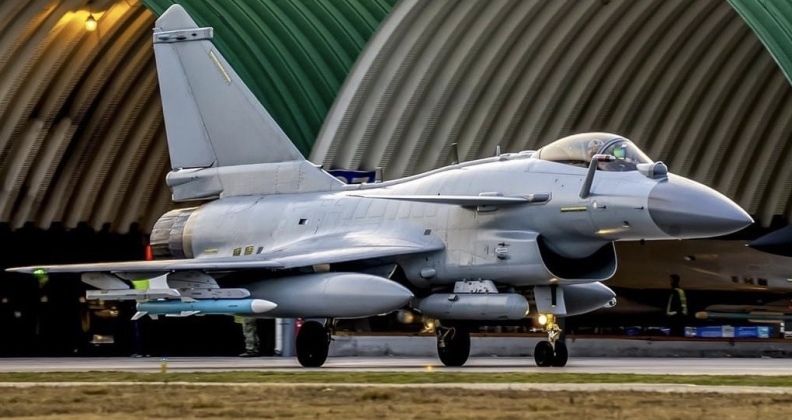
Commenting on the engagement, Chinese defence expert Fu Qianshao observed that the J-10’s ability to successfully counter radar illumination and regain tactical initiative reflects the benefits of years of incremental modernisation of the fighter’s capabilities. He noted that compared with earlier J-10 variants, the J-10C has achieved key technological breakthroughs in radar systems and detection methods, providing important advantages in electromagnetic confrontation and aerial tactical engagements, and providing pilots with strong technical confidence in responding to foreign provocations. The pilot highlighted that the replacement of the original J-10’s pulse-Doppler radar system with a modern active electronically scanned array radar, and the integration of an infrared search and track system, has significantly enhanced its detection capabilities and the means in which it can be operated.
Fu further pointed to the J-10C’s optimised aerodynamic design, which plays a critical role in enabling it to execute effective countermeasures. A fighter's radar signature varies with its orientation, and sometimes a single manoeuvre can sharply reduce its radar cross-section, he noted. He added that not all aircraft or pilots are capable of executing such manoeuvres due to their complexity. Through coordinated manoeuvring and countermeasures, the pilot is reported to have achieved reverse radar illumination and secured a dominant tactical position, placing the foreign aircraft in a difficult position to respond. Fu attributed this capability to the Air Force's intensive daily training and realistic combat drills.
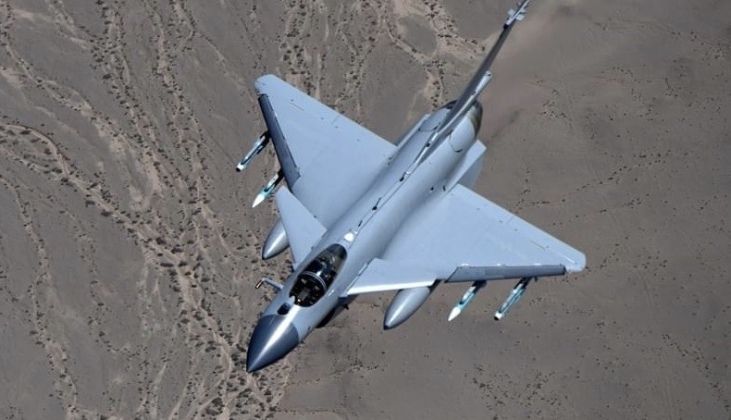
The growing discrepancies in both the sophistication of average fighter aircraft, and in pilot training levels, between the Chinese People’s Liberation Army Air Force and the U.S. Air Force, has been pointed to with growing concern by Western analysts and defence officials. Former U.S. Pacific Air Forces Vice Commander Lieutenant General (ret.) David Deptula, for one, was among the figures to highlight that Chinese pilots were flying fighters which were on average several decades newer, and getting more flying hours than their U.S. counterparts. Additional training “makes a difference,” he warned, with this giving the Chinese fleet an important edge in better preparing itself for warfare at a fifth generation level. The J-10C was developed as a lighter counterpart to the J-16 ‘4+ generation’ and J-20 fifth generation fighters integrating many of the same technologies and weaponry, but with much lower maintenance needs and operational costs. The U.S. Air Force has not procured any similarly maintenance friendly fighters for over 20 years, with negative consequences for availability rates and training hours.
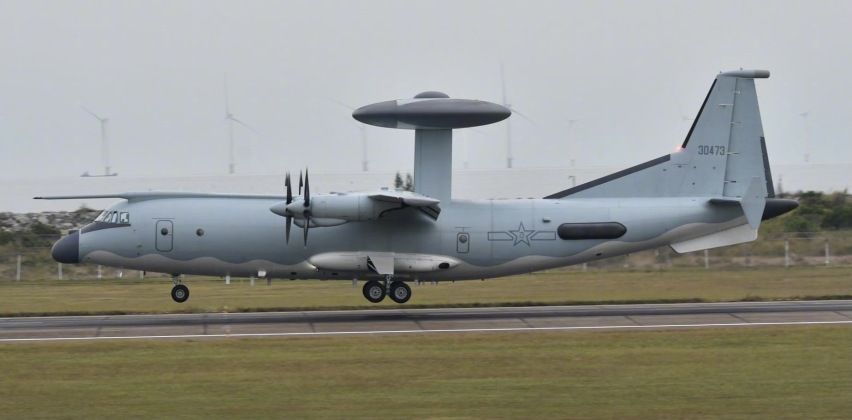
The report on the latest engagement closely follows the deployment of multiple J-10C fighter units to conduct high-intensity drills under complex electromagnetic conditions, which highlighted their ability to integrate operations closely with KJ-500 airborne early warning and control (AEW&C) systems. Compensating for the small size of the J-10’s radar, the KJ-500 can detect aerial targets, including aircraft and missiles, hundreds of kilometres away, and relay their position, speed, and altitude to fighters via data links, allowing for more effective intercept manoeuvres without J-10s emitting their own radar signatures. In early August 2025, the J-10C demonstrated the capability to engage targets with cutting edge stealth capabilities when operating with KJ-500 support, relying on the AEW&C system to guide missiles to its targets using its much more powerful sensors.
