
World’s Most Costly Destroyers See $452 Million Price Rise to $9.5 Billion Each: Zumwalt Class Ships Still Not Operational
Military Watch Magazine Editorial Staff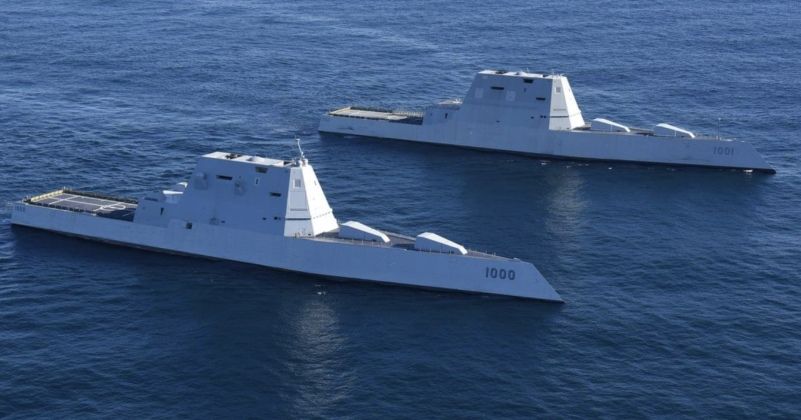
U.S. Navy Zumwalt Class Stealth Destroyers
The U.S. Department of War on March 31 announced a $1.356 billion contract modification for Lockheed Martin Space to finance the engineering, integration, tooling, and long-lead industrial effort needed to bring the Conventional Prompt Strike (CPS) program from development into practical fielding in the Navy, providing a conventional hypersonic strike capability to the Zumwalt class destroyer fleet. Should the program not exceed allocated budgets, it will add $452 million to the cost of each of the three destroyers, bringing their costs up to approximately $9.5 billion each. The Zumwalt class destroyer program has been among the most notorious in history for its extreme cost overruns and performance issues, with the ships having been planned to cost between $1.4 billion and $1.6 billion each. These issues resulted in the termination of plans to build 32 ships, with 91 percent of production cancelled.
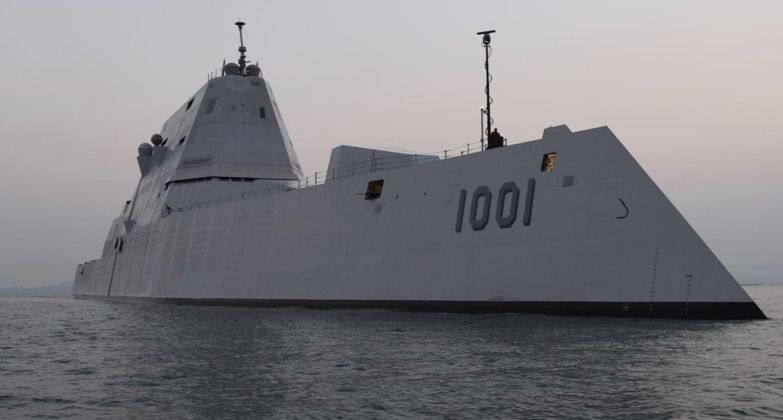
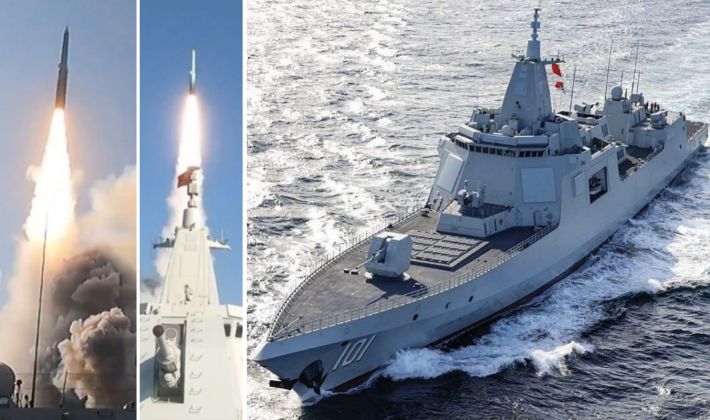
The first destroyer of the class, the USS Zumwalt, in mid-January became the first to conduct sea trials while configured to be equipped with Conventional Prompt Strike missiles. This followed a protracted refit from August 2023, during which its two 155mm Advanced Gun System turrets were removed and replaced with 12 launch tubes for the CPS. The destroyer completed its first operational deployment in November 2022 with the Pacific Fleet, which lasted three months, with the lack of further deployments, and the initiation of refurbishment shortly after the sole deployment that was made, indicating that its performance was considered far from optimal. The integration of ballistic missiles onto destroyers has become increasingly common, with North Korea having done so on its Choi Hyon class ships, which are being built at a rapid rate, while China has repeatedly tested YJ-20 hypersonic anti-ship ballistic missiles from its Type 055 class destroyers and will likely bring them into service in 2026.
The Department of War’s notice indicates that the CPS program is moving from a focus validating the concept, to building the industrial and technical foundation needed for deployment. This indicates that the Pentagon is no longer treating the program as a developing capability, but as a system it is preparing to begin fielding and sustaining. Official Navy reports have described CPS as the foundation of the United States’ first sea-based hypersonic weapons, an area in which it has been left increasingly far behind potential adversaries. The value of hypersonic weapons has recently been highlighted both by Russian use of the Oreshnnik ballistic missile with hypersonic glide vehicles against targets in Ukraine, and more significantly by Iran’s use of Fattah 2 missiles with similar glide vehicles to penetrate dense U.S. and Israeli missile defences during engagements that began on February 28.

The CPS missile is based on the Long-Range Hypersonic Weapon program developed by Lockheed Martin for the U.S. Army, and uses the same propulsion rocket and the same Common Hypersonic Glide Body warhead. The aircraft combines ranges usually associated with strategic ballistic missiles carrying megaton level warheads, with a conventional warhead and high precision, providing naval units with the ability to quickly react and lend fire support in a wide range of contingencies. After vertical launch, the missile releases a glide vehicle, which accelerates to hypersonic speeds. A significant risk in employing the missile, however, is that its flight characteristics will alert the strategic early warning radar systems of China and Russia, meaning the United States will likely need to notify both if making a launch, much like Russia has notified Washington and Beijing when launching its Oreshnik missile.
