
What South Korea’s Ambitious KF-21 Stealth Fighter Program Means for its Future as a Major Arms Exporter
Military Watch Magazine Editorial Staff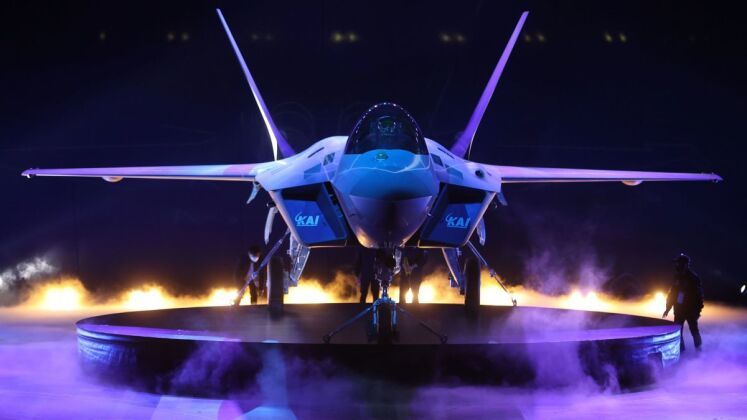
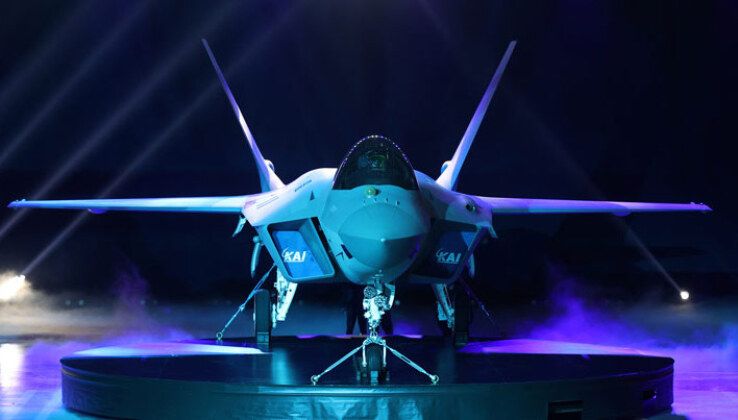
Korean KF-21 Fifth Generation Fighter
Following the success of its F/A-50 fourth generation light fighter program, which has been widely exported and proven highly effective in combat in Iraq and the Philippines, South Korea's Korea Aerospace Industries (KAI) has sought to develop a fifth generation fighter under the KF-21 program. The program is highly ambitious, with South Korea being relatively new to the field of military aviation, particularly considering that only two countries in the world, China and the United States, have deployed squadrons of indigenously developed fifth generation fighters. The KF-X program began four years before the United States inducted its F-22 Raptor into service - the wold's first fifth generation fighter - and saw KAI begin the program jointly with Indonesian Aerospace. The Korean side held 80% of the shares in the program while Indonesia, with its lower defence expenditure, less sophisticated military industrial base and smaller planned purchases, held a smaller 20% share.
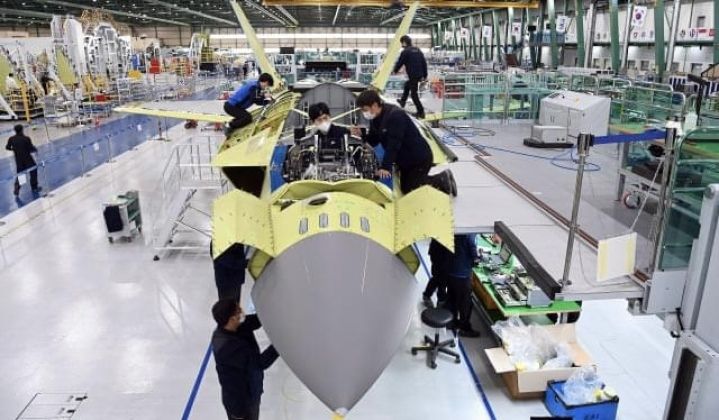
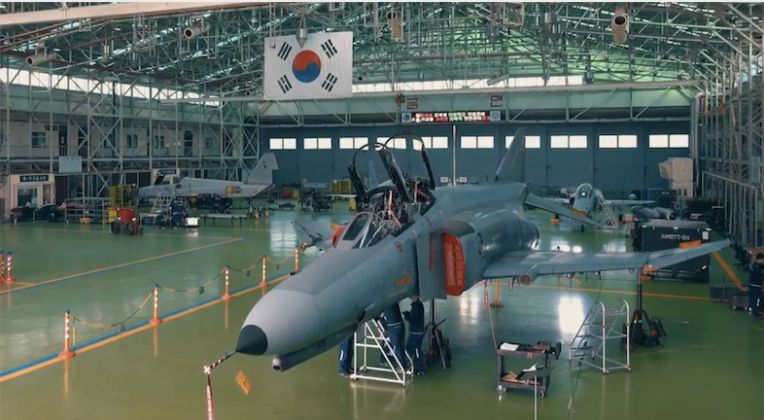
The KF-21 was to be a light singe seat twin engine jet with advanced stealth capabilities, and would prioritise a low operational cost and ease of maintenance which would allow the South Korean Air Force to field it in large numbers. This would also be key to successfully marketing the jet for export, with Southeast Asian clients in particular notably prizing then F/A-50 for precisely this reason. South Korea's Air Force is among the largest in the world today, and with much of the fleet fast ageing there is room to induct several hundred KF-21 jets into service - ensuring a considerable scale of production and a cost effective final product. The fighter would replace South Korea’s Vietnam War era F-4E Phantoms and F-5E Tigers - the latter which are its most widely deployed fighters today with around 175 in service. Around 235 of these third generation jets are currently in service in ten squadrons, which if all replaced with the KF-21 would allow for a considerable production run for domestic use alone - exceeding the expected production runs of all other fifth generation fighter programs in the world other than the American F-35 and Chinese J-20. The higher operational cost of the KF-21, particularly compared to the F-5, will likely mean that either the number of squadrons will be cut or that squadrons will be made considerably smaller as the Tigers are phased out for new stealth fighters.
Beyond replacing South Korea's third generation fighters, the KF-21 also has the potential to replace a large portion of the Air Force fourth generation fleet - currently comprised of F-16 and F-15K platforms. South Korea received its first F-16 fighters in the 1980s and currently fields 163 of the aircraft, alongside 60 of the more recently acquired F-15s. The F-15K is still a very modern heavyweight jet highly capable in both strike and air to air roles, and neither the F-35 nor the KF-21 will be able to match its flight performance or its endurance. The F-16, designed as a lighter and cheaper analogue to the F-15, is increasingly considered to be bordering on obsolescence, with officials from Singapore's Defence Minister Ng Eng Hen to U.S. Air Force Air Combat Command chief General Mike Hostage predicting the aircraft would become obsolete shortly. While regular Korean upgrades to the design can potentially extent its service life, particularly for later production variants, it is likely that the South Korean Air Force will seek to retire at least a large portion of the fleet for replacement with the KF-21. The new stealth fighter's relatively low operational cost will make this quite affordable, and will represent a serious upgrade to the South Korean fleet.
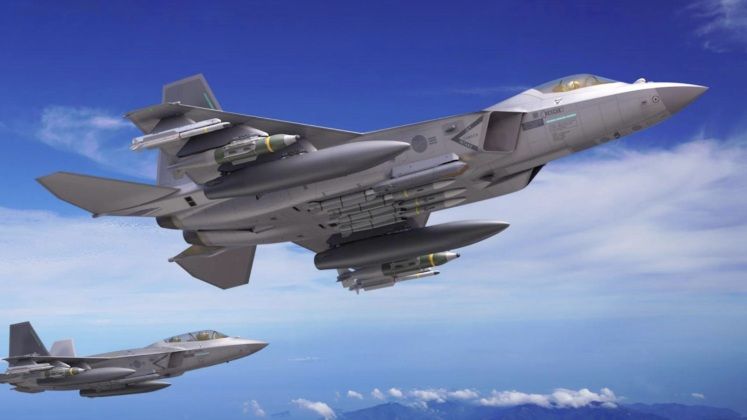
Beyond acquisitions for its own Air Force, the KF-21 is expected to be marketed for export with Southeast Asian nations in particular expected to be leading clients. Thailand, the Philippines, Indonesia and possibly even Iraq could be leading clients for the fighter, with all of these operating the F-50 and either the F-16 or the F-5 which the KF-21 was designed to replace. While less stealthy than the F-35 and integrating less powerful engines, the KF-21's advantages go beyond its lower operational cost, easier maintenance and lower price. The new fighter is expected to be faster and able to operate at higher altitudes than the F-16 and F-35, and will have access to a range of advanced munition types. Most notable among these are an indigenous derivative of the European Taurus bunker buster long range cruise missile - one of the most capable in the world currently deployed by F-15K strike fighters, and Meteor long range air to air missiles which have approximately twice the range of the AIM-120 AMRAAMs used by the F-35. The fighters are also expected to be compatible with American missile classes, meaning they could likely begin to integrate AIM-260 long range air to air missiles which are expected to begin to enter service near the end of the decade. These missiles are expected to be faster, more manoeuvrable, longer ranged, more reliable and cheaper than the European Meteor.
Based on the precedents set by South Korea's defence sector for very high performance and cost effective weapons systems - from K9 Thunder artillery and K2 Black Panther battle tanks to the F/A-50 fighter and Hyunmoo-3 cruise missile, the KF-21 its expected to be one of the world's most successful fifth generation fighter programs - quite possibly the most successful outside China and the United States. With Russia's Su-57 program stymied by a very small production run, Turkey's overly ambitious TF-X program heavily reliant on foreign technologies and coming from a country with a very limited domestic technological base, and the Pakistani Project AZM fighter being pursued jointly with China and expected to be built mainly around Chinese rather than indigenous technologies, this leaves the KF-21 as a leader among indigenous fifth generation programs with the exception of those in China and the U.S.
