
U.S. Air Force Keeps Small B-2 Stealth Bomber Fleet at Abnormally High Readiness Levels For Strikes Against Iran
Military Watch Magazine Editorial Staff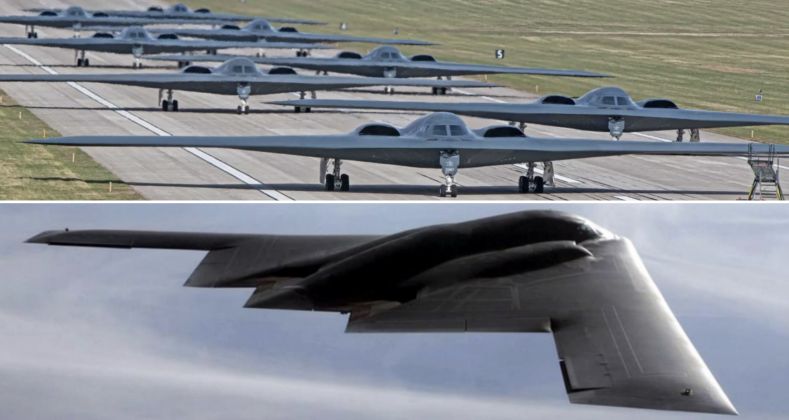
U.S. Air Force B-2 Strategic Bombers
The U.S. Air Force has maintained its small B-2 strategic bomber squadron at a higher-than-usual alert status, according to a February 13 report by the New York Times, as the possibility of strikes on Iranian targets continue to be seriously considered, and as the U.S. Armed Forces have continued to stage a large military buildup of shorter ranged assets in the Middle East. The B-2 remains the world’s only operational strategic bomber built to use a reduced radar cross section to launch penetration strikes into heavily defended airspace, although China fields unmanned bombers with more up to date stealth features designed for medium rather than intercontinental range attacks. The Air Force fields an estimated 18 of the bombers, with 20 serial production aircraft and a single converted prototype having been brought into service from 1997, of which two were destroyed in accidents in 2008 and 2022, while another was critical damaged and is currently under repair. The small numbers in service makes the sustainment of high availability rates particularly critical.
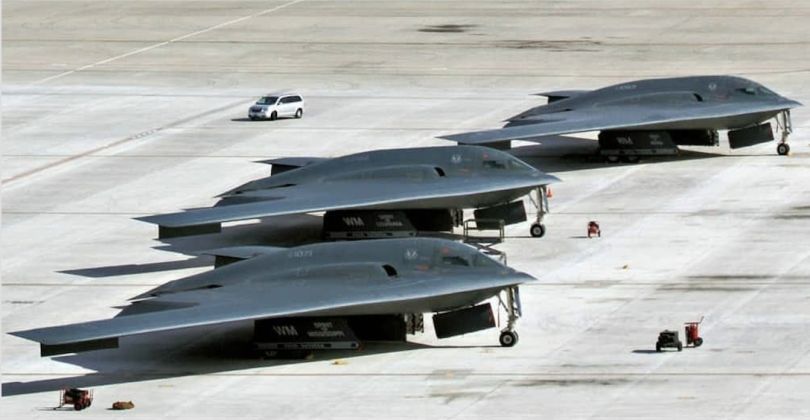
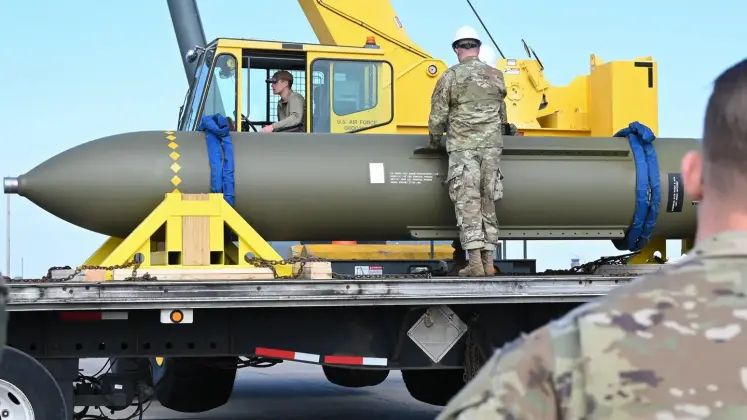
The B-2 was first tested in combat during NATO’s air assault on Yugoslavia in 1999, including flying a single CIA mission to bomb the Chinese embassy in Belgrade on May 7 of that year. The aircraft were first used to penetrate heavily defended airspace in the late hours of June 21, when seven B-2s targeted Iran’s Fordow and Natanz nuclear facilities under Operation Midnight Hammer using GBU-57 penetrative bombs. The B-2 is the only aircraft in the world capable of deploying the bomb, which is entirely in a league of its own among non-nuclear weapons in terms of its penetrative capabilities. Iranian air defences had by that time been severely depleted by attacks by Western- and Israeli-backed paramilitary groups on the ground, which used drones and Spike missiles to take out radars, command posts and missile launchers.
The age of the B-2 has raised questions regarding its survivability in heavily defended airspace. Commenting on the means used to defend the aircraft during operations in Iranian airspace, Chairman of the Joint Chiefs General Dan Caine reported: “As the Operation Midnight Hammer Strike package entered Iranian airspace, the U.S. employed several deception tactics, including decoys, as the fourth-and fifth-generation aircraft pushed out in front of the strike package at high altitude and high speed, sweeping in front of the package for enemy fighters and surface-to-air missile threats.” B-2s took off from Whiteman Air Force Base with a flight plan that indicated Guam was their destination, apparently to reduce the possibility of Iran preparing what defences it had remaining for their arrival.
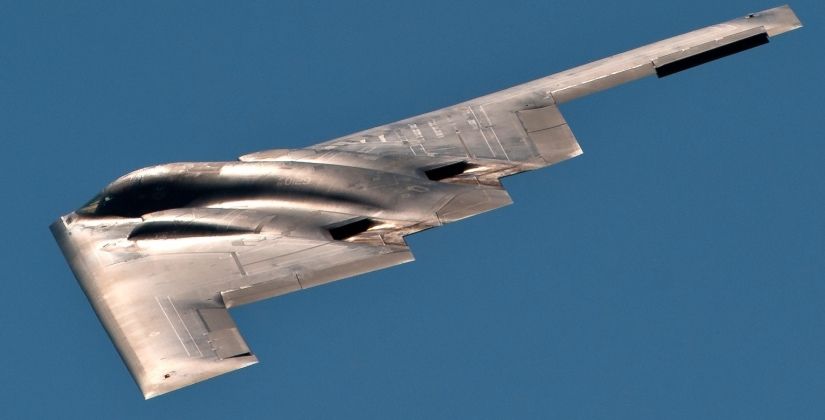
The small size of the U.S. stealth bomber fleet has seriously limited the Air Force’s ability to conduct penetration strikes, and fuelled calls for the B-21 bomber currently under development to succeed the B-2 to see a production run of closer to 300 aircraft. The affordability of this remains in serious question. A report from U.S. Air Force Academy Mitchell Institute for Aerospace Studies in early February highlighted that even 100-200 B-21 bombers would be insufficient to sustain pressure in a broader conflict with a peer level adversary such as China, forming only “a raid force, not a campaign force.” The issue of the small size of the B-2 fleet is compounded by the aircraft’s extreme maintenance requirements, which has made it difficult to sustain high or even medium level availability rates. This has limited the fleet to conducting isolated strikes against Iranian targets, rather than playing a larger role in a sustained longer term air campaign.
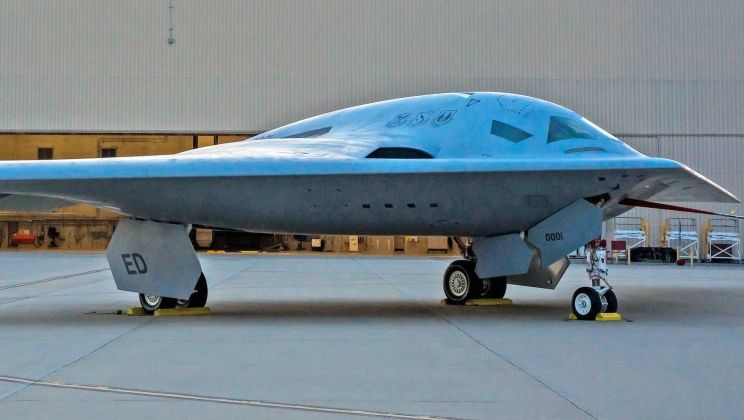
The B-2’s viability is expected to be brought to further question as Iran strengthens its air defences, including with the expected operationalisation of its first post-Cold War fighters, Russian Su-35s, before the end of the year. The Su-35’s ability to network with ground-based assets, integration of one of the world’s largest radars fielded by a combat aircraft, and use of secondary L-band radars, is expected to significantly strengthen the Iranian air defence networks’ ability to detect, track and engage stealth aircraft, in particular older ones like the B-2. The B-21 not only has significantly superior stealth capabilities to the B-2, but is also considered more maintenance friendly and more affordable for large scale procurements, which could allow it to significantly strengthen U.S. Air Force options for penetration strikes. As a much smaller and shorter ranged aircraft, however, it is restricted to a more limited payload and will be far more reliant on tanker support for long range operations. In parallel to the B-21’s development, China is developing its own intercontinental range stealth bomber, which is currently in flight testing and is significantly larger than the B-21.
