
U.S. Sale of Tomahawk Cruise Missiles to Germany Places Cities and Bases Across Western Russia in Range
Military Watch Magazine Editorial Staff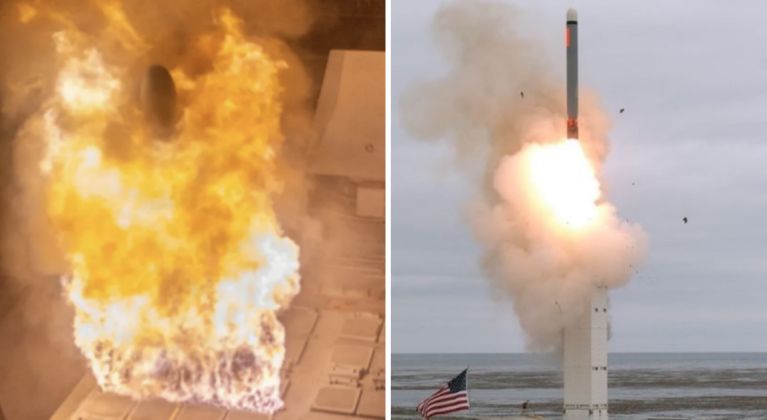
Tomahawk Launch and Typhon Launcher
The German Defence Ministry has confirmed the procurement of the Typhon Mid-Range Capability missile system and Tomahawk Block V cruise missiles, which represents one of the most significant changes in European conventional deterrence since the end of the Cold War. The acquisition follows months of uncertainty after Washington cancelled plans to permanently deploy an U.S. long-range fires battalion in Germany, prompting Berlin to seek an independent capability rather than relying on U.S.-controlled assets. The agreement will provide Germany with its first land-based precision strike capability able to engage targets well beyond 1,000 kilometres, filling what Chancellor Friedrich Merz described as a major strategic gap in the country’s offensive capabilities.
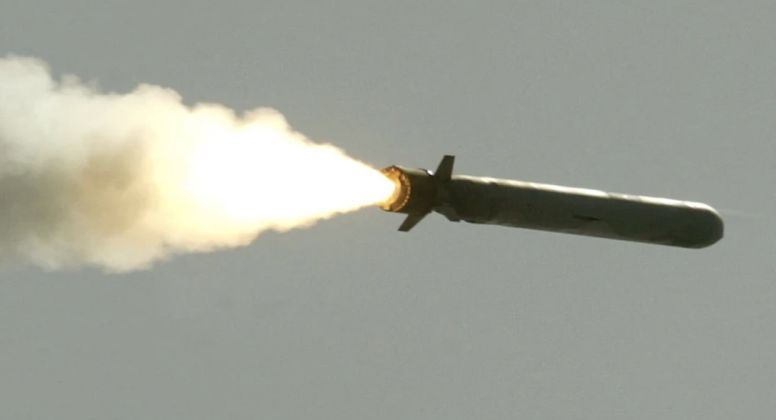
The Typhon was developed by the U.S. Army after, with its launcher derived from the U.S. Navy's Mk 41 Vertical Launch System, allowing naval missiles to be fired from highly mobile ground vehicles. A standard Typhon battery includes four launch vehicles together with command, reload and support elements, each launcher carrying four missile cells capable of firing both Tomahawk land attack cruise missiles and SM-6 multi-role missiles. According to reports, Germany will procure Typhon launchers together with up to 400 Tomahawk Block V cruise missiles, although the final number of missiles and launchers has not been officially disclosed. The purchase follows a Letter of Intent signed during the NATO summit in Ankara, with formal U.S. approval expected shortly afterwards.
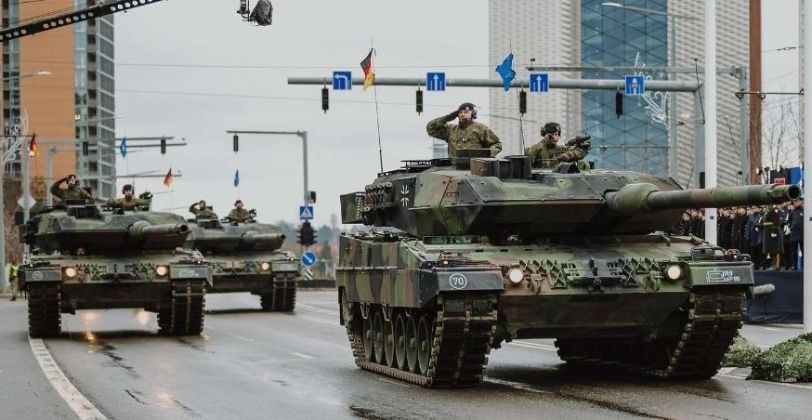
The Tomahawk Block V has an estimated 1,700 kilometre range, and flies at low altitude using terrain-following guidance, making interception difficult. Modern variants combine GPS navigation with Terrain Contour Matching, Digital Scene Matching Area Correlation, two-way satellite communications and in-flight retargeting capability. Operators can redirect the missile after launch, command it to loiter while awaiting updated target information, and even receive post-strike battle damage data. The latest Block Vb version also incorporates an advanced penetrating warhead designed specifically to destroy hardened bunkers, underground command centres and fortified military infrastructure. The Tomahawk is nevertheless limited to flying at low subsonic speeds, and lacks stealth capabilities, which makes it relatively straightforward to shoot down for advanced multi-layered air defence networks like that of Russia. Russian forces have mounted successful missile defence operations against cruise missile strikes from Ukraine for years, with mass strikes by low cost long range drones having proven far more challenging for local defences.
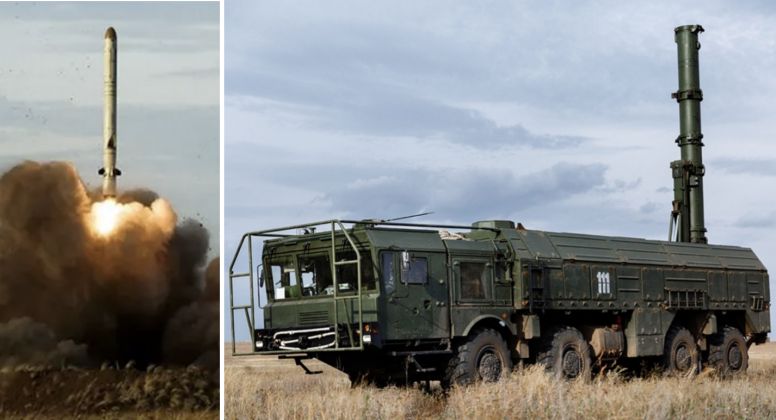
At present, Germany's longest-range land-based precision weapon is the MARS II multiple launch rocket system, whose range is measured in only tens of kilometres. Although Germany possesses the air-launched Taurus cruise missile, its approximate 500 kilometre range is significantly shorter than that of the Tomahawk, while employment depends on the availability of combat aircraft and secure airspace. Ground-based Tomahawks can instead be launched rapidly from dispersed positions and strike strategic targets without risking pilots or relying on air superiority. The system provides a counter to the Russian Iskander-K system, which has an estimated 2,500 kilometre range, although it falls short of a counter to the Russian Oreshnik intermediate range hypersonic ballistic system that was introduced into service in December 2025.
