
Footage Shows Russian Nuclear Long Range Cruise Missile Launchers Deploy to Forests For Major Strategic Exercises
Military Watch Magazine Editorial Staff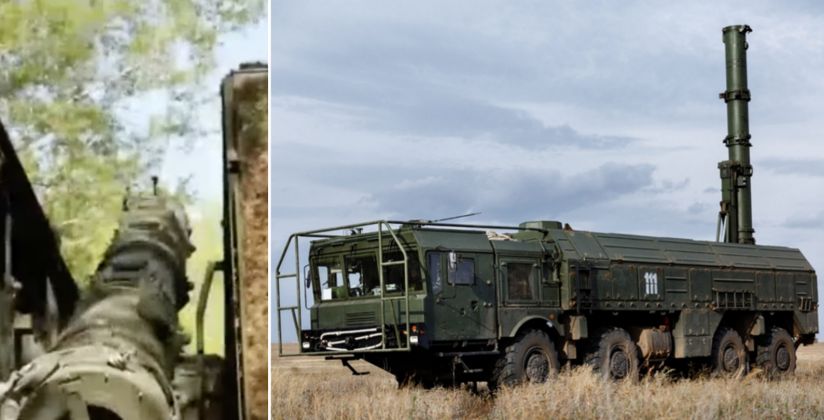
Iskander-K Launcher in Exercises (left) and in Peacetime
Footage released by the Russian Defence Ministry has shown road-mobile cruise missile launchers from the Iskander-K system taking part in large-scale nuclear war exercises, which are being conducted jointly with Belarus. The Iskander-K has gained growing publicity for its role in the Russian Ukrainian War, and after entering service in the mid-2010s, it was enhanced in the early 2020s with the new 9M729 cruise missile providing a much extended 1,500-2,000 kilometre engagement range. The missile is thought to be a derivative of the 3M14 Kalibr cruise missile developed for the Russian Navy, and can be used to deliver both conventional and nuclear attacks. Its capabilities are highly complementary to those of other Russian tactical long range nuclear delivery systems, including other long range cruise missiles such as the ship and submarine launched 3M14 Kalibr and the air-launched Kh-102.
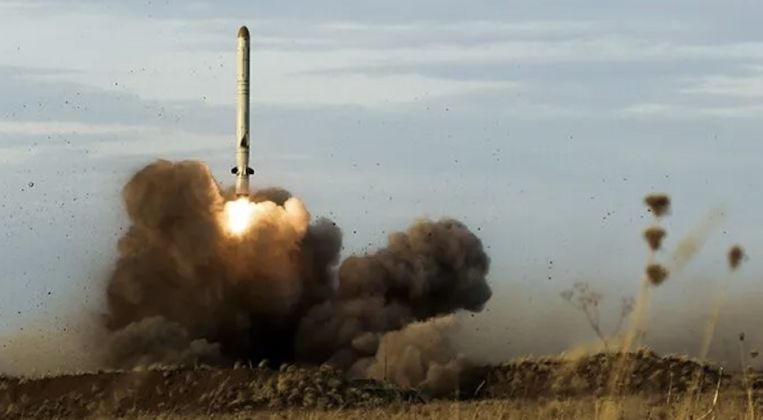
The Iskander-K system’s range allows it to be used to launch nuclear attacks against targets across most of Europe from Russian territory. Its highly mobile launchers are able to accompany advancing forces, torapidly redeploy by air, and disperse and rapidly redeploy after firing to maximise survivability. While it was previous Russia’s the only long range ground-launched system capable of being used to launch tactical nuclear strikes over such ranges, the introduction into service of the Oreshnik intermediate range ballistic missile system in December 2025 has provided a complementary further capability. While lacking the speed and kinetic energy upon impact of ballistic missiles, cruise missiles like the 9M729 are often more challenging to detect or track, as they follow complex terrain hugging profiles. They are also generally much more compact, allowing long ranges to be achieved by relatively small missile types.
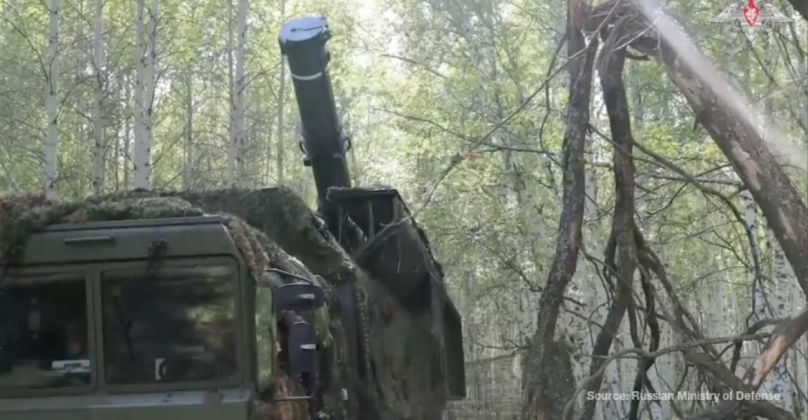
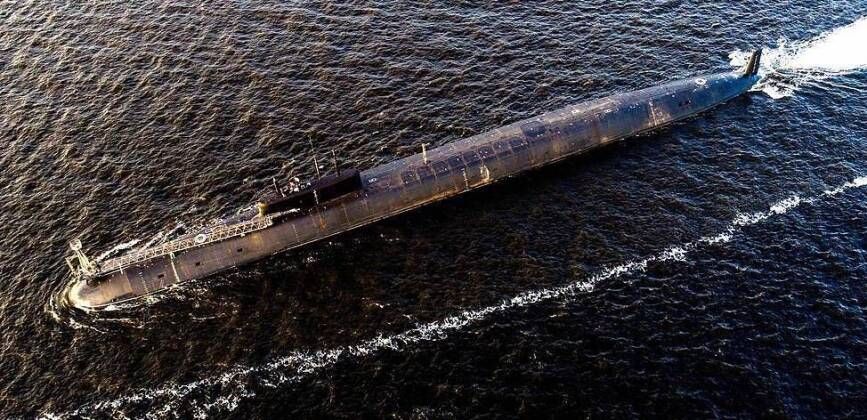
Footage published on May 20 has shown a military convoy escorted by attack helicopters moving into a wooded rural area before preparing for cruise missile launches from the Iskander-K system. The Defence Ministry announced the personnel were training to use nuclear weapons “in the conditions of aggression,” adding that all three components of Russia’s nuclear triad were involved. Exercises include 64,000 Russian personnel, 7,800 military vehicles, 200 missile launchers, 140 aircraft, 73 surface warships, and 13 submarines, including ships from both the Northern and Pacific fleets where all Russian nuclear powered submarines are concentrated. Russia has since the end of the Cold War relied heavily on its nuclear forces to asymmetrically deter and if necessary militarily counter Western Bloc forces, compensating for the significant conventional disadvantages it has suffered in the post-Cold War era.
Speaking to Russian state media in January, Deputy Chairman of the Russian Security Council Dmitry Medvedev stressed the importance of the country’s nuclear deterrent in guaranteeing its continued existence, observing: “Without nuclear weapons, it is quite possible that our country would no longer exist.” Western analysts and former officials have widely alluded to the fact that NATO members would have likely attacked Russia directly if it did not have a nuclear deterrent, with the head of the NATO Military Committee Admiral Rob Bauer having observed in November 2024: “I am absolutely sure if the Russians did not have nuclear weapons, we would have been in Ukraine, kicking them out.” A year later in November 2025 former NATO Secretary General Jens Stoltenberg confirmed that the unacceptable risk of open conflict with a nuclear armed Russia was the primary factor preventing Western Bloc states from joining the Ukrainian war effort more directly and on a larger scale.
