
Russia’s Iskander-K Long Range Cruise Missile System Poses Growing Threat to Key NATO Targets
Military Watch Magazine Editorial Staff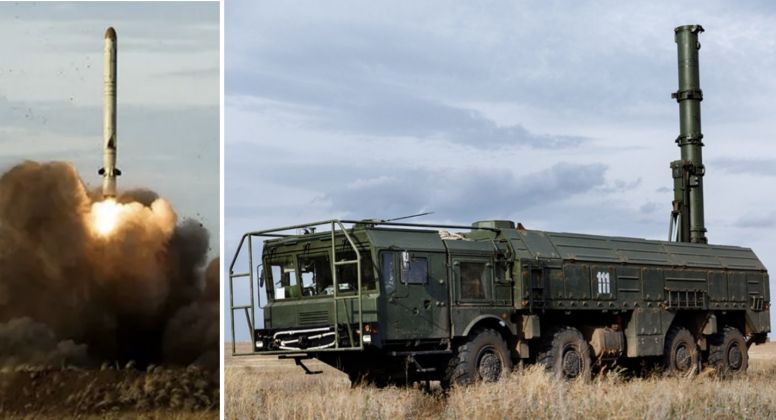
9M729 Cruise Missile Launch (left) and Launcher From Iskander-K System
The Russian Iskander-K cruise missile system has gained growing publicity for its role in the Russian Ukrainian War, and although often overshadowed by the capabilities of the Iskander-M ballistic missile system which has been employed on a much larger scale, the challenges it poses to NATO members’ rear facilities in the event of a full scale war are in many respects greater. The Iskander-K entered service in the mid-2010s, approximately a decade behind the Iskander-M system, and was designed to provide a complementary low-altitude, precision deep-strike capability. The 9M728 and 9M729 are its primary missiles, with the latter estimated to have a 1,500-2,000 kilometre range, and thought to be a derivative of the 3M14 Kalibr cruise missile developed for the Russian Navy. This range places targets across most of Europe within targeting reach from Russian territory, with the system’s combat and highly mobile launchers able to accompany advancing forces, and to rapidly redeploy by air.
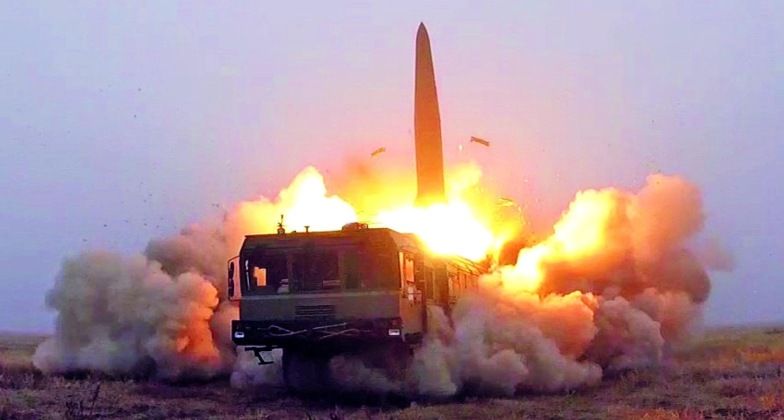
The Iskander-K system provides a more cost effective means of launching cruise missile strikes than relying on aircraft or warships, and allows launchers to be much more widely dispersed on mobile transporter-erector launchers to ensure a strike capability. In the event of a full scale war in Europe the system is expected to be used to launch combined attacks with Iskander-M systems, as a simultaneous defence against both cruise and ballistic missiles can be particularly challenging. Aside from its longer range, primary advantages over the Iskander-M include its low observability and penetration capability. Contrasting to ballistic missiles which are fast but highly visible to early warning systems, its cruise missiles, although slower and easier to shoot down if detected, are harder to detect or track and follow complex terrain hugging profiles.
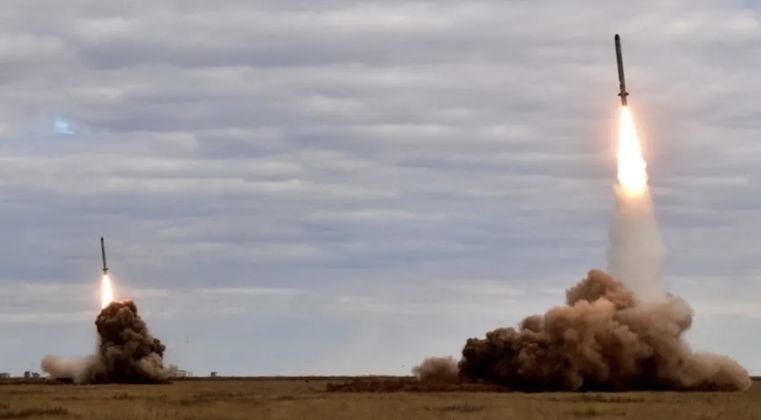
The capabilities of the Iskander-K are considered optimal for launching initial strikes or saturation attacks, exploiting gaps in air defence coverage and complicate an adversary’s response. With an estimated circular error probable of 5–10 meters, the system is capable of highly accurate strikes against fixed high-value targets. Where the system’s long reach was previously unique within the Russian arsenal, the introduction into service of the Oreshnik intermediate range ballistic missile system in December 2025 has provided a complementary further capability to attack NATO targets across Europe and beyond. The Iskander-K is broadly comparable in its role to the Chinese CJ-10, which entered service close to a decade early and has continued to be modernised, and to the U.S. Typhon system that integrates Tomahawk cruise missiles.
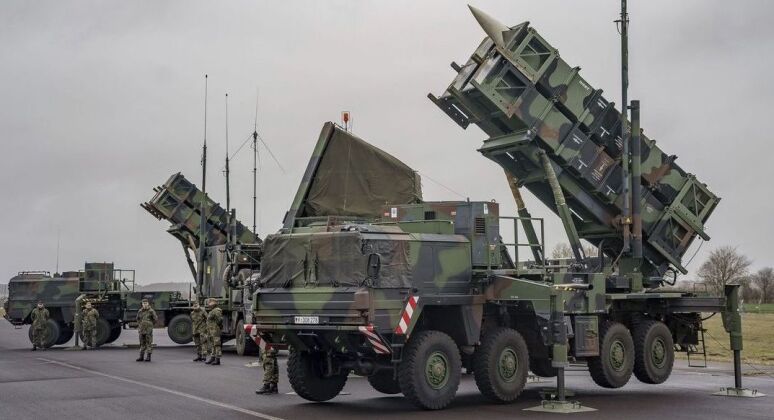
The challenge posed to NATO members’ defences by the Iskander-K system are expected to continue to grow, and are particularly serious due to the system’s ability to serve as a delivery platform for tactical nuclear strikes. The ongoing Russian-Ukrainian War has depleted NATO members’ air defences to an extreme degree, as launchers, radars, command posts, and surface-to-air missiles have been donated to the Ukrainian Armed Forces on a vast scale. The United States’ own air defence stockpiles at key facilities across the world have also been critically depleted by very rapid expenditures of munitions against Iran, and the destruction of key air defence radars in Iranian strikes. Where the Iskander-M has been used as a force multiple for other missile systems in the Ukrainian theatre by destroying high value air defence systems such as U.S.-origin MIM-104 Patriots, the Oreshink’s service entry raises the possibility that it could be used for the same purposes across Europe, allowing strikes to then be launched using the Iskander-K with much higher success rates.
