
Russia Deploys Rare A-50U ‘Flying Radar’ System to Support Interception of Ukrainian Flamingo Cruise Missile Strike
Military Watch Magazine Editorial Staff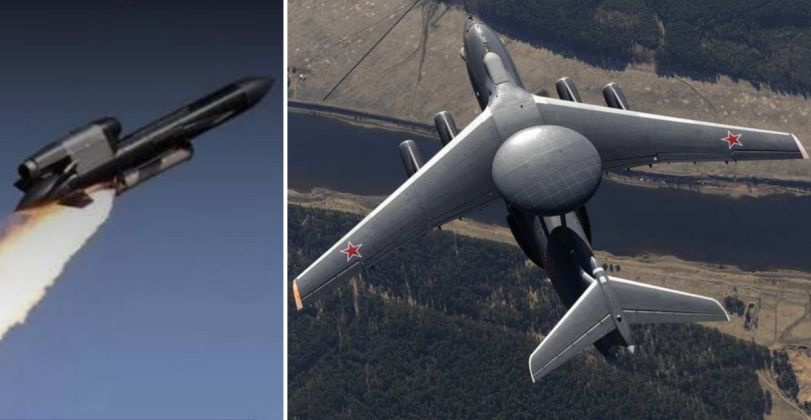
Flamingo Cruise Missile and A-50U AEW&C System
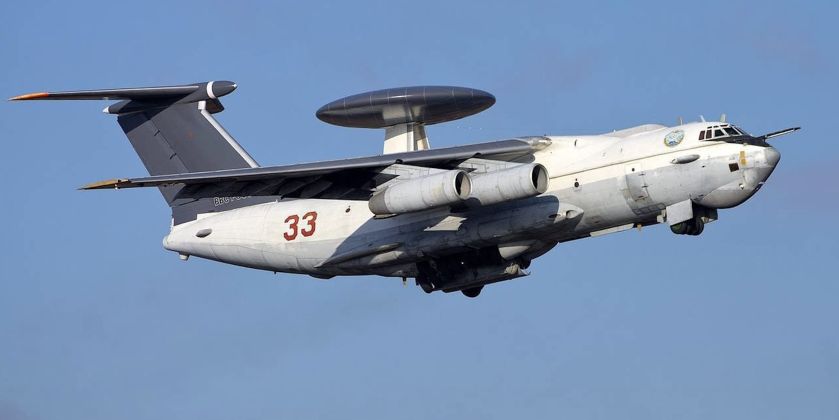
The Russian Aerospace Forces have deployed A-50U airborne early warning and control (AEW&C) systems to provide to provide support to missile defence efforts, in particular to help intercept FP-5 Flamingo cruise missile strikes which are being launched from Ukraine against high value strategic targets. This gained particular attention after Russian air defences in shot down more than five of the missiles in the early hours of June 5, with these missiles having followed a Volga route via Volgograd towards Votkinsk in Udmurtia. The A-50U integrates by far the most powerful airborne radar in Russian service, and is an enhanced variant of the Soviet A-50 system that incorporates a wide range of updated technologies from the severely delayed A-100 AEW&C program.
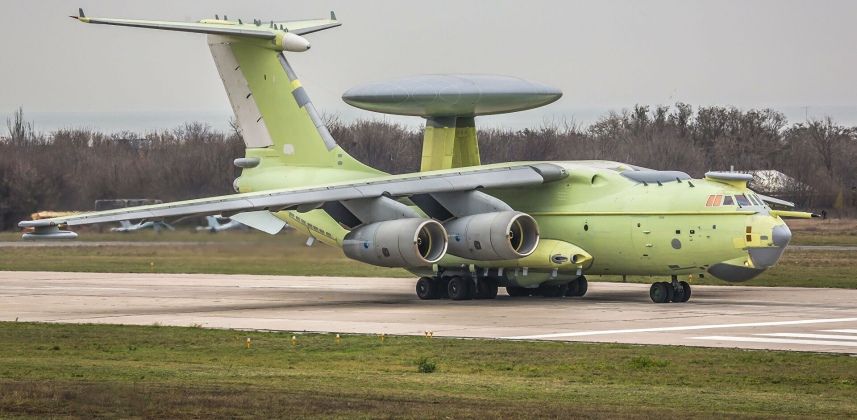
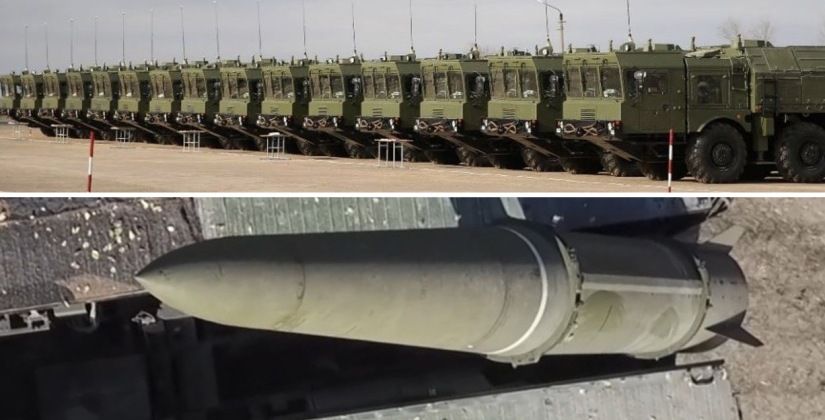
Ukraine’s cruise missile strike launched on July 4 is thought to have targeted the Votkinsk Machine-Building Plant, which produces ballistic missiles for the Iskander-M system. The system’s very central role in the Russian war effort for both strategic and tactical roles, and Russian doctrine’s considerable dependence on it for potential conflicts with NATO, would make the disruption of production at the facility a highly impactful success. No missile impacts were reported, indicating successful air defence operations, with the cruise missile group reported to have been intercepted by Russian air defences and fighter aircraft while approaching the target. An A-50U took off at around 00:40 on July 5 as part of these missile defence efforts, improving detection over rivers and terrain where ground radar coverage was weaker.
The A-50U’s elevated sensors and data links can considerably improve the situational awareness of air defence networks, with its ability to ‘peer’ over the radar horizon being particularly valuable against cruise missiles that follow terrain-hugging profiles. The system allows cruise missiles to be detected and tracked an estimated 10-30 minutes earlier than if relying on ground-based systems, while also providing significantly wider coverage than ground-based radar networks can. Their communications systems are also used for command and control purposes to coordinate complex multi-tier air defence efforts. The enhanced A-50U variant has a 15-20 percent higher endurance than the baseline variant, allowing each aircraft to remain airborne for over 9 hours without refuelling, as well as integration of the Shmel II radar which provides a 33 percent longer tracking range against fighters. The A-50U can thus track up to 300 objects and provide targets to up to 40 accompanying combat aircraft, where the original variant could track just 200 and provide data to just 20 aircraft.
Although the Ukrainian Armed Forces have launched cruise missile strikes against a wide range of targets throughout the duration of the war effort, they previously relied solely on Anglo-French Storm Shadow/SCALP missiles which were fired from the air, and were initially restricted to striking targets in internationally recognised Ukrainian territory. The FP-5 is not only available in much greater numbers, but also has no restrictions on the targets it can be used against, with its design for ground-based firing meaning launches are not restricted by the limited number of fighters or their availability. Although Russian forces have achieved considerable successes in destroying production facilities related to the missile program in the past, the growing intensity of launches indicates that these have been limited in their scope.
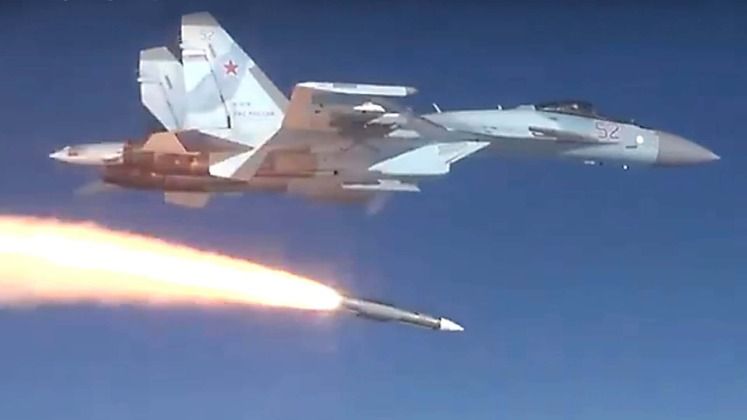
Preceding the launching of deep cruise missile strikes into Russia, the A-50U fleet was used extensively to support anti-aircraft operations against Ukrainian forces. One of the most notable examples was the reported use of the system from early November 2023 to guide a 40N6 surface to air missile from an S-400 air defence system to strike target close to 400km away at low altitude, with the missiles having been designed to be able to engage targets at such extreme range using targeting data from airborne assets or forward deployed ground radars. The A-50U was also reportedly used to support air-to-air operations by Su-35 fighters using R-37 long range missiles, which can engage targets up to 350 kilometres away when launched by the fighters. The R-37 was designed to be launched by MiG-31 interceptors, which integrate more powerful radars than Su-35, with Russian aircraft other than the MiG-31 being reliant on the A-50 for very long range engagements.
