
U.S. Nuclear Attack Submarines Can Now Serve as Montherships For Underwater Drone Fleets with New Launch and Recovery System
Military Watch Magazine Editorial Staff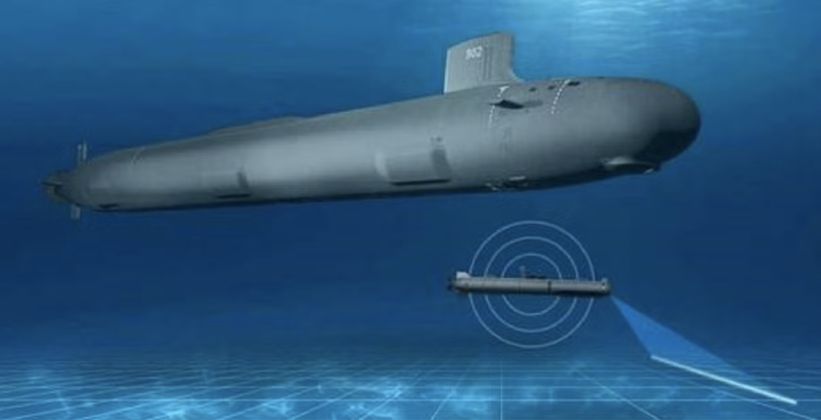
Illustration of Attack Submarine and Drone Launched Using TTLR System
The U.S. Navy has improved the capabilities of its attack submarines to conduct renaissance, mine warfare and seabed operations with the introduction of the new Iver4 900 autonomous underwater vehicle and the Torpedo Tube Launch and Recovery (TTLR) system into limited service. The new system allows submarines not only to launch drones through their 21-inch torpedo tubes, but also to recover them afterwards while remaining submerged. The ability to repeatedly launch and retrieve an autonomous underwater vehicle from a submerged submarine without requiring the submarine to surface is entirely unprecedented, and significantly expands the underwater fleet's reconnaissance capabilities and allowing ships to preserve their stealth.
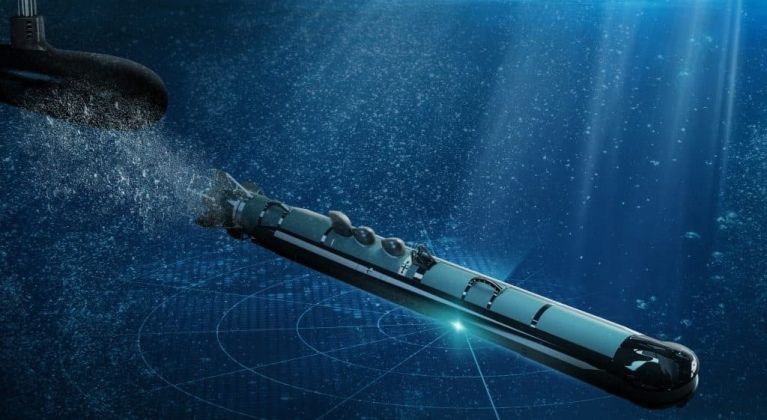
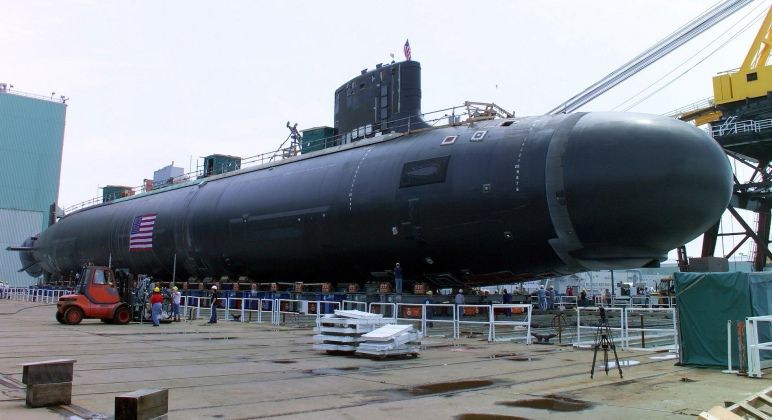
The introduction of the new recovery capability is arguably more significant than recent advances in the capabilities of new submarine-launched underwater drones. For well over a century, virtually every weapon or payload fired from a submarine torpedo tube - whether a torpedo, cruise missile, mine or decoy - has been designed as a one-way system. Recovering a vehicle after launch has presented a far greater technical challenge than launching it. The TTLR system overcomes this by enclosing the drone within a removable launch-and-recovery sleeve inserted into a standard torpedo tube, allowing submarines to effectively operate as underwater drone motherships.
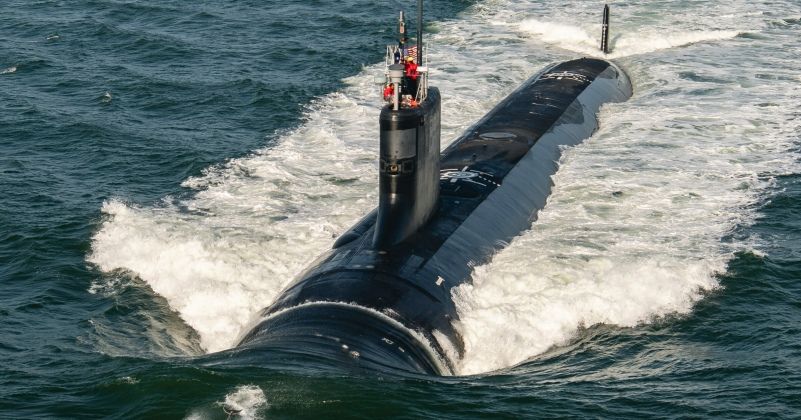
Developed by L3Harris, the Iver4 900 employs modular payload bays that allow operators to rapidly exchange sonar systems, seabed mapping equipment, mine detection sensors, electronic intelligence packages or other mission-specific payloads between deployments. The compact drones are constructed from titanium and carbon fibre, and are rated to operate at depths of 300 metres. It is expected that new generations of similarly sized drones will follow it into service and be integrated onto the TTLR system. The drones and the TTLR have reportedly already entered operational evaluation aboard Virginia class nuclear powered attack submarines.
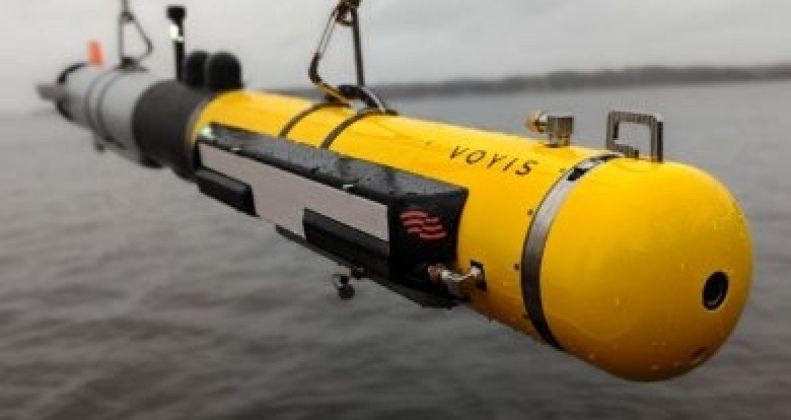
Operationally, the Iver4 900 is intended to serve as an underwater equivalent of the “loyal wingman” concept increasingly appearing in military aviation. Rather than exposing a multi-billion-dollar attack submarine to dangerous shallow waters or heavily defended coastal areas, commanders can dispatch the unmanned vehicle to perform hazardous missions independently. These include mine reconnaissance, mine countermeasures, seabed mapping, hydrographic surveying, underwater intelligence collection, inspection of undersea cables and pipelines, and other high risk reconnaissance tasks. Because the drone operates independently and without a tether, it can investigate areas tens of kilometres away from the submarine, significantly extending the reach of the ship’s sensor suite while reducing operational risk. Mine warfare is likely to become one of the most important applications, and has remained an area where the U.S. Navy’s capabilities are relatively limited.
The greatest significance of the introduction into service TTLR system is likely not to be any individual mission that it facilitates in the near term, but rather the broader transformation of submarine operations that it facilitates. Attack submarines have traditionally relied almost entirely on their own onboard sonar and periscopes for situational awareness. Recoverable autonomous vehicles effectively become additional mobile sensor platforms that can operate independently over wide areas while maintaining continuous communication with the submarine through secure underwater networking. Rather than a single submarine observing from one location, commanders gain multiple distributed sensors capable of covering significantly larger areas simultaneously. This has the potential to represent a major turning point for the U.S. attack submarine fleet.
