
U.S. Navy Establishes New Nuclear Attack Submarine Squadron Forward Deployed Against China
Military Watch Magazine Editorial Staff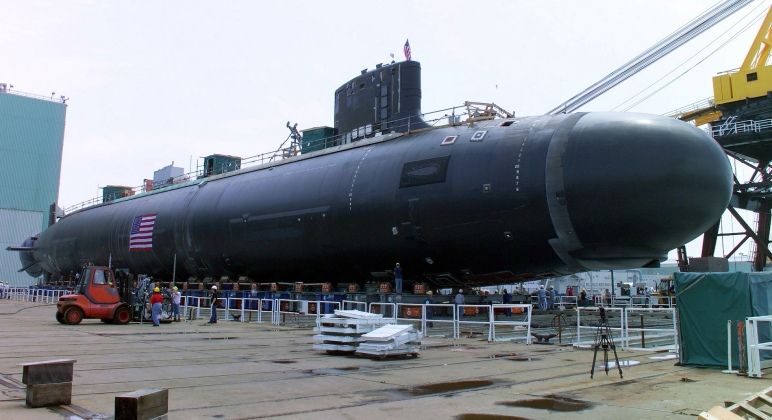
U.S. Navy Virginia Class Nuclear Powered Attack Submarine
The U.S. Navy has established a new submarine squadron, Submarine Squadron 3, at a Royal Australian Navy base HMAS Stirling in Western Australia, as part of broader efforts to refocus the large majority of American attack submarine operations to the Pacific theatre. Rear Admiral Chris Cavanaugh, commander of Submarine Force, U.S. Pacific Fleet, formally reestablished the squadron, laying the command infrastructure needed before the first nuclear powered attack submarines begin rotating through the base in 2027. Although Submarine Squadron 3 is not an entirely new unit, and was decommissioned in February 2012, its operation from Australia is an entirely new development, and creates a new forward command element to support rotational submarine operations integrated with Royal Australian Navy counterparts and oriented toward the waters of the Western Pacific.
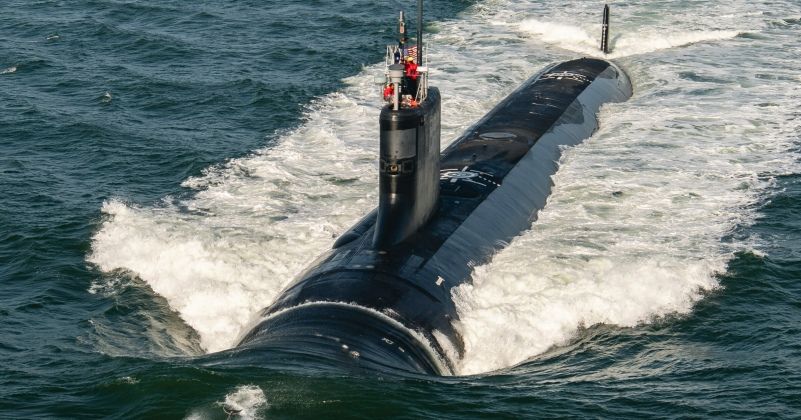
Commenting on the squadron’s formation, Admiral Cavanaugh observed: “Adding an additional forward-positioned submarine squadron in the Indo-Pacific enhances our presence, agility, and responsiveness across a range of operations… CSS-3 enables our submarines and crews to respond rapidly in support of the U.S. joint force mission of regional deterrence.” Vice Admiral Rob Gaucher, Director of Submarine Programs, stressed the benefit of having “submarines rotating through a critical region with an organic, predominantly Australian, maintenance workforce keeping those boats fit to fight.” “That not only supports readiness, but it also reduces the burden on the U.S. shipyards and increases our fast-attack submarine force’s readiness while preparing Australia to maintain their own SSNs,” he observed.
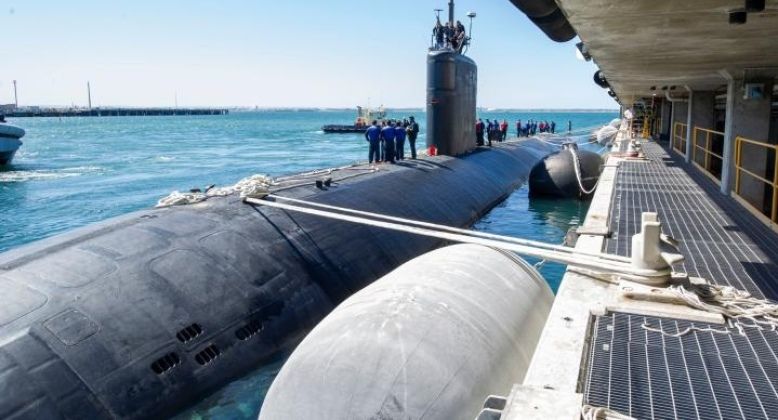
The Australian government is investing up to $8 billion to expand HMAS Stirling, which is strategically located on Garden Island at the entrance to the Indian Ocean, and close to critical sea lanes connecting the Pacific and Indian Oceans, making it a highly prized location for U.S. nuclear attack submarines to operate from in possible campaigns against China or North Korea. A primary role of ships based in Australia will be to seek and destroy Chinese, North Korean and Russian strategic ballistic missile submarines such as the new Chinese Type 096 class ships, which are key parts of these countries’ nuclear deterrents, allowing the U.S. to achieve escalation dominance with its own less vulnerable nuclear forces. Insertion of special forces and interdiction of commercial shipping are further primary roles. Under Rotational Force-West U.S. and British nuclear submarines will conduct rotational deployments from HMAS Stirling from 2027 as part of the AUKUS agreement reached in 2021, allowing Australian personnel to gain operational experience aboard nuclear-powered attack submarines before the Royal Australia Navy begins to receive such ships second hand from the U.S. Navy.
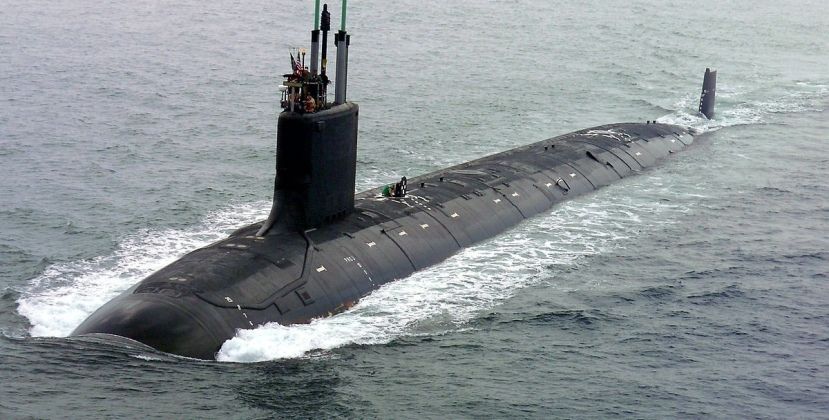
Complementing the establishment of a new squadron in Australia, the Navy in November 2024 begun its first permanent forward deployment of a Virginia class submarine to Guam as part of the broader pivot of its forces to focus on targeting China. Commenting on the decision to station Virginia class submarines on Guam, the Navy announced in 2024: “The security environment in the Indo-Pacific requires that the U.S. Navy station the most capable units forward. This posture allows flexibility for maritime and joint force operations, with forward-deployed units ready to rapidly respond to deter aggression and promote a peaceful and prosperous Indo-Pacific region.” Costing an estimated $4.4 billion each, Virginia class ships currently form the backbone of the Navy’s attack fleet, with the service planning to field 66 ships, of which 43 have been ordered, of which the 27th to 34th are currently under construction. The result of major shortfalls in submarine production capacity in the United States has been a much smaller fleet than the U.S. Navy intended to operate.
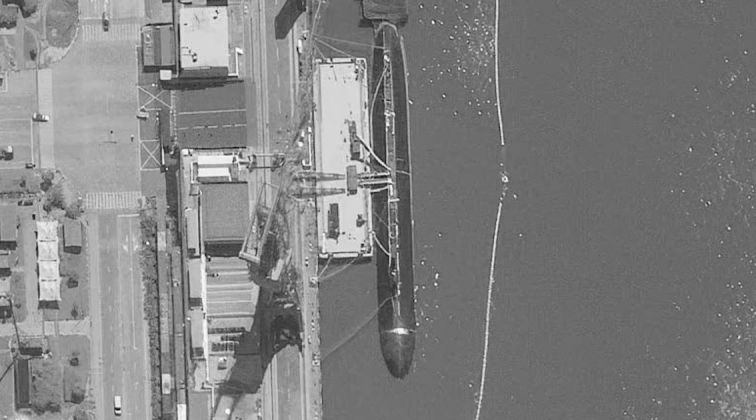
Shortfalls in U.S. submarine construction have become a major issue as China has rapidly expanded its own capacity, more than tripling it with expansion of the Bohai Shipbuilding Heavy Industry Corporation shipyard in Huludao, and the construction of two new facilities which both began to launch their first ships. The U.S. industrial base has itself shrunk significantly since the end of the Cold War, with its nuclear submarine production capacity having slowed dramatically, while efforts to rebuild it have struggled considerably. Following major improvements to the capabilities of the currently operation Chinese Type 093 and Type 094 class nuclear powered attack and strategic submarines, which have caused considerable concerns in the Western world, the next generation of nuclear submarines is expected to introduce a significant qualitative advantage, while also being brought into service far faster.
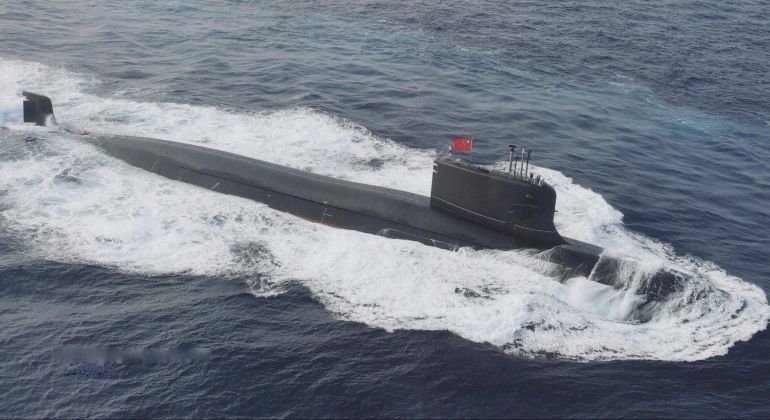
The first Type 095 class next generation nuclear powered attack submarine is reported to have been launched in early 2026, and is thought to have cutting edge features including magnetic drive technologies and Rim Driven Propellers to revolutionise its performance. All that is known of the Type 095’s design indicates a strong emphasis on cleaner hydrodynamic shaping and stealth-oriented engineering. Thus while the U.S. has a major advantage in the range of facilities from which it can deploy its submarines, which extend across the Pacific from Hawaii and Guam to Australia, China is expected to enjoy growing quantitative and qualitative advantages reflecting its industrial and tech sector strengths.
