
U.S. Navy Operations Chief Stresses Urgent Need For New Nuclear Powered Battleships
Military Watch Magazine Editorial Staff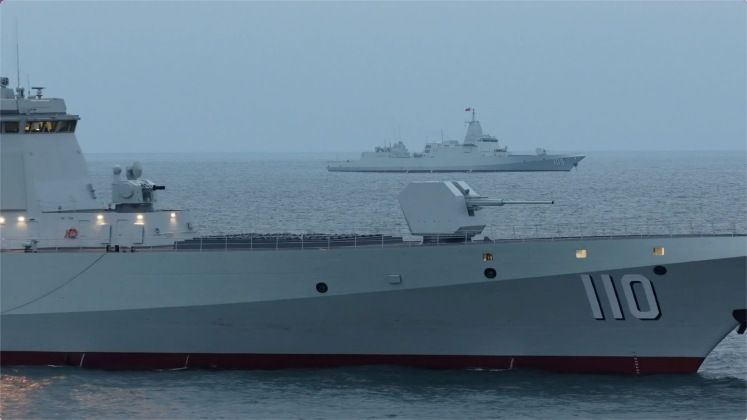
Chinese PLA Navy Type 055 Destroyers
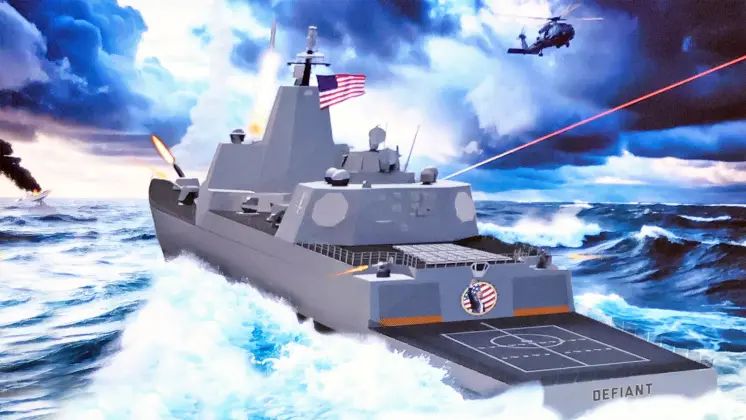
U.S. Chief of Naval Operations Admiral Daryl Caldell has provided new details on plans to transition the fleet to operating primary surface combat vessels powered by nuclear reactors. Caldell stated that the Navy's complete abandonment of nuclear powered surface combatants after the end of the Cold War was "one of the biggest mistakes in its history," adding that the newest nuclear-powered battleship being developed under the BBG(X) program will correct this mistake. Regarding the operational capabilities this is projected to provide, he elaborated: “Imagine what that would have looked like in the Arabian Gulf if I’d had a nuclear-powered battleship there to give the air and defence and fires [sic] power that it could sustain – rotate ships that roll, that need gasoline around it… So the imperative for this is crucial to develop that level of payload capacity.”
Responding to concerns that the BBG(X) will be unaffordable, Caldell stated that only the ship’s hull and its directed energy weapons will need to be newly developed, with the vessel intended to use the same A1B nuclear reactor as the much delayed Gerald Ford class aircraft carriers. Cadells’ position supporting developing the BBG(X) as a nuclear powered warship program notably marks a stark departure from his position just four months ago in January, when he observed: "Wouldn't nuclear propulsion be more logical? But it places an additional burden on the construction process, which is completely beyond our goal of getting it launched as quickly as possible… Ultimately, you'll find that this pushes the warship's construction timeline to a stage that is fundamentally unsuitable for operational needs."
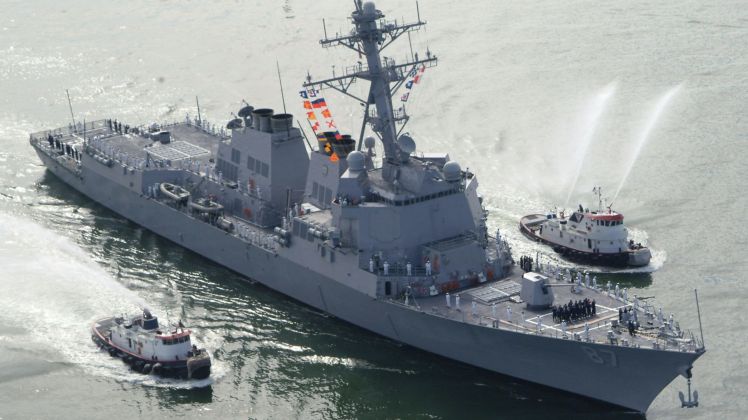
Hostilities with Iran from February 28 appear to have been a primary factor shifting the consensus in the Navy regarding the need for nuclear propulsion systems on the BBG(X), as the U.S. Navy has suffered from a serious strain on its logistics despite enjoying relatively secure supply chains. The conflict has highlighted that a war in the Pacific theatre against China or North Korea, which is the primary contingency for which the Department of War is planning, would place a significantly greater strain on supplies, potentially leaving workhorses of the fleet such as the currently Arleigh Burke class destroyers without sufficient fuel to operate. Nuclear powered surface warships are nevertheless significantly more costly both to produce and to sustain, and require periodic reactor servicing, depot maintenance, more complex crew support and combat system sustainment, and significant modernisation of dry docks and shipyards.
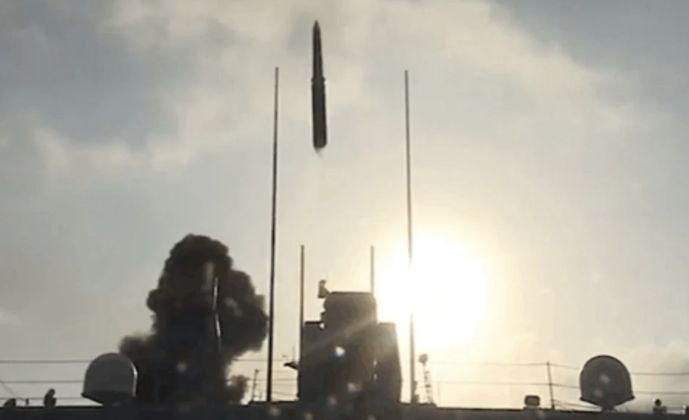
The BBG(X) program is projected to cost up to $700 billion, and to produce 15 ships, with each ship costing $46.6 billion over its lifetime. Each ship will displace 35,000 to 41,000 tons, making them by far the largest surface combat vessels operating anywhere in the world. The vulnerabilities that result from concentrating a large number of sailors, tens of billions of dollars in investment, and a very large portion of the Navy’s arsenal, onto just a single very heavy warship, have been widely raised, with advances in anti-ship missile technologies leaving new generations of missile defences increasingly ineffective. The BBG(X) development has been initiated after the capabilities of the Chinese PLA Navy’s 13,000 ton Type 055 class destroyers have for years caused very significant concern in the Western world, as the vessels are currently widely assessed to be the world’s most capable surface combatants. The program is considered a response to both the lessons from war against Iran, and the perceived immense difficulties that waging war in the Pacific will pose.
